
Animals are adept at picking up on things we miss, from faint scents to subtle shifts in body language. But does that heightened sensory awareness allow them to literally smell fear?
A number of studies suggest that the answer is yes, although “smelling fear” is perhaps an oversimplification. There is strong evidence to support the idea that numerous animals can detect and respond to the chemical cues that accompany fear, though whether they actually recognise those signals as a sign of fear is a somewhat thornier question.
To understand what animals are responding to, we have to look at what fear does to the body. When a threat is perceived, the brains of many animals trigger the adrenal glands to release cortisol. This prepares them to respond to danger, increasing things such as heart rate and alertness. It also plays a role in changing the chemistry of sweat and breath, releasing volatile organic compounds into the air that some animals can detect.
Various animals are much better equipped to detect these chemical cues than we are. Dogs, for example, have up to 300 million olfactory receptors, compared with around six million in humans. This gives them access to chemical information we simply can’t detect.
In a study by researchers at Queen’s University Belfast, four dogs were given sweat and breath samples from people before and after they completed a stressful maths task. Each of the dogs was able to distinguish the stressed samples from those taken when the participants were relaxed, even when the samples came from people they had never previously encountered.
In another study led by researchers at the University of Naples, pet dogs were exposed to human sweat collected under conditions of fear, happiness and a neutral control. When exposed to the fear scent, the dogs showed higher heart rates and displayed more stress behaviours. They also became more focused on their owners and showed wariness towards strangers. Interestingly, when exposed to the “happy” scent, they became more inclined to approach and interact with new people.
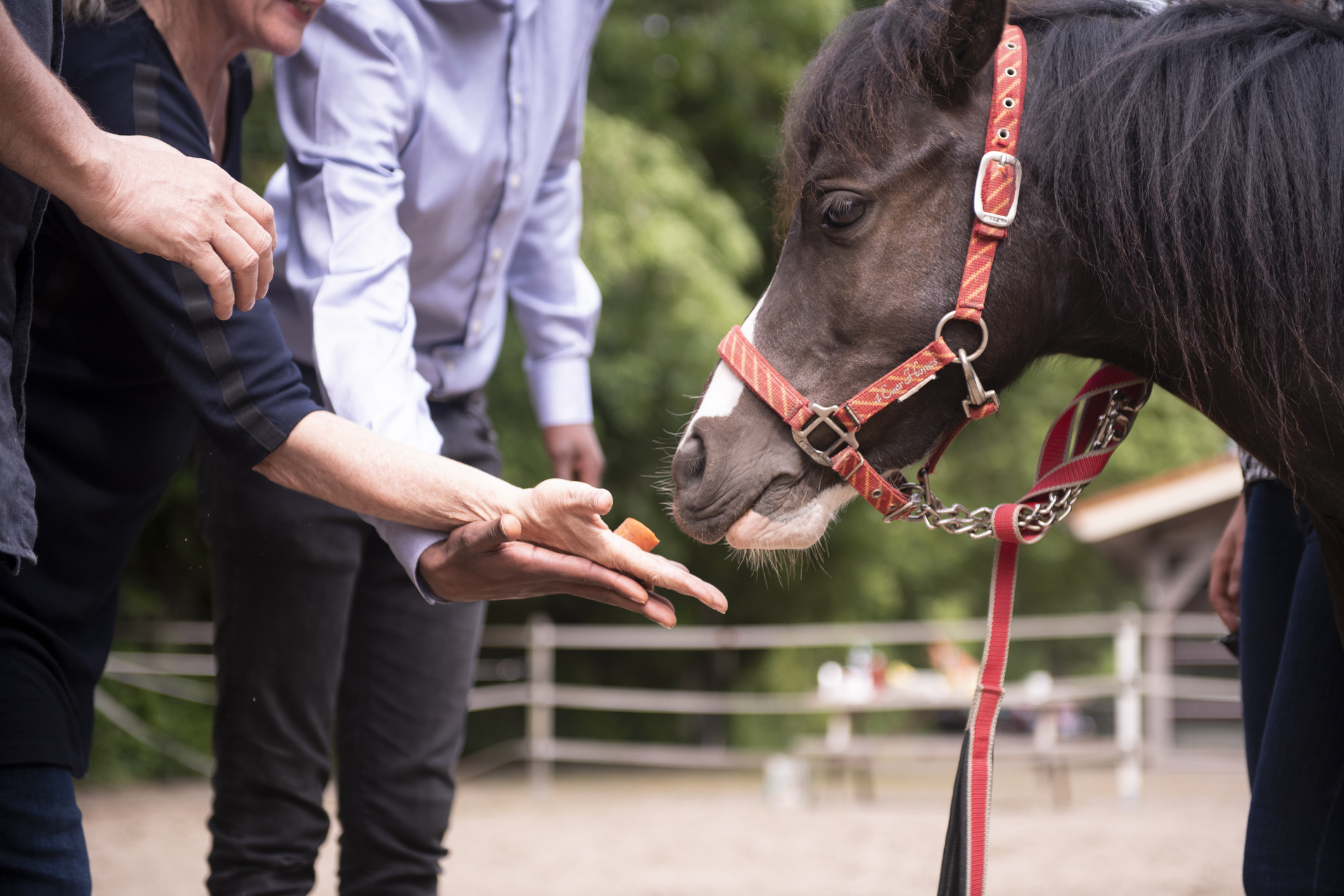
It isn't just dogs that appear to be acutely attuned to human fear signals. Research suggests horses are similarly sensitive, and can shift into a high-alert state when they detect human fear odours. In tests, horses exposed to sweat from frightened people showed heightened fear responses, becoming significantly more startled by sudden events, and also interacting far less with humans than when they were exposed to “joy” or neutral scents.
Even cats, often (somewhat unfairly) considered to be aloof, appear to be well attuned to our emotional state. In one study, domestic cats were exposed to human scents collected during fear, happiness, physical exercise and neutral states, with the researchers finding that the cats showed considerably higher stress levels when around the fear scents.
Sensing stress chemistry is an ancient survival mechanism, and it is something prevalent across the animal kingdom. Injured fish release an alarm substance called Schreckstoff that warns the rest of the school; social insects can mobilise colonies with alarm pheromones; and mammals such as rats and some deer give off stress scents from specialised glands.
Responding to these signals lets an animal react to danger without having to spend time working out exactly what is happening. An animal doesn’t need to contemplate why a scent is there, or even recognise it as “fear”, for the chemical cue to make it instantly more alert.
