
This week, the British Isles will experience the darkest partial solar eclipse since 1999. This once-or-twice-in-a-lifetime event is not to be missed – and hopefully, if the skies stay clear, should be visible across the UK, particularly in the South West of England. This will be the last time an eclipse of this scale will be seen until 2081, so is certainly worth grabbing your eclipse glasses or pinhole projector for.
What is a partial solar eclipse?
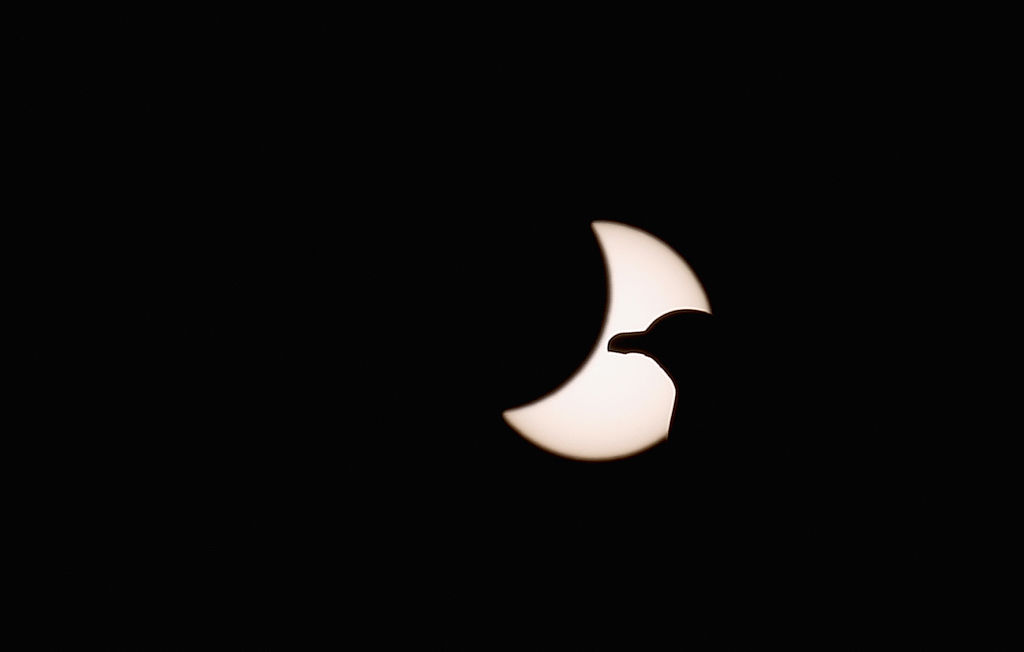
A total solar eclipse occurs when the Sun, the Moon and the Earth are in perfect alignment, which means that the Moon covers the Sun – plunging it into complete darkness. A partial eclipse occurs when the Moon only covers a portion of the Sun, so the alignment between planets is incomplete.
When will the partial solar eclipse be visible?
On Wednesday evening, the partial solar eclipse will be visible from the UK. It is due to last about an hour and 50 minutes, beginning at 6.20pm and ending by 8.10pm. Although a total solar eclipse won’t technically be visible from the British Isles, we will still get to see over 90 per cent of the Sun covered by the Moon’s shadow. In the South West of England, the rate will be closer to 95 per cent – higher still in South West Ireland, where viewers will be able to see 97 per cent coverage.
While the partial solar eclipse will be visible in the UK, a total eclipse will be visible elsewhere in Europe, chiefly in Greenland, Iceland, Spain and northern Portugal.
How will nature respond?
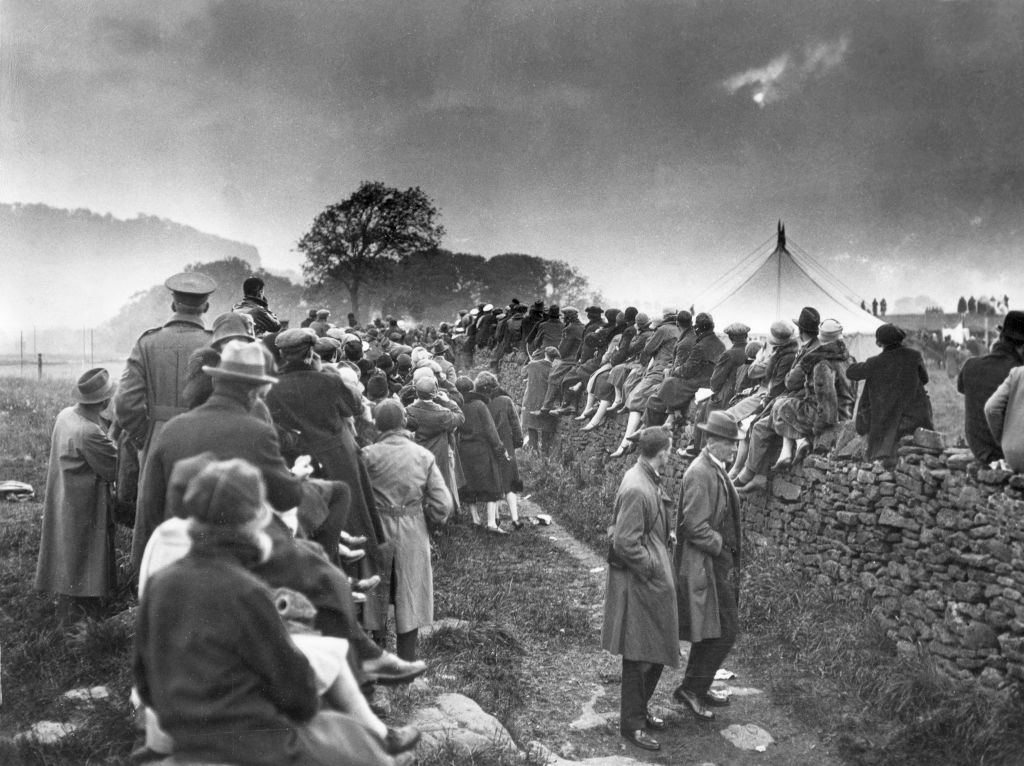
Viewers will notice a slight change in the temperature, as the sky begins to darken. At the peak of the eclipse, the shadow will be noticeable in the sounds of nature, as birds fall silent, believing it to be night. As it gets light again towards the end of the eclipse, birds might think it’s dawn – so you may hear a dawn chorus.
Where will you be able to see it in the UK?
The partial solar eclipse will be most visible across the South West of the UK and the Channel Islands, but the eclipse will still be seen by spectators in the rest of the UK with slightly lower coverage. Astronomers have confirmed that the percentage differences are relatively small, and views of the partial solar eclipse will still be impressive across the entirety of the UK.
How to find the best viewing points to see the eclipse
Because of the summer timing of this eclipse, the skies are likely to be clear, with reasonable viewing conditions. Head to areas with cloud-free skies for the best possible viewing experience.
Get to a high point with a clear view of the horizon.
You could visit one of the UK's Dark Sky sites for interrupted sky views.
When is the next partial solar eclipse in the UK?
The next partial solar eclipse in the UK of this scale is due to take place in 2081, when up to 99 per cent of the Sun will be obscured by the Moon.
When is the next total solar eclipse in the UK?
The next full solar eclipse in the UK is due to take place in 64 years’ time, on 23 September 2090.
How to see the partial solar eclipse
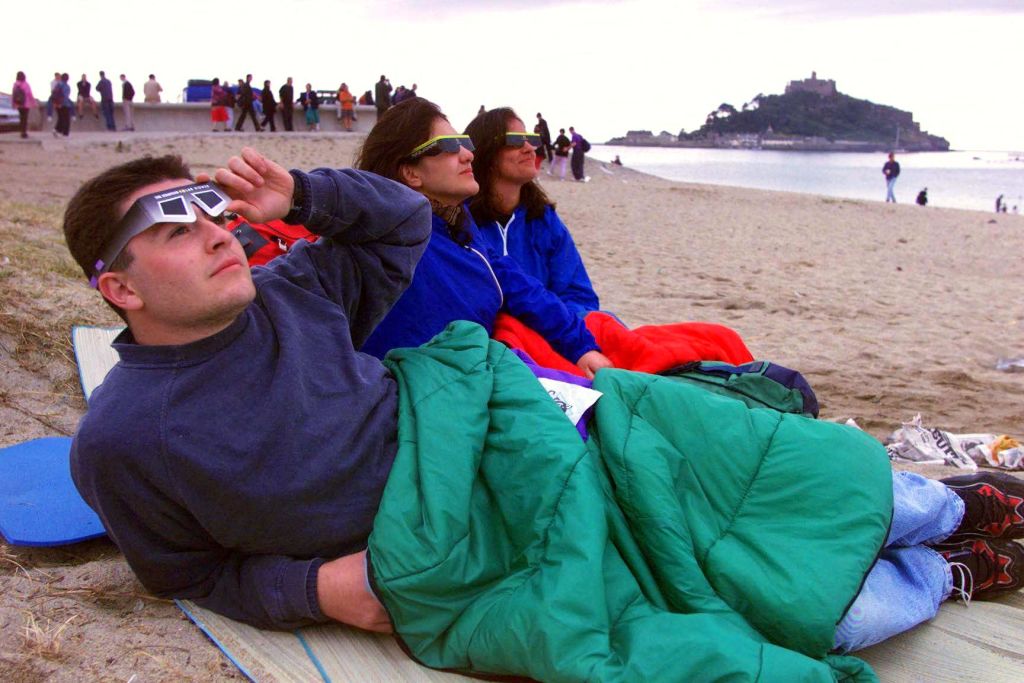
People watching the eclipse are encouraged to buy a pair of eclipse glasses or a pinhole viewer, avoiding looking at the Sun without suitable protection. Looking directly at the eclipse – even for a short moment – can damage your eyesight.
Looking at an eclipse can be more dangerous than looking at the Sun, as your defence mechanisms are diminished due to the tricks played by the Moon’s shadow. As the environment around you will darken during the eclipse, your irises will expand to allow in more light, making them more susceptible to the damage caused by the Sun’s radiation. Just because the Sun appears dimmer (and is therefore easier to look at directly), doesn’t mean it’s not doing harm!
Although eclipse glasses are likely to sell out online this week, the UK Health Security Agency has suggested a couple of alternatives: try viewing the Sun’s image through a colander or through the gaps in the tree leaves onto white paper. Alternatively, you could project the Sun’s image onto a sheet of paper using a simple pinhole projector.

