I still remember the first time I saw the island. It was the summer of 2008 and I was standing on the shore of neighbouring Walney Island with nature guide and former Mayor of Barrow, John Murphy.
We were looking out across a pea-souper of a sea fret blanketing Morecambe Bay when suddenly a gust of wind revealed a surprising sight: a substantial castle keep that appeared to have been built upon the waves. John assured me that there was a small isle underneath the fortress, and that it was called Piel. I knew there and then that I would have to go there.
- Roads that disappear with the tides: These are the UK's most dramatic island causeways
- What’s the world’s biggest island?
What is Piel Island?
Piel Island has since become one of my favourite places in Britain, both to visit and camp on. Tucked away off the south-western coast of Cumbria, the 21-hectare isle is not just home to a castle, but also a trim Victorian terrace of cottages built for harbour pilots and customs inspectors, and a pub.
Yes, a pub. On an island with a permanent population currently numbering just three. Piel also has its own king. And it was once the landing place for an invasion of England. As tiny islands go, it certainly punches above its weight.
How can you get to Piel Island?
Located in one of the most blustery parts of the country, it can also prove challenging to get to. At low tide it’s possible to walk a mile-and-a-half across from the much larger Walney Island but that’s not recommended without a guide due to the danger posed by shifting patches of sinking sand and the possibility of the sort of sea fret I encountered there.
Most visitors, therefore, arrive on the tiny 12-passenger Piel Ferry that sails from Roa Island, an islet attached to the mainland by a causeway. Unfortunately, the ferry service can be cancelled for days at a time when a gale comes raking in from the Irish Sea. Indeed, that’s precisely what happened on my latest attempt to renew my acquaintance with the island.
Arriving in Barrow-in-Furness, I received the dread phone call from the ever-friendly people who operate the ferry. “So sorry, but there’ll be no sailings today – it’s just too rough out there.” My one consolation was that the King of Piel himself happened to be on Walney – connected to the mainland via a bridge – and was more than willing to grant me an audience.

Who is the King of Piel?
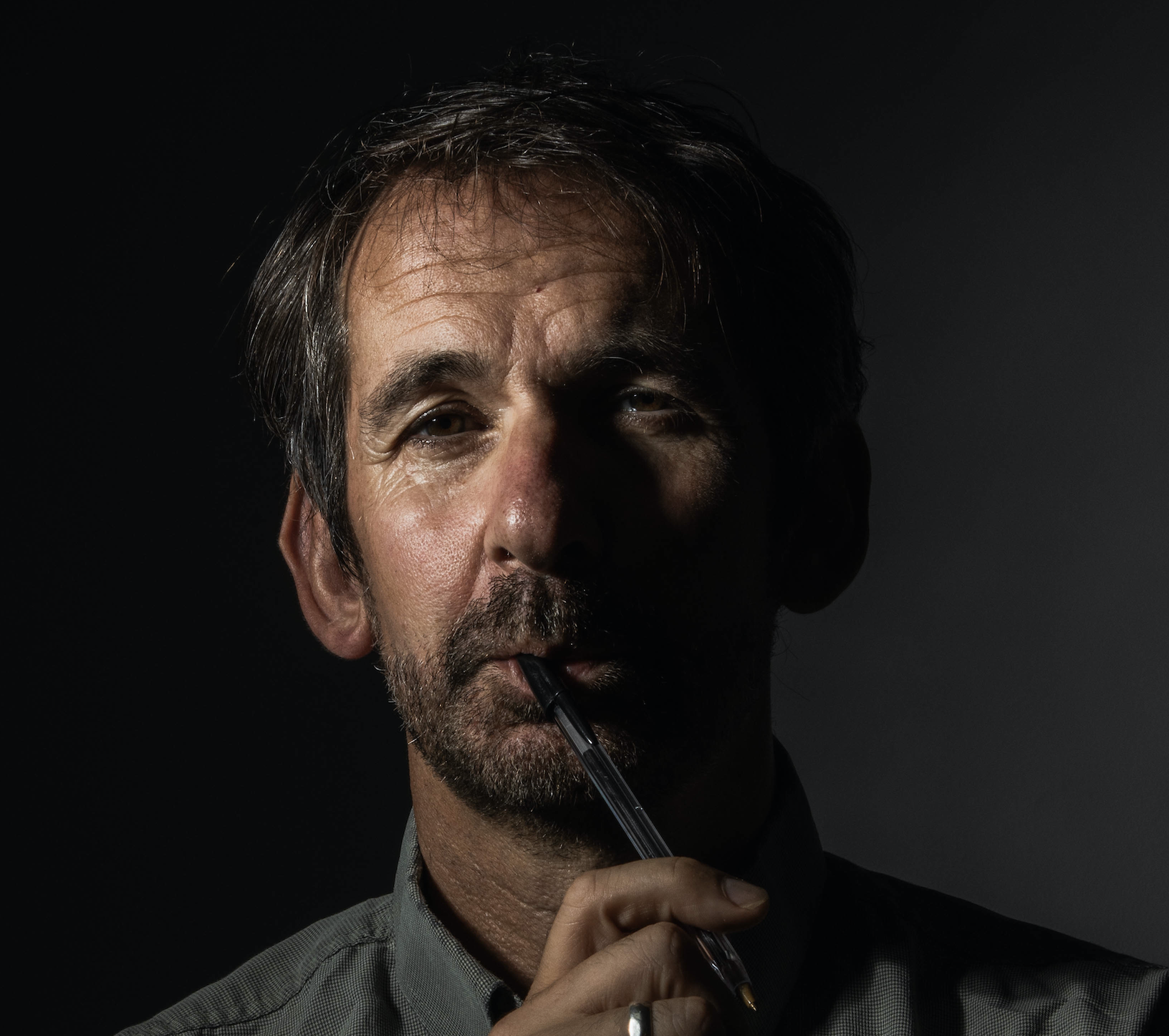
I should perhaps explain at this point that, as far as I’m aware, Piel has no intention of declaring itself an independent nation just yet. The King of Piel is a title bestowed upon the landlord of the island’s 18th-century Ship Inn, whose coronation ceremony requires him to sit upon a throne (an old beer barrel) while a large quantity of beer is poured over his head.
The tradition is thought to date back to the 19th century and is in mocking reference to a 10-year-old boy named Lambert Simnel – but more of him later. Since 2022, the King of Piel has been an affable local man named Aaron Sanderson. After working in the Barrow shipyards for 18 years, he decided he “needed a bit more of a challenge”.
He thus applied for the post of landlord, along with nearly 200 others, and was offered what must be one of the more unusual council jobs going (the island and its pub having been sold in 1920 to Barrow-in-Furness Council).
Born in Barrow and living on Walney, Aaron was already very familiar with Piel. “I was a regular visitor as a kid,” he tells me. “I sailed and used boards so I spent a lot of time there. I camped there too when I was a teenager.”

History of Piel Island
The island has attracted visitors for countless generations. Celts and Romans are believed to have been tempted ashore while Vikings actually settled on the isle, providing it with its first known name, Foudray (‘fire island’), suggesting a beacon to guide seafarers was kept alight here. The modern name Piel comes from ‘pile’ or ‘pele’ – common terms in the Middle Ages for a castle keep.
As for the castle, that began life as a fortified warehouse constructed on the orders of the Abbot of Furness in the early 14th century. The Cistercian brothers were keen to keep pirates and Scots raiders from getting their hands on the monastery’s wool and other precious commodities.
The scale of the monks’ wealth can be judged by the fact that, at the time of its construction, it was the second largest building in Britain, beaten only by the White Tower in London. Later on, the not-so-holy brothers ran extensive smuggling operations from the castle.
On 4 June 1487, one Colonel Martin Schwartz landed on Piel with several thousand mercenaries and spent the night on the island. With them was a 10-year-old boy called Lambert Simnel whom Schwartz was attempting to pass off as a son of Edward IV and a rightful heir to the English throne.
His army got as far as Nottinghamshire before being defeated by Henry VII’s forces at Stoke Field, the final battle of the War of the Roses. Surprisingly, Simnel was spared execution and was instead set to work in Henry’s kitchens. Though contrary to popular belief, he did not invent the Simnel cake (which predates him by a couple of centuries).

Piel's wildlife
I camped in its outer bailey during one of my visits, and can report that waking up, poking one’s head through the tent flap and seeing a mighty castle keep backed by a glistening sea is a truly joyful experience. I’d made sure to push my tent pegs in well though.
Piel is a flat grassy isle with little natural protection from the wind aside from some clumps of bushes. But, as Aaron pointed out to me, that means you can enjoy “a different view every way you look”.
And the view across towards Walney is particularly satisfying for any lover of birds, especially in the winter months. Piel’s neighbour is home to significant numbers of lesser black-backed, great black-backed and black-headed gulls, as well as eiders, Arctic terns, wildfowl, waders and a variety of rare blow-ins. Remarkably, the total number of avian species recorded there each year oscillates between 170 and 180.
Life on Piel
Back in the present, I ask Aaron to describe the experience of being on Piel. “On a lovely, beautiful, sunny day, it’s magical – peaceful, calm, relaxed and lovely,” he replies with a smile. “It can be also really busy – with kids running round – a different kind of beautiful.”
Perhaps surprisingly, his favourite time of year is winter. “On a cold, crisp, sunny winter’s day you can still sit out in a t-shirt. It might be five degrees but it’ll feel like it’s 15. You can sit on the bench with a brew and watch the world go by.”
But Piel is not just a special place during the day. On one visit, I stayed up all night, starting by sitting at a picnic table outside the pub at dusk and watching one of the nation’s great unsung spectacles: the lights coming on all the way around the Cumbrian and Lancashire coast to the Blackpool Tower – some 60 miles of shoreline. Piel and the southern tip of Walney are the only two places on land from which you can observe this phenomenon.
Visitors can do so more peacefully of late too. In 2023, 30 solar panels were tucked away behind The Ship, supplying virtually all the pub’s energy needs, so the diesel generator that used to create a near constant background drone is now rarely heard.
But as a rule, Piel is not an island much given to alteration. So when I ask Aaron if there’s anything he’d like to change, he thinks for a moment before suggesting an appropriately modest tweak. “I’d like to see a new pier and steps,” he says, “just to make access better.”
The word ‘unique’ is a sorely misused adjective nowadays. However, in Piel’s case, I feel it’s entirely justified. Unless, of course, you can think of a minuscule island with its own pub and king, and
a castle supposedly haunted by the ghost of an unhinged Cistercian brother. And even if you can, it’s impossible to believe any spectral monk enjoys such cracking views as those from Piel Island.