One of the lesser-told stories of D-Day is of a calamity that occurred six weeks beforehand.
‘Exercise Tiger’, which ran between 22 and 30 April 1944, was intended to enable Allied forces to conduct practice landings at Slapton Sands on the south Devon coast in England, which roughly resembled the Normandy beaches.
Unfortunately, one of the battleships that should have protected the vessels bringing troops into shore on the night of 27 April had gone in for repairs, leaving one side of the convoy exposed.
Disastrously, the exercise was then spotted by a German reconnaissance plane. Although their base at Cherbourg was under surveillance, nine German E-boats slipped out unseen and sped across the Channel.
Around 1.30am they began torpedoing the largely unprotected ships. In the bedlam that followed, 749 American servicemen were killed.
Of the officers who had been entrusted with information about the D-Day landings 10 went missing: it was feared one or more had been taken prisoner. However, the bodies of all 10 were eventually accounted for.
- History of Scapa Flow: what happened, why it was important and where to see the remains
- Hidden in plain sight: The English landscapes where D-Day took shape
- Guide to Britain's battlefields: history and best sites to visit
The best that can be said for the doomed exercise resulting in such a tragic loss of life is that lessons were learnt for when the real operation began in June 1944. For instance, provision was made to rescue any troops who ended up in the sea, a measure that no doubt saved many lives on 6 June 1944.
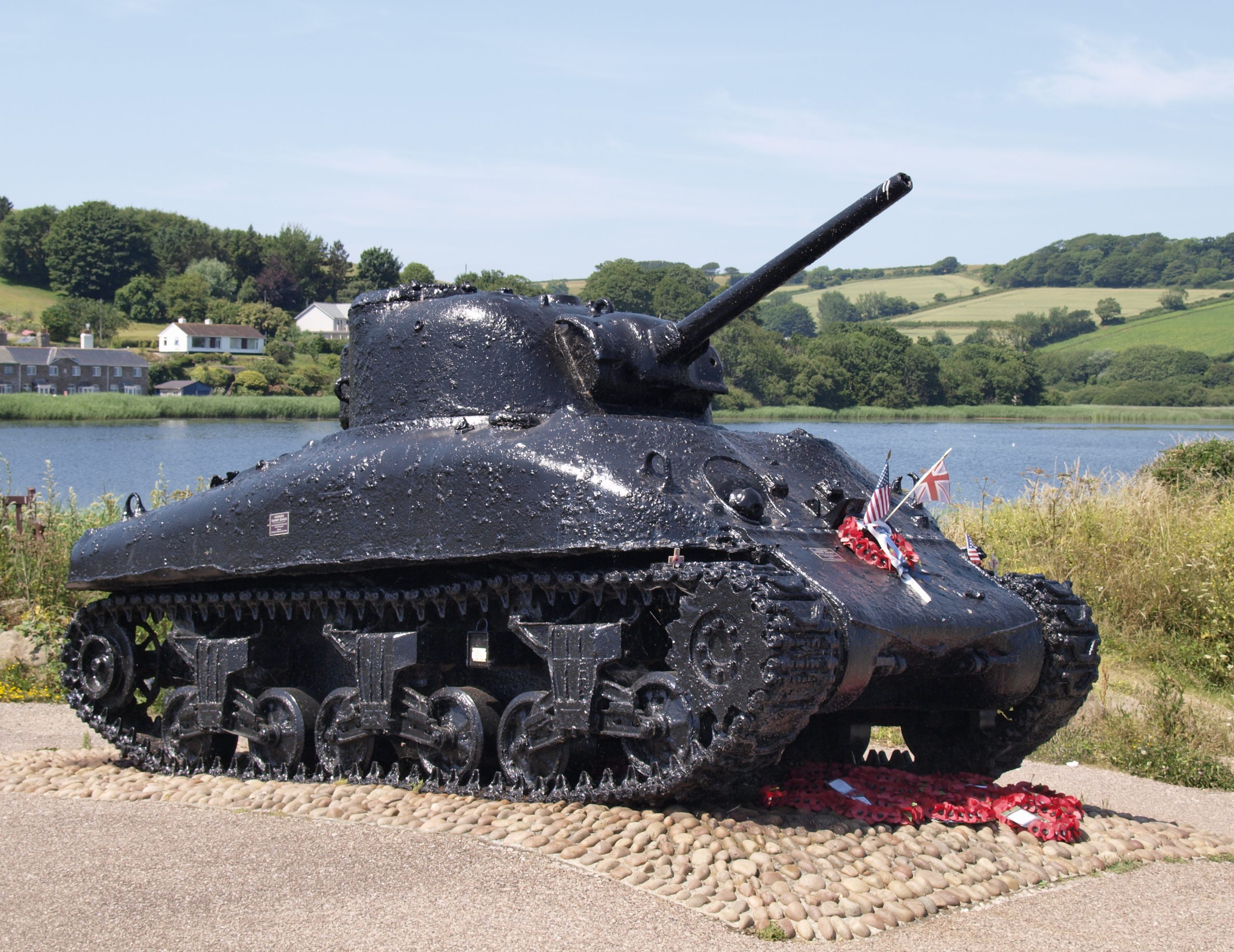
In the 1980s, local resident Ken Small had a sunken Sherman tank dragged up out of the sea and set it on the shore as a memorial to those who had lost their lives (pictured above). It remains there today.