
There is something about cooking over a campfire that simply cannot be recreated indoors – the smell of woodsmoke, the crackle of burning logs, the quiet focus that comes with preparing food outside.
I’ve been cooking over campfires for many years, first as a Forest School leader in Switzerland, later with children in the Peak District. In 2018, I spent a week working alongside Ray Mears, whose respect for fire craft left a lasting impression on me. Yet I’m always surprised by what a campfire does to people.
Children who barely speak begin chatting freely while stirring a pot or toasting bread. Tense, distracted adults gradually relax as the evening progresses around the flames.
Science supports what many of us feel instinctively: spending time in nature lowers cortisol levels and helps calm the nervous system. Campfire cooking adds another layer to that experience because it demands patience and attention. You cannot multitask around a fire in the way you can in a kitchen. You notice the wind, the heat of the embers, the rhythm of the flames. It becomes a form of mindfulness.
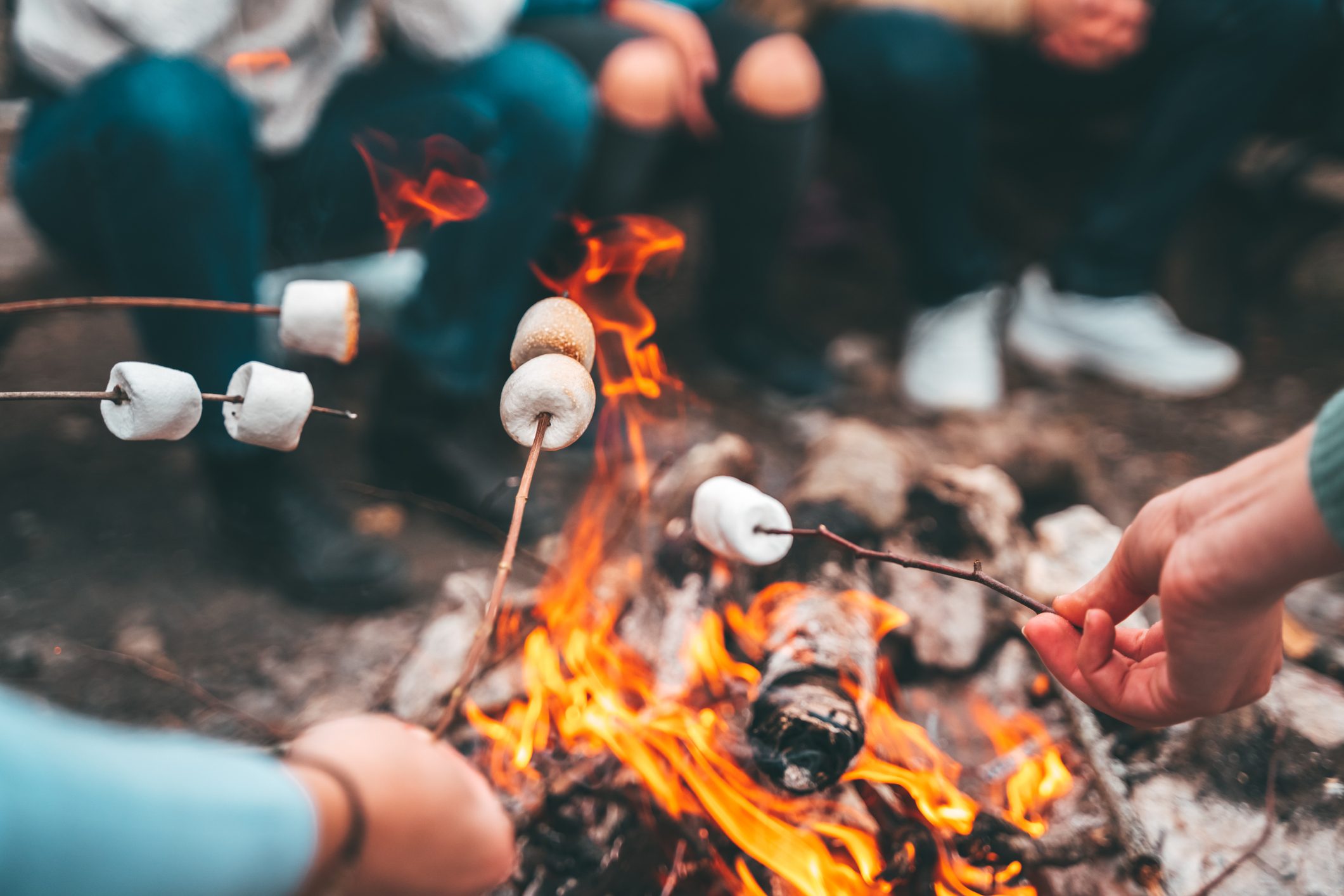
Of course, it’s important to enjoy fire responsibly. Open fires are prohibited in many places, including national parks in Wales and England, unless you have explicit permission from the landowner. During dry weather, especially, any small spark can result in enormous damage. Never light fires on tree roots, near overhanging branches or where vegetation is dry underfoot. For most people, a campsite or a fire pit at home is the safest place to learn.
The guiding outdoors principle is simple: leave no trace. One of the easiest ways to do this is by bringing cut firewood rather than taking it from living trees. Dry wood burns hotter and cleaner and produces far less smoke, which also means that your food tastes better. At the end of your time at the fire, make sure it’s fully extinguished: mix water thoroughly through the embers rather than simply pouring it over the top. Once everything is cool, scatter the ashes and take every scrap of rubbish home with you, including food waste that could harm wildlife.
The secret of campfire cooking is patience. Cook on embers not flames, which leap and scorch unpredictably; glowing embers provide steady, even heat. A good fire takes time to build, but that’s part of the experience.
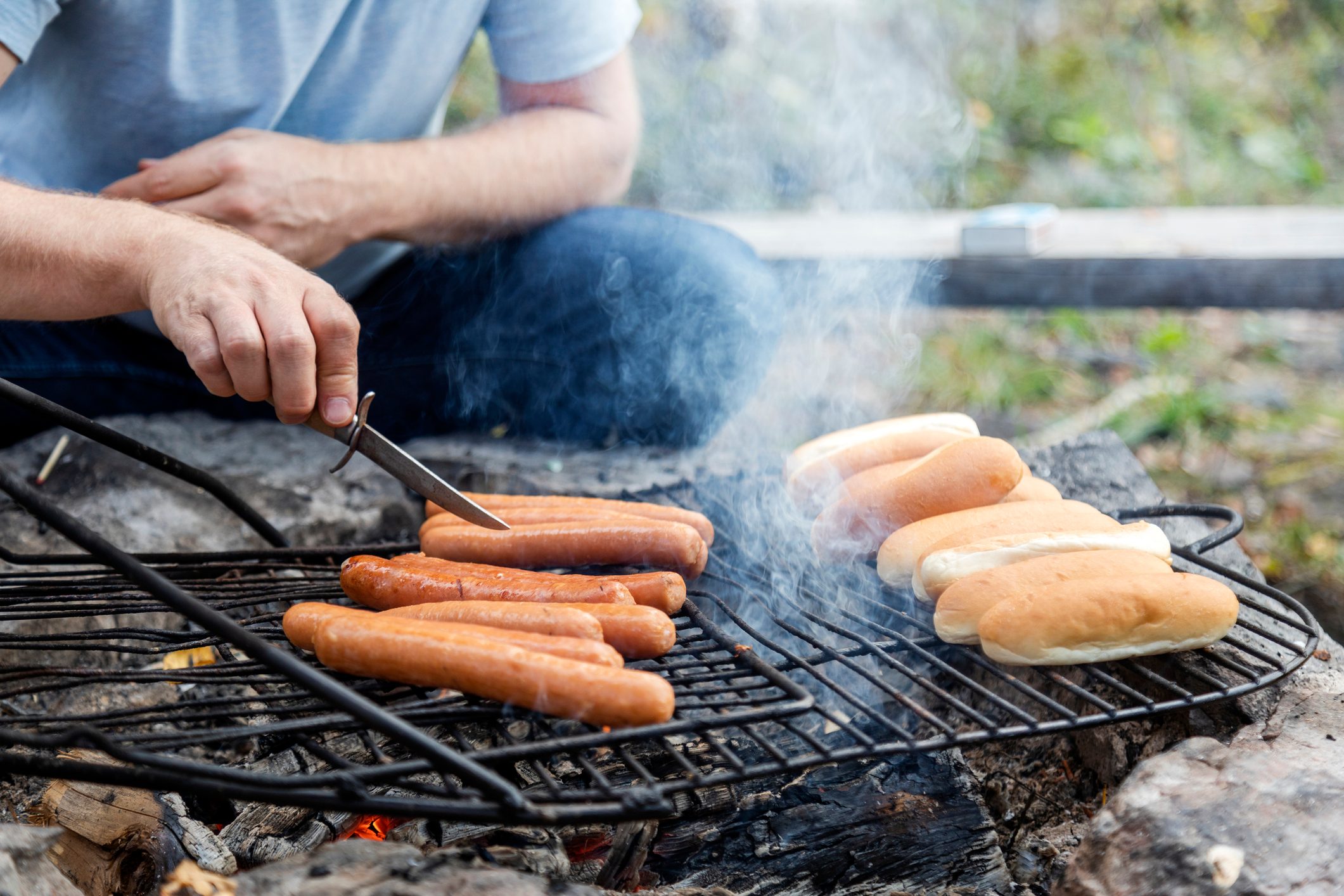
Sausages are always a hit, but make sure meat is piping hot all the way through before eating. I score sausages lengthways before cooking to ensure heat is distributed evenly.
When your feast is finally ready – smoky, crisp-edged and eaten outdoors with cold hands and warm faces – it tastes better than almost anything else.
What are the laws around campfire cooking outdoors?
Seasonal bans and local by-laws may prohibit or heavily restrict open fires in specific areas in Scotland. They’re also strictly prohibited and illegal on most public lands in Northern Ireland.
Words by Emma Hookey
