
If you unfortunately missed out on seeing the once-in-a-lifetime total solar eclipse recently, don’t despair. This Friday marks the occasion of another eclipse, but this time it is the moon that you’ll be looking to the sky for.
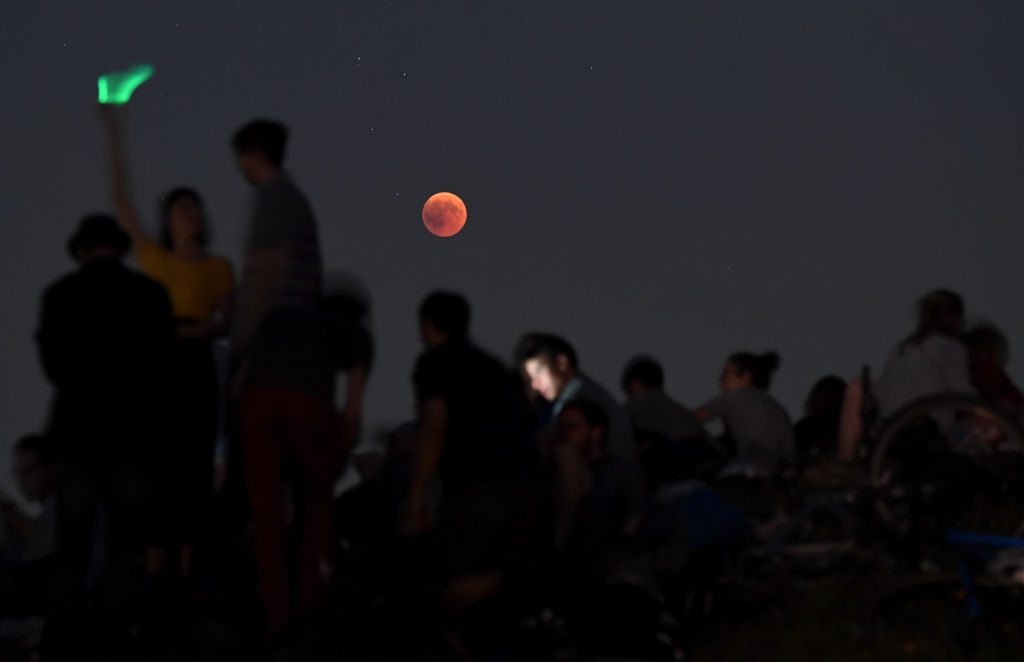
The Earth’s shadow is expected to cover more than 96% of the moon’s surface, creating a deep dark colour. This is known as a blood moon, which isn’t quite as dramatic as it sounds.
The eclipsing effect causes the moon to take on a dark red, blood-like tone. And unlike the solar eclipse, this is perfectly safe to look at with the naked eye. It is also a much longer experience, slowly unfolding across a few hours.
Read on to see how to watch the eclipse and find out why exactly the moon takes on that shade.
When is the eclipse?
Currently, the eclipse is expected to take place across 27 and 28 August. While it will be visible in both Europe and the US, those in America will get an overall better viewing experience.
The eclipse officially begins at 12:34am GMT on the 28th (9:23pm EDT on the 27th). You will see the eclipse reach its peak at 4:12am GMT (12:12am EDT) on the 28th.
Finally, the eclipse will come to an end at around 7:01am GMT (3:01am EDT).
The next eclipse of this kind won’t be until New Year’s Eve 2028 so it is worth getting outside to view this one.
What is a blood moon eclipse and what causes it?
Technically, this isn’t a full blood moon as it won’t be completely covered by Earth. However, it is so close to a full eclipse that you’ll get most of the effect.
A lunar eclipse occurs when Earth is directly between both the moon and the Sun. When this happens, Earth completely blocks the light coming from the Sun. This casts a shadow on the moon, which makes the moon appear far more dim and, if you’re lucky, turns the surface of the moon into a striking red colour.
This colour occurs because the light that is illuminating it must pass through Earth’s atmosphere. This causes blue light to scatter and bend red light toward the moon.
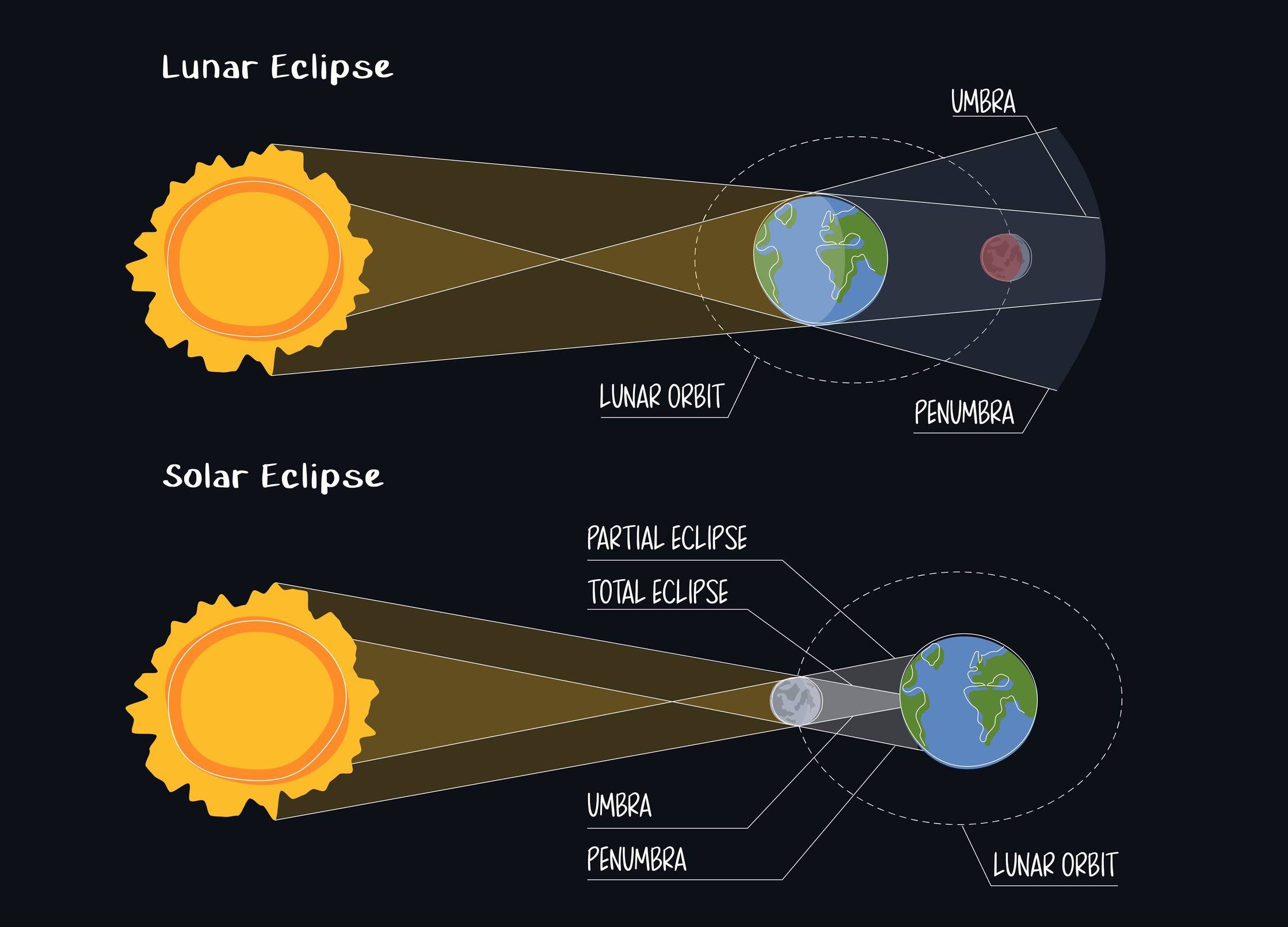
This colour can change in intensity depending on where the moon is in Earth’s shadow. The moon will appear a deeper red colour when it is in the darkest part of shadow.
If you were an alien stood on the moon, Earth would block your view of the Sun in this situation. Unfortunately, other than a few lucky astronauts, none of us will see it from this way around.
How can I watch it?
Unlike the solar eclipse, lunar eclipses are perfectly safe to look at. That means you can simply head outside and look straight up at the moon. Of course, you’ll benefit from a few factors.
A telescope or pair of binoculars will vastly improve your viewing experience, although you will still be able to make out the effect with your naked eye.
It will also help to get yourself somewhere more remote. If you are in the central of a busy urban area, light pollution can make it more challenging to make out the eclipse in the sky.
How rare is a total lunar eclipse?
A total lunar eclipse, or a blood moon, aren’t particularly rare in the grand scheme of eclipses.
In fact, most types of eclipses will happen frequently throughout your lifetime. However, these aren’t always going to be fully visible from every part of the world.
For example, the reason the solar eclipse on Wednesday 12 August was so rare was that it was the closest parts of the world had come to a total eclipse in an incredibly long time.
Both solar and lunar eclipses happen frequently, but their intensity varies depending on location and year. This upcoming blood moon happens fairly frequently.
Each year, we get a few solar and lunar eclipses. Total solar eclipses happen every couple of years, and the same goes for total lunar eclipses, occurring every couple of years.
