
And just like that, the British summer has ended. This weekend marks the all important date where the clocks go back. That means sunset will move forward an hour, giving you a lovely extra hour in bed.
With this change, the British public will enter Greenwhich Mean Time. But why do we do this? And when exactly does the change kick in? Read on for a detailed analysis of the clock changes in the UK.
When do the clocks change?
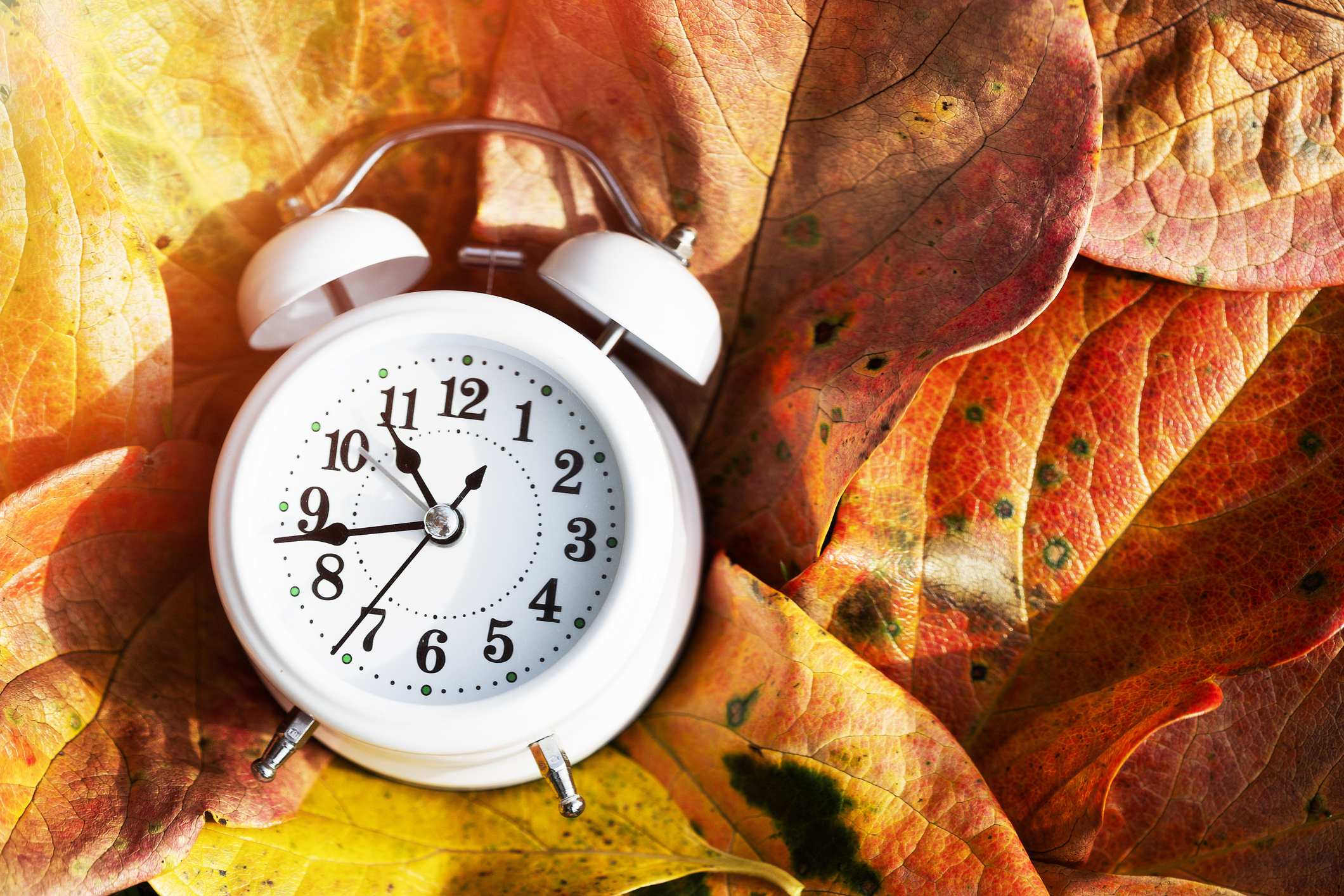
Mark your calendars, the clocks will go back an hour on Sunday, 25 October at 2am BST. This means an extra hour in bed, perfect for a relaxed Sunday.
The clocks won’t then change again until Sunday 28 March next year.
Why do we change the clocks?
We don’t necessarily need to change the clocks, but it is a behaviour that we have been doing for years now. So why do we do it? Well, it's all thanks to a policy brought about years ago.
The policy was first introduced on 17th May 1916 in an attempt to save fuel, namely candles and coal, during World War One. Daylight Saving Time (DST) became permanent when parliament passed the Summer Time Act, which became known as British Summer Time (BST).
The campaign to use BST was first started in 1907 by a British builder called William Willett from Kent who wanted the country to make the most of the daylight hours in the summer months and save vital fuel. He wrote the pamphlet 'The Waste of Daylight' arguing the case for DST. Willett at first wanted the clocks to be changed by 20 minutes every Sunday in April and then reversed by 20 minutes on four Sundays in September, however this was revised to the simpler one-hour change that we know today.
Sadly, Willett never lived to see the passing of the Summer Time Act as he died of influenza in 1915.
DST has since remained to help people make better use of the daylight hours – however, it could be argued that it is more useful to some people more than others.
In 1941 during the Second World War, an emergency British Double Summer Time (BDST) was used by Britain to help with fuel shortages. This saw clocks put forward two hours ahead of GMT until the end of summer 1945. However, following a harsh winter in 1946, BDST was used again in summer 1947.
Do all countries change their clocks on the same day?
For the vast majority of European countries, clocks will go back at the same time this Sunday. However, that doesn’t mean it is the same all around the world.
In Asia, Oceania, South America and Africa, there are only actually a few places that follow DST. Egypt, for example, ends DST on Friday 30 October.
In North America, the clocks go back on the first weekend of November.
