
The great bustard is an unusual creature. Not only is it the largest flying bird in the UK, but it has also had its own brush with extinction. Now, in a vulnerable status around the world, the species has become heavily protected.
A once dominant creature, numbers of great bustards decreased over the years due to hunting, their eggs being collected and changes to farming which reduced the open landscapes that they thrive on.
While they can be found in numerous places around the world, there are now around just 50 to 55 of them in the UK, most of which can be found on Salisbury Plain in Wiltshire, an area managed by the Great Bustard group.
"The Great Bustard is Globally Endangered (IUCN and Birdlife). It is the only bird in the UK which is Globally Endangered. It may be noted species such as the Giant Panda and Snow Leopards are not classed as Globally Endangered and have a lower conservation status," David Waters, the Executive officer of the Great Bustard Group told BBC Countryfile Magazine.
"Great Bustards were hunted to extinction by Victorian ornithologists wanting specimens for their collections."
One of the most notable things about these creatures is their size. While females look perfectly normal, the males can grow to be between 9-16kg on average, with one recorded height being 21kg – the record for the heaviest UK bird.
Along with their size, males are hard to miss. They have a line of bristle-like feathers running down their bill. They also utilise a unique display during mating season, inflating themselves into a spectacular white puffy display.
Surprisingly, the species operates in a polyamorous mating system. The most dominant males mate with multiple females but take no part in parental care whatsoever. Females on their own incubate the eggs, nesting in shallow scrapes well camouflaged among the grass.
"The first release of Great Bustards was in 2004, they successfully bred in 2009 and have bred every year since," Waters said.
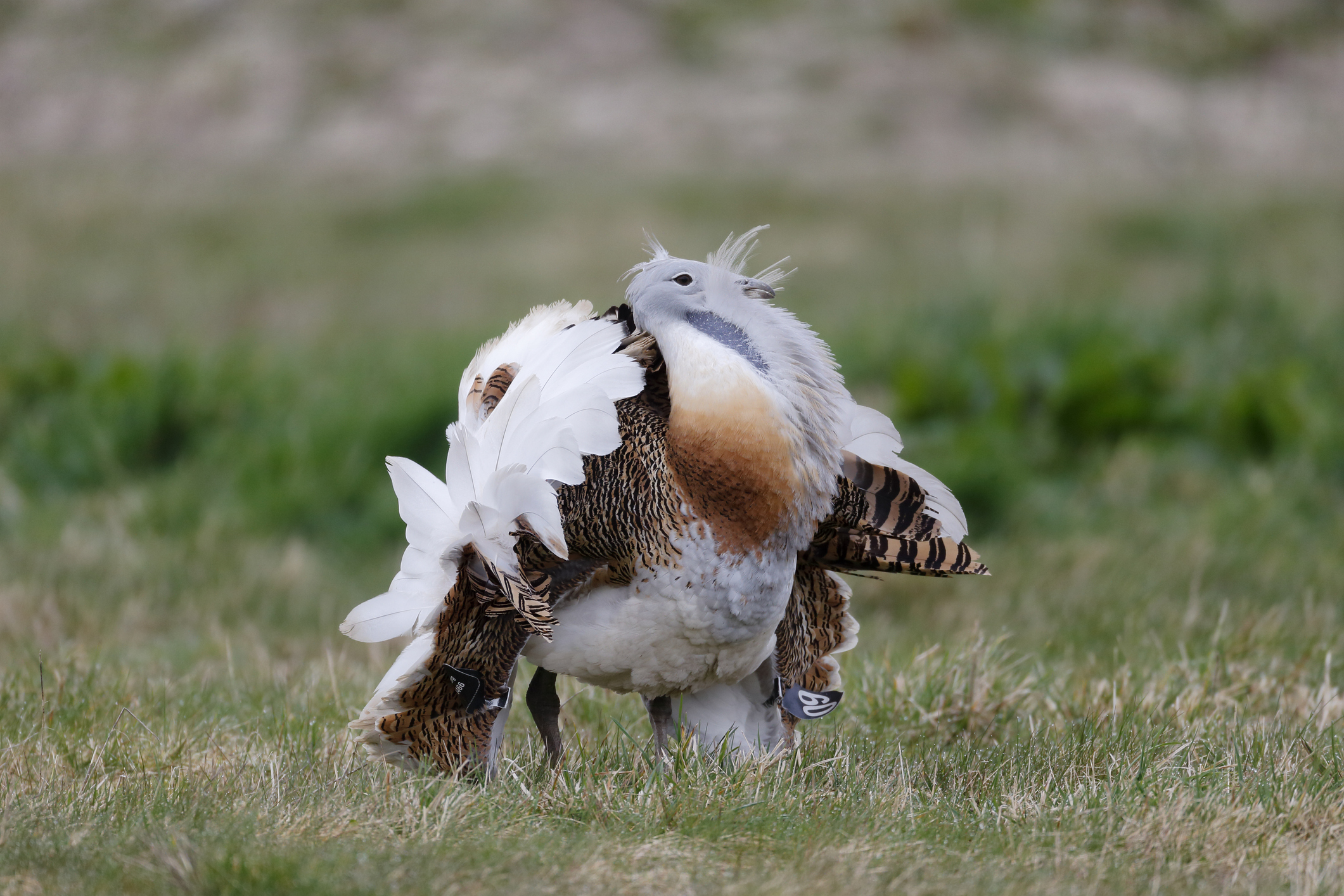
Females, on the other hand, are much more subdued. They have a more camouflaged coat which helps to keep them safe.
Part of what drove their huge reduction in numbers is their need for space. They thrive in open grasslands, rolling farmland and large plains. It likes to be able to roam freely and keep an eye out for predators.
The ones found in the UK seem to have no interest in migration, settling peacefully into the site that they are found on. They live surprisingly long lives for birds, with some surviving past 20 years. That means some females will partake in multiple mating seasons and dominant males will produce swarms of children.
Despite their stranger tendencies around child-raising, they operate in a large social structure, especially in the winter, gathering in groups called droves.
In the UK, there is a clear push to increase their numbers, slowly pulling the Great Bustard away from extinction.
