
There’s a reason we eat cows, pigs and chickens and not wolves, tigers or lions.
As a rule of thumb, animals that eat plants are tastier than those that eat meat. There are some exceptions to this rule - take salmon, for example, they are carnivorous yet very tasty - but, on the whole, humans tend to eat herbivores or omnivores rather than carnivores. Why is that? Well, there are several different factors...
Meat quality
The meat obtained from herbivores is generally fattier than that obtained from carnivores and, as we all know, fat equals flavour.
Typically, carnivore meat has an overly ‘gamey’ flavour that, while delicious to some, is rather unappealing to the masses. This is because their fat absorbs strong, pungent flavours from the wide variety of animals they consume.
The meat from carnivores is also quite tough and stringy, largely as a result of their heavy muscle usage and high concentration of red muscle fibres.
It can be riddled with parasites too. Trichinosis is a parasitic infection that can be caught by eating raw or undercooked meat containing Trichinella worms, which form cysts in muscle tissue and lead to serious illnesses. These worms are particularly prevalent in bears and wild boars.

Another big factor that dissuades us from eating carnivores is the risk of bioaccumulation of toxins/pollutants. As they’re higher up the food chain, carnivores accumulate a higher concentration and wider diversity of parasites, pathogens and dangerous chemicals from their prey.
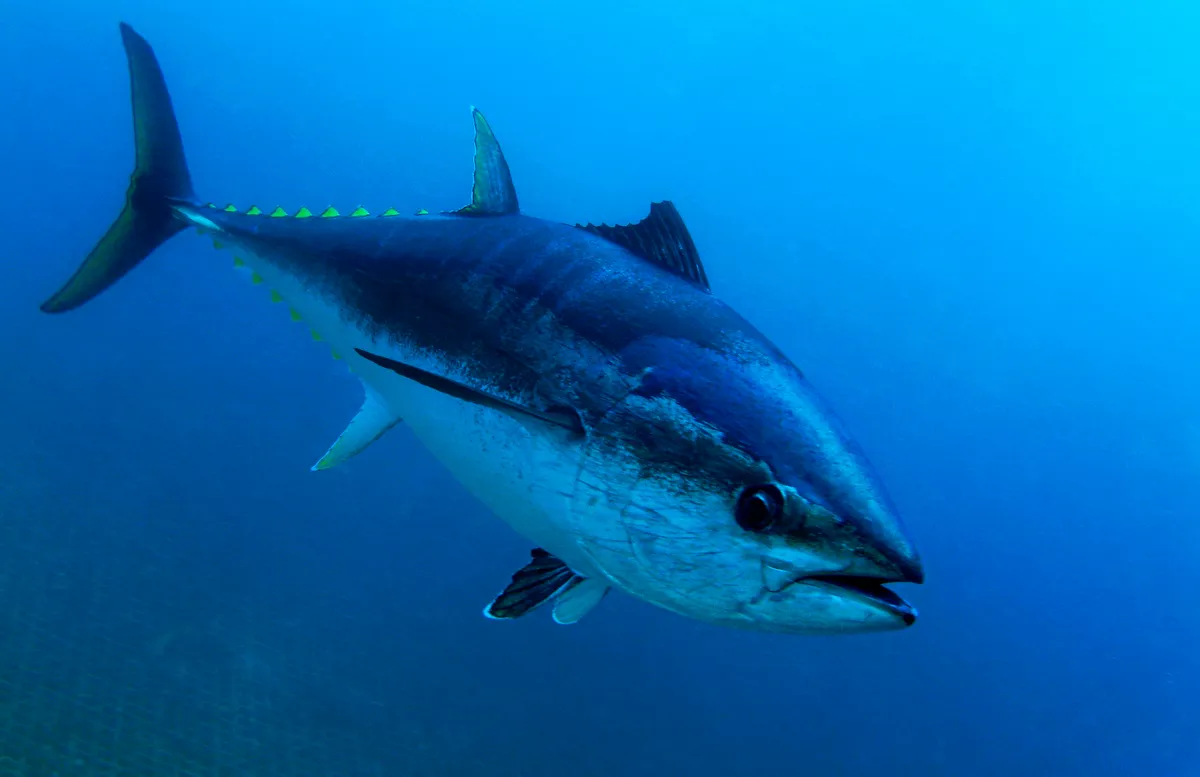
For example, tuna consume vast quantities of smaller fish and zooplankton, which themselves contain mercury, microplastics and other industrial pollutants. It’s for this reason that people are advised against eating multiple cans of tuna regularly; not only is it expensive, it also increases exposure to nasty, bioaccumulated pollutants like mercury.
- Wolves versus wild cattle – the story of the battle to rewild Britain’s countryside
- Should Britain be eating more goat? Why this common farmyard animal could be a more ethical alternative to beef
Cost of production
To raise animals for meat you need to feed them, and it’s a simple fact that plants and grains cost far less than meat. If you wanted to farm carnivores, you would need to farm another animal for them to eat, which becomes increasingly inefficient the further up the food chain you go.
However, it is worth noting that herbivorous animals bred for their meat - cows, chickens and pigs, for example - haven’t always been fed a completely vegetarian diet. In order to boost their protein intake and encourage faster growth, feed was sometimes supplemented with animal products, such as meat scraps, bone meal and blood meal.
Historically, cattle in the UK were fed rendered animal protein in their commercial feed. This was banned in 1988 in order to control the spread of Bovine Spongiform Encephalopathy (BSE) or ‘mad cow disease’.
Further regulations were introduced in 2001, following the devastating Foot and Mouth disease outbreak, banning cows, chickens, pigs and other livestock from being fed any kind of meat, including bone meal, as well as kitchen scraps.
That said, some non-ruminant livestock are still fed some DEFRA-approved animal proteins, such as specific insect meals or fishmeal.

- "Foot and mouth devastated rural Britain. It could happen again" John Craven on the crippling effect of the disease, and its potential resurgence
- How scaremongering about the cattle feed additive Bovaer is leading to people pouring gallons of milk down the toilet
Dangers of domestication
It’s not only prohibitively expensive to feed and house carnivores, it’s dangerous too. Just imagine trying to corral a pride of lions into a new enclosure - one wrong move and the tables would suddenly turn, with you becoming dinner.
Not all carnivores are dangerous to humans, though. In fact, there’s an argument that some herbivores can be just as deadly, if not even more so. Cows, for example, cause an average of four to five deaths in the UK per year.
It’s a common misconception that herbivores are inherently more docile than carnivores. Yes, a cow might look a lot more approachable than a lion in most contexts, but they - and other herbivores - are wildly unpredictable and easily agitated, especially while they’re protecting their offspring.
The biggest danger of domesticating carnivores may not be the risk of them eating us, but rather them becoming ‘disease reservoirs’ that could potentially harbour the next global pandemic.
A study published by the University of Cambridge in 2021 found that carnivorous animals lack key genes needed to detect and respond to infection by pathogens. This defective immune response causes them to harbour diseases as asymptomatic carriers, allowing pathogens to mutate within dense farming conditions and potentially jump to humans.
Farm-raised vs wild
While most would generally agree that herbivores taste better than carnivores, it’s worth noting that this is somewhat of an unfair comparison. Typically, the herbivore meat we consume is farm-raised; it’s not wild like the majority of carnivore meat we eat is.
Because farmed animals have constant access to food and face less threats from predators - therefore requiring less intense daily movement - their meat develops better fat marbling, resulting in a less tough and, arguably, tastier eating experience.
That said, taste is incredibly subjective. Some prefer fatty, farm-raised meat, while others prefer the lean cuts they’ve harvested following a wild hunt. Ultimately it’s a matter of opinion - the majority of meat we consume may come from farm-raised herbivores, but that doesn’t necessarily mean it’s the tastiest.
Exceptions to the rule
There are, of course, exceptions to the ‘rule of thumb’ outlined above.
You need only look at a fishmonger’s stall to realise that a lot of the fish we eat day-to-day are actually carnivores. Salmon and tuna are both meat eaters, as are haddock and cod. Crustaceans like prawns, crabs and lobsters eat lots of meat, too - as well as any other detritus they can find on the seafloor.
In the UK, salmon, cod, haddock, tuna and prawns (all meat eaters) account for roughly 80% of all the seafood eaten nationwide.
In the southern US, alligators are prized for their meat, which reportedly tastes like a cross between chicken and fish. Elsewhere in the US, particularly Alaska, black and grizzly bears are hunted for their meat. This meat needs to be cooked thoroughly in order to avoid Trichinosis, but when it is, its flavour profile is said to fall somewhere between beef and pork, but with a distinct ‘gamey’ profile.

Other carnivores hunted for their meat include whales, seals, sharks, dogs, snakes and so on. This list is endless and contains many animals that are critically endangered and legally protected from hunting. These restrictions don’t always stop such animals from being hunted and consumed, though.
The wide variety of animals consumed by humans - including both herbivores and carnivores - highlights the remarkable diversity in our diets.
While it may be true that we in the UK prefer farm-raised herbivore meat (farm-raised chicken makes up over 40% of the average UK person’s daily meat intake), we should appreciate this isn’t the case everywhere. Somewhere in Louisiana, US, there’s someone reading the headline of this article, shaking their head and tutting as they tuck into some cajun-spiced, blackened alligator.

