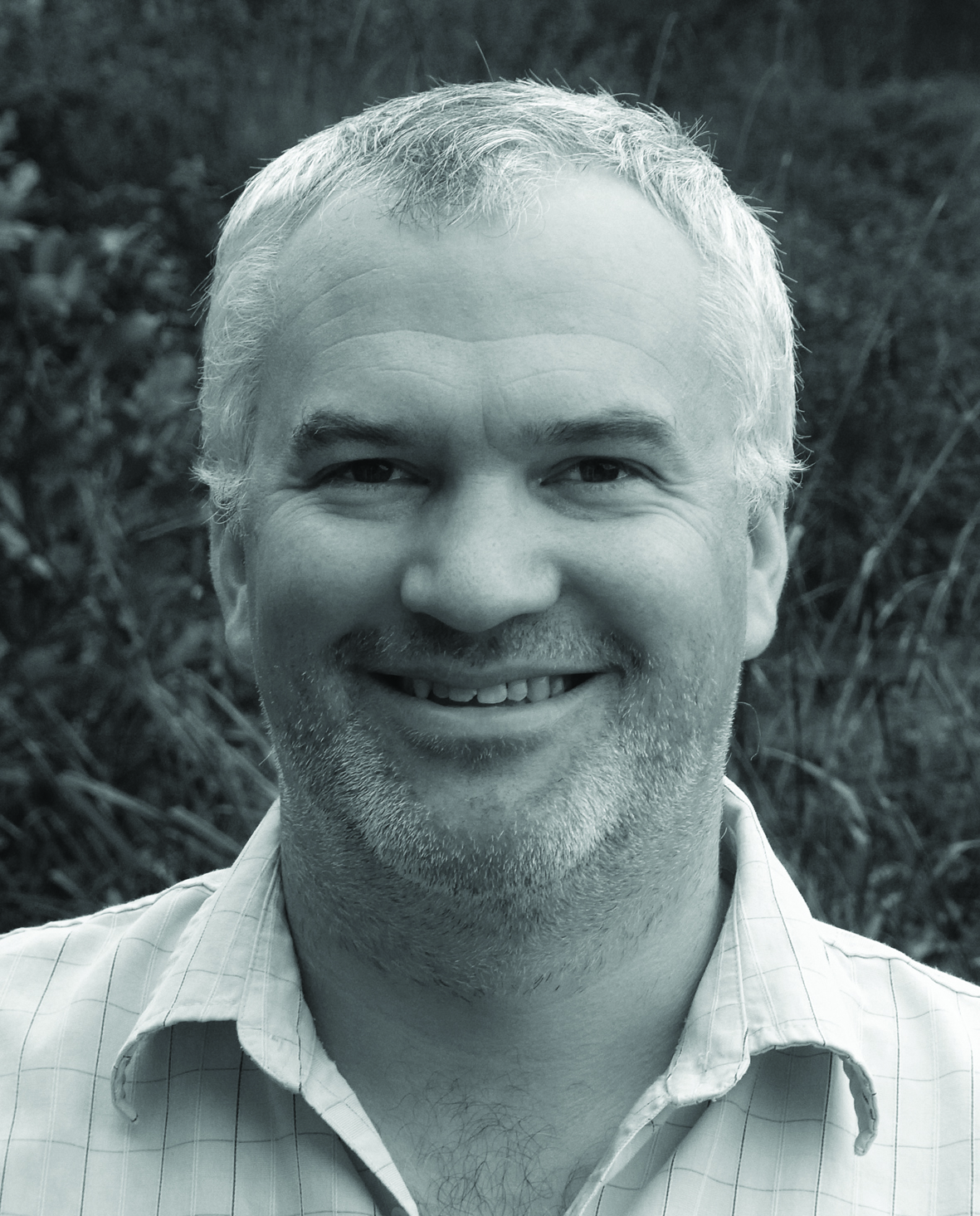
On being told that they had been bitten by a venomous snake, most eight-year-olds would panic. Not Nicholas Jubber; he was not terrified but disappointed by a diagnosis that contradicted his own. Nicholas had believed that the two small puncture wounds had been inflicted by a subterranean goblin – and that the pain that followed was the beginning of his own transformation into a monster.
- Screaming banshees, horse skulls and faery trees: eerie and downright creepy rituals and superstitions
- This monstrous hellhound is thought to have inspired Dracula – discover the legend of Barghest
This was the moment his young imagination had craved: an actualisation of all the drawings and games in which he had immersed himself.
“The skin on my leg was changing colour and there were blisters bursting out,” Jubber recalls. “And I thought, ‘I’m turning into a monster. I’m going to develop sucker pads or tentacles or fangs’. It was all very exciting.”
Instead, thanks to medicine and a non-fantastical cause (an adder bite), Nicholas would remain a human boy – but his childhood fascination for monsters never diminished.
“That experience tapped into this fascination that I already had and that illogical fascination for monsters has stayed with me ever since.”
Decades later, Jubber found himself on the slopes of Povlen Mountain in Serbia, where he sought the origins of another being known for inflicting puncture marks. Jubber ventured to a watermill close to the village of Zarožje that was said to have been the haunt of Sava Savanović, an 18th-century vampire who reputedly murdered millers and drank their blood.
As part of a worldwide journey described in his latest book, Monsterland: A Journey Around the World’s Dark Imagination, published earlier this year, Jubber challenged himself to spend a night alone in the mill – a test of nerve that challenged his resolve through eight sleepless hours of darkness.
The power of imagination, intensified by the location and the chilling stories that led him there, amplified the sense of terror but also aided his understanding of how such myths evolve.
A history of monsters
As Monsterland details, it’s a fundamental tendency of human nature to seek answers and explanations.
“It’s very much about looking at monsters as a mirror to human history and that connection between human societies and monsters,” Nicholas tells me on a blustery walk on the Dorset coast.
“If you go back to Babylonian literature, they have these creepy godlike figures, or there’s the ancient Egyptian gods with their animal heads.
“But what monsters tell us is how human society develops through time,” Jubber explains. “You see human society increasingly claiming control over the wild landscapes around us and becoming more confident.
“And so we start to bring those monsters down to our level and tell stories where we’re not worshipping them anymore – we’re slaying them. We’re hunting the dragons, the ogres and the trolls, the kraken of the sea.
“Even as we’re trying to tame the wild places around us, these ancient medieval societies are also fascinated by the wildness within us. And so you get these stories of shapeshifters, of people becoming wolves.”
All stories are tweaked in the retelling – whispers repeated with minutiae misheard, or facts adjusted for greater impact. Rumours might be started as a deterrent, preventing prying eyes from witnessing wrongdoing, or perhaps to perpetuate a personal grudge.
The witch trials that peaked in the 17th centuries, and which resulted in the execution of perhaps 60,000 people across Europe, were fuelled by such processes. Public fear was exploited, often leading to mob rule and flawed justice.
- The dark history of witches and the infamous witch trials: How thousands were executed in Europe's bloody pursuit of sorcery
- I spent 3 days hiking England's answer to the Salem witch trials. It was as creepy as it sounds
Such patterns remain prevalent, with minority groups still demonised and persecuted. If we dehumanise people, so we cease to feel empathy for them. Hate can be an easier emotion to maintain than compassion.
With the age of science and the enlightenment, there was a feeling that nature and landscape had been conquered.
“The next barrier to fret about was death itself,” adds Jubber. “So you have the monsters of the undead, zombies and the ghosts and the wonderful vampire stories that have never stopped since. And that became the dominant strain in monster stories from the 20th century until now.
“You also have the stories of the mad scientists creating their warped creations, from The Island of Dr. Moreau by HG Wells in 1896 through to Godzilla in 1954. And Godzilla, of course, is connected with the trauma that Japan went through in the Second World War.”

Legends of dragons
In Monsterland, Jubber ventures into Bavaria to explore the dragon legend and to witness the festival of Drachenstich – ‘dragon stabbing’ – which today has as its centrepiece a 15m-long robotic beast.
Much like an instinctual recoil to spiders or snakes, different cultures conjure similar fantastical beasts because they represent properties that we envy but fear: the power of flight, an ability to breathe fire, a body encased in impenetrable armour.
A dragon is a manifestation of humankind’s ultimate adversary. “My favourite monsters are probably dragons. I think of them as being really our human imagination in different ways across the world,” says Jubber.
The origins of myths and legends may also form retrospectively. Take Blue Ben, a dragon said to have lived on Putsham Hill in Somerset. He would, went the legend of uncertain origin, soar across the Quantock Hills and, having breathed fire, cool himself down in the shallow coastal water.
One day, he got stuck in the thick squelch of mud and was unable to escape, leading to his demise. In the early 19th century, quarriers working near Kilve uncovered the skull of an ichthyosaur, a long extinct marine reptile – and it was attributed to Blue Ben.
But what came first: the story of Blue Ben or the discovery of the skull? It is a classic dragon-and-egg situation.
A popular theory holds that legends of dragons were sparked by discoveries of the fossils of prehistoric creatures, and there is likely some basis to this. The dragon is a monster that crosses continents and civilisations, in varying yet familiar form, perhaps reflecting a shared innate fear.

Stories of selkies and mermaids
In Monsterland, Jubber also journeys to Scotland’s Orkney archipelago to explore a story of shapeshifters. “There’s an island called Sanday where a 19th-century folklorist called Walter Traill Dennison lived.
“He collected a lot of wonderfully ethereal stories of selkies. It’s very questionable whether you could talk about them as monsters, but it’s part of challenging the concept of what is a monster.”
The folklore of the northern isles is liberally sprinkled with such creatures, with many islands having their own unique take on the selkie myth. “It’s the idea that you have these seal creatures that can shed their skin when they come to land and turn themselves into human form,” adds Jubber.
Here he relates the folk tale, earlier recorded by Dennison, of ‘The Goodman o’ Wastness’. One moonlit night, so the story goes, a young farmer became mesmerised by the dance of brown-haired figures on the beach. He stole one of their furs, forcing the owner to return with him to his home.
There she bore him seven children in seven years, before one of them revealed where the man had hidden her fur. The draw of the sea was so strong that she was unable to resist, even though it meant leaving her children behind.
The children born of human and selkie are sometimes described as having webbed fingers – a trait said to have been shared by members of the MacCodrum clan of the Outer Hebrides. They believed the family had selkie genealogy and refused to hunt or harm seals.
Selkies are not restricted to the northern isles of Scotland: similar stories are found in Icelandic and Faroese folklore. But more common elsewhere in the British isles are merfolk – beings with a similar shapeshifting ability, swapping fishtails for legs.
Such legends typically involve a tangle of attraction and longing. Consider the mermaid of Zennor, who wooed a young Cornishman by the name of Mathey Trewella in a tale recorded by 19th-century folklorist William Bottrell.

Tales of Cornish giants
Bottrell also wrote of Cornish giants, and it was these tales that drew Jubber to the south-west, which is where Monsterland starts. “Being at the edge of England, Cornwall has many stories projected onto it. You have the stories of Jack the Giant Killer, of the Giant Cormoran of St. Michael’s Mount.”
Jubber found himself looking upon a landscape that was formed not just by giants but also of them. “One of the stories that I focused on was the story of Bolster the Giant, who had a huge head like a slab of granite and a beard so unruly that the seafowl would nest in it when he’s sleeping.
“The granite hills of Cornwall lend themselves to these ideas of imagining a giant there. Humans couldn’t have put up sarsens and dolmens, so did giants do it?”
The story sees Bolster bringing terror to local villages and farms until he falls in love with a wandering saint named Agnes. “He begged her to live with him, but Agnes outwits him. She challenges Bolster to prove his devotion by filling a small hole in the nearby hillside with his blood.
“He pricks himself and his blood starts filling the hole. But the hole goes all the way down to the sea and so his blood pours out of his arm, pours out of his legs, pours out of all of him and he collapses and becomes part of the landscape.”
The Christian saviour St Agnes is still remembered in the name of the town on Cornwall’s north coast,
while the roots of Cornish giants remain embedded within the landscape and culture of the county, just as Balkan vampires and Orcadian selkies do in theirs.
Monsters, in whatever form, are vital components of folklore and history, uniting communities through festivals, traditions and shared fear, while often leaving a permanent etymological mark on the landscape.
“Monsters aren’t real,” writes Jubber. “They just need somebody with imagination enough to whisper them to life.”