One of the stranger centenaries commemorated this year is that of the disappearance of Agatha Christie. Making headlines around the world, the episode sucked in huge numbers of police officers and volunteer searchers, and even Sherlock Holmes’ creator Sir Arthur Conan Doyle. To an engrossed public, it was a mystery that seemed to have leapt from the pages of one of the Queen of Crime’s own books.
- "To travel by train is to see nature": The best Agatha Christie quotes from the Queen of Crime
- Famous writers' homes you can holiday in, from Roald Dahl's childhood holiday home to the Queen of Crime Agatha Christie's house
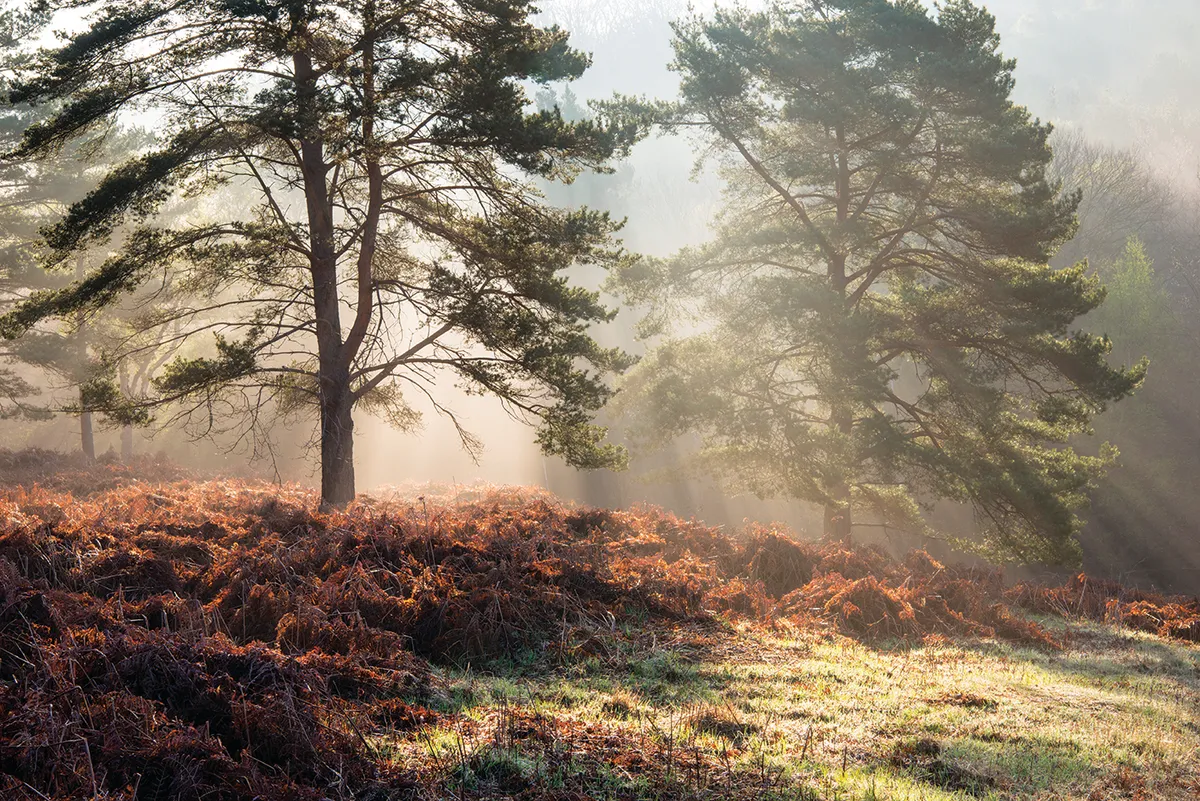
At 8.00am on Saturday 4 December 1926, a 15-year-old Romani boy called Jack Best discovered Christie’s Morris Cowley in bushes near a small lake at Newlands Corner, a beauty spot on the North Downs about 15 miles from the author’s home in Sunningdale, Berkshire. The car’s bonnet was up, its lights were on, and clothes from an open suitcase were scattered over the seats.
The police were alerted and foul play immediately feared. Relations between the writer and her husband, Colonel Archibald ‘Archie’ Christie, were known to be strained and, if a murder had indeed been committed, the police knew who their number one suspect would be.
They had him tailed by plainclothes’ officers and dragged the Newlands Corner lake, known as the Silent Pool, but found nothing.
Speculation as to Christie’s fate and whereabouts filled the newspapers and were the talk of the nation. The Daily News offered a £100 reward (over £5,000 in today’s money) to any reader who could to track the author down. An estimated 15,000 volunteers joined more than 1000 police officers and several spotter planes in the search for a body.
Conan Doyle went so far as employing a medium to locate her, but to no avail.
Happily, on 14 December, Agatha was found alive and well and having a whale of a time at the Swan Hydropathic Hotel in Harrogate, Yorkshire.

So why did the Duchess of Death disappear?
Agatha had left her home on the night of 3 December, kissing her sleeping daughter Rosalind and telling a member of her staff that she was ‘going for a drive’. Her mother had died in April that year, and she had recently been struggling with the plot of The Mystery of the Blue Train, a Poirot novel she later declared she had ‘always hated’.
Furthermore, her husband was having an affair with his secretary, Nancy Neele, and had asked Agatha for a divorce. On the night of the disappearance, Archie was with Nancy at a house-party in Godalming, which had understandably infuriated his wife.
Some of Agatha’s movements during her 11-day disappearance have since been revealed. After abandoning her car, she went into London where she visited Harrods department store, apparently enjoying the Christmas display there. She took a train to Harrogate and checked in at the Swan Hydropathic Hotel under the name Theresa Neele.
There she was spotted by Bob Tappin, a banjo player with the hotel’s resident band, the Happy Hydro Boys (though some accounts state it was the head waiter who recognised her). The local police were informed. They alerted Archie who raced up to Harrogate to reclaim his wife, who claimed to be suffering from amnesia.
Whether this was true or not, Agatha’s conduct was certainly very curious. She had made little attempt at disguise, and openly discussed the disappearance with other guests despite the fact that they had remarked on her resemblance to newspaper photos of the missing author. Even her false surname appears to be a clue – it was that of her rival for Archie’s affections.
Before her discovery, fellow crime writer Edgar Wallace had opined, ’The disappearance seems to be a typical case of ‘mental reprisal’ on somebody who has hurt her.’ Certainly, Archie spent a very uncomfortable time as prime suspect during Agatha’s disappearance.
However, others have speculated that her actions were brought on by a nervous breakdown or a ‘dissociative fugue’. Agatha’s autobiography doesn’t mention the event at all, so the cause is likely to remain forever a mystery.
Newlands Corner
Today, Newlands Corner remains a delightful spot at the heart of the Surrey Hills National Landscape and is home to a Discovery Centre and café. The enormous Swan Hydropathic Hotel is still receiving guests, though it’s now called the Old Swan Hotel.
It was used as a filming location in Agatha, a 1979 film by Michael Apted about Christie’s disappearance, with Vanessa Redgrave playing the troubled novelist.
Agatha and Archie divorced in 1928. He wed Nancy and she married archaeologist Max Mallowan and joined him on several expeditions to the Middle East, inspiring further famous Poirot stories…
Love a mystery? Check these out: