Enjoy a modern day treasure hunt by searching for geocaches around the UK. Our guide explains what geocaching is and how to do it.
What is geocaching?
Geocaching is a modern treasure hunt to find hidden geocaches using a GPS and a map.
Geocaching is often described as a way of ‘using billions of dollars of US satellite technology to find plastic boxes in the woods’.
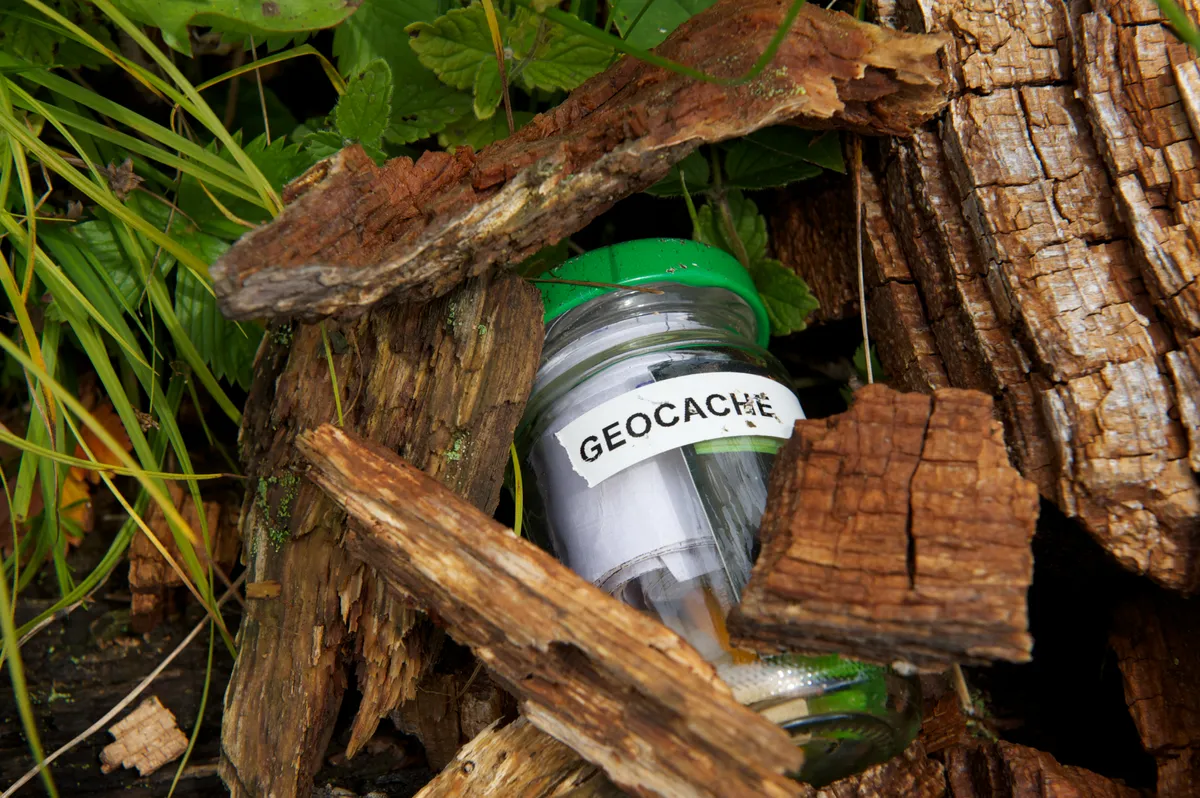
The word geocache comes from ‘geo’, meaning earth (think geography) and ‘cache’ meaning a hidden store of things. The geocache itself is normally a waterproof container, such as a plastic box that contains a logbook, sometimes a pen, and low-cost trinkets that can be exchanged for items of equal or greater value.

How do you find geocaches?
There are geocaches everywhere. We found our first geocache on the way home from school this winter. It was just 300m from our front door, tucked behind a fence on a public footpath.
With over 2.7 million caches globally, there’s bound to be a cache near you, wherever you live. Even tiny towns have one or two caches, so you won’t have to drag the kids up the nearest mountain to try it.
What is the reward of finding a geocache?
Your reward? Finding the cache – some are extremely difficult. You swap treasure – take something small, leave something small, jot your code name in the logbook, then enter your find onto the website.
Where did geocaching come from?
Prior to 2000, Global Positioning System (GPS) signals were only accurate for the military and government systems. Then the US government relaxed these ‘selective availability’ restrictions and allowed civilian access to its GPS satellites.
Dave Ulmer, a computer consultant from Oregon, immediately saw this as a great excuse for a high-tech treasure hunt. He buried a plastic container, containing a few items and a little cash, in his local woods then posted its coordinates on the internet.
From these humble beginnings, a worldwide phenomenon, which later became known as Geocaching, was born.
What equipment do you need for geocaching?
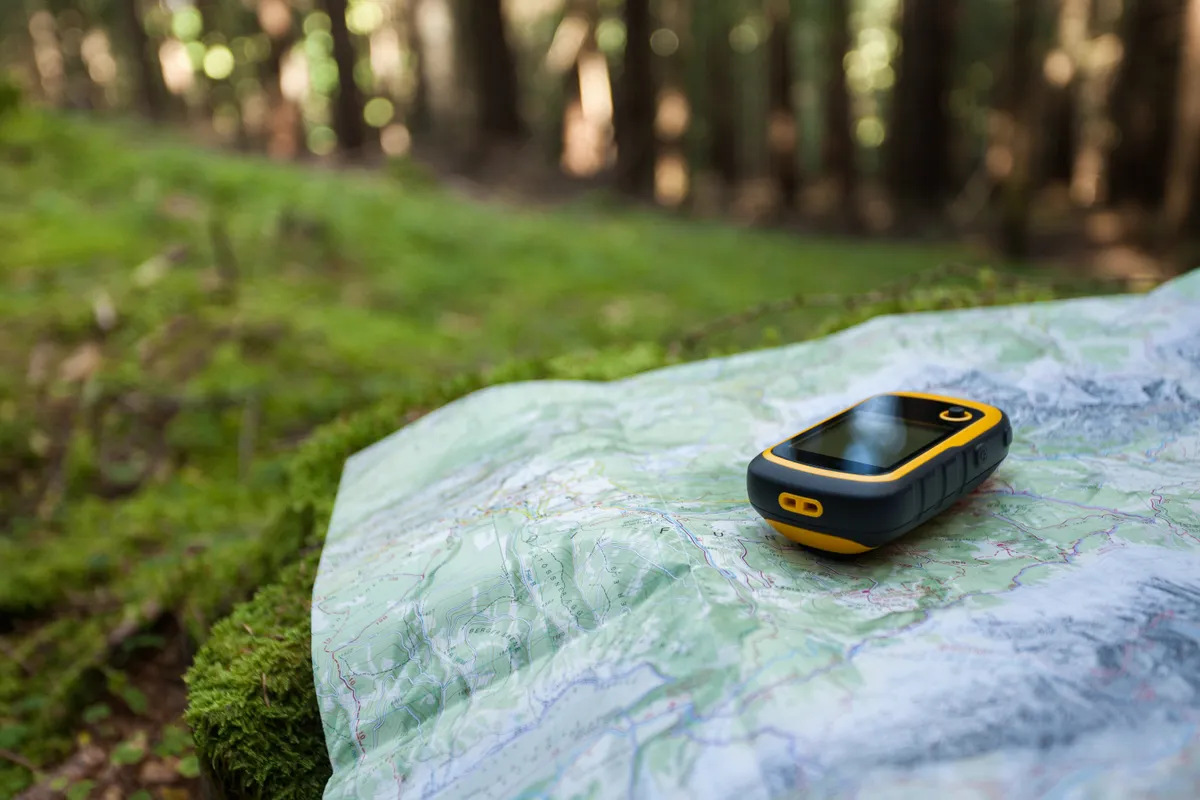
To embark on this exciting blend of virtual and real-world exploration, you will need a GPS activated hand-held mobile device, such as an iPhone, Android or Windows Phone. This will act as your navigation system.
How to go geocaching
To get started, grab a smartphone (or a GPS device), and a pen and download the free geocaching app or visit the website.
Next, sign up for an account and look for your nearest cache. You can pay for a premium service giving access to more caches, but this isn’t necessary for a casual user.
When you find a geocache, write your name in the log, record your find on the app or website – and that’s it!
What's the difference between geocaching and orienteering?
Although geocaching has been called high-tech orienteering, it’s very different. Orienteering requires competing teams to use a map and compass to follow set courses to multiple points.
Geocaching on the other hand, is non-competitive by nature, there’s no time limit to find each cache and they can be found by an individual or a group. Geocaching is refreshingly simple, even for the youngest navigators.
Where can you go geocaching?
Geocaching can be experienced in the most built-up urban environments and the wildest reaches of the countryside.
“I personally know two people who go geocaching on mobility scooters,” says Chris Warren of the Geocaching Association of Great Britain.
“It’s a hobby that can be achieved by most people, from wheelchair cachers to those who like the extreme side of the hobby – climbing trees or swimming in wild water!”
Some of my favourite ways to geocache are on a bike ride, walk or car journey. It takes a little longer to get anywhere but it can be a welcome distraction, especially with young children in tow.
You’ll find caches on cycle tracks, long-distance footpaths and even just off motorway junctions.
I tend to be opportunistic, looking for caches after I’ve planned a route. But it is possible to do it the other way round, planning a route around the geocaches along the way.
Will children enjoy geocaching?
I’ve found children between the ages of five and 12 enjoy it the most. Not only can it give them a sense of agency and achievement, they also get the thrill of using a smartphone that may otherwise be restricted.
Younger kids may need a little more guidance, and teens, even if they enjoy it, may never let it show, but there’s no harm in introducing them to it.