
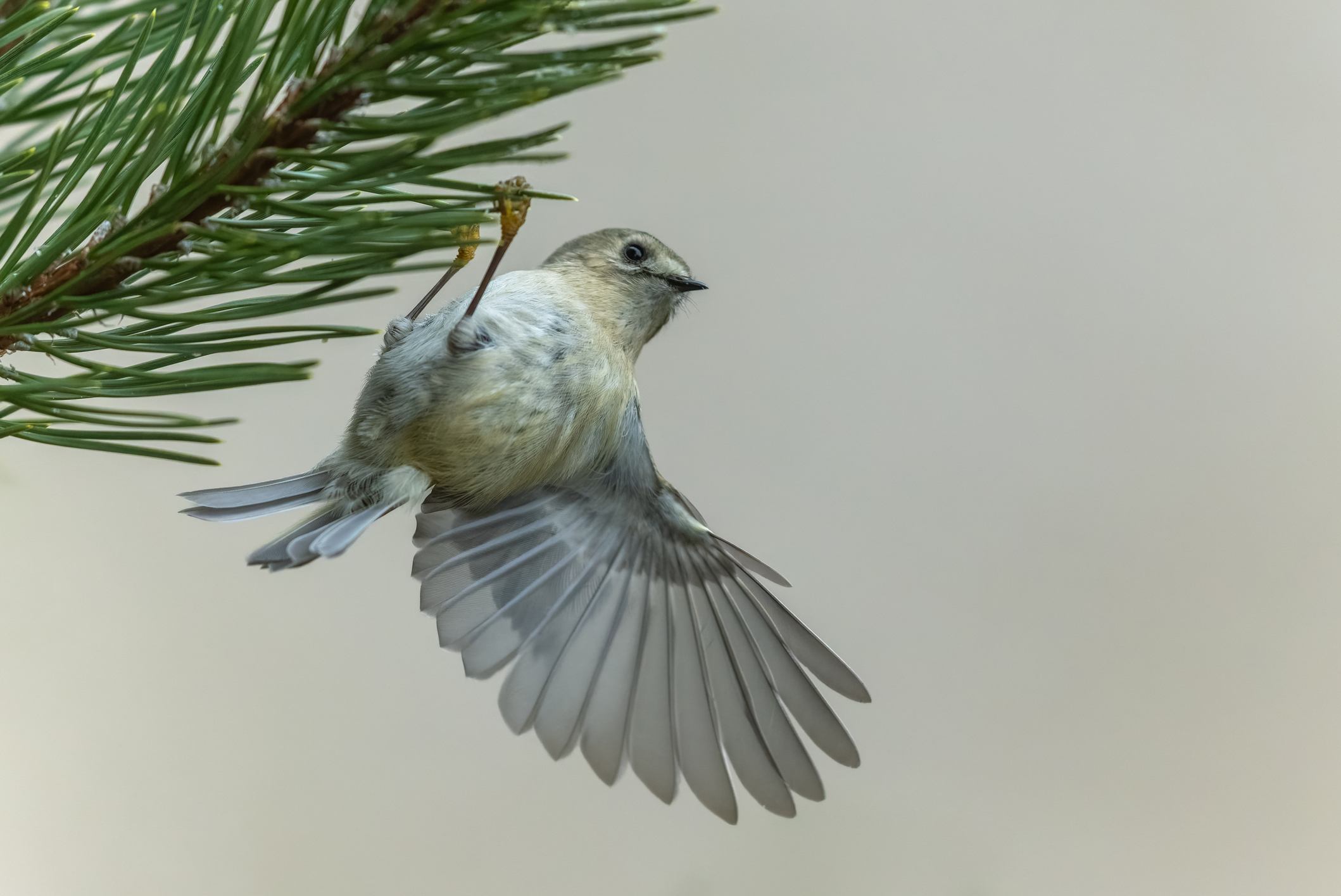
The goldcrest is the UK’s smallest bird. It is a similar size to a golf ball and is unbelievably light. Despite this, they are extremely active birds and are widespread across the whole of the UK.
In fact, the goldcrest makes the most of its size. It picks tiny insects and spiders from small needles and twigs, searching areas that larger birds just can’t reach. This also makes it easier for a goldcrest to find shelter within gardens, squeezing into a variety of tiny gaps.
You likely won't see one still for long. They flit rapidly between branches, utilising their tiny bills to hunt. In some cases, you’ll even see them hang upside down while searching foliages for food sources.
They are often just as hard to hear as they are to see. Due to their size, goldcrests emit a thin high-pitched call which can be difficult for humans to hear, especially if you have reduced sensitivity to higher pitches.
Despite their tiny size, a lot of goldcrests come to the UK in a large migration process. This typically starts happening in autumn, with particularly good opportunities to witness it in October and November.
Surprisingly, these migrating birds typically fly across the North Sea. They are usually found in coastal regions once they arrive in the UK.
How do they survive?
The goldcrest has a unique challenge. Due to its size, winters can be especially challenging. They can rapidly lose heat, especially in noticeably cold periods. A key part of their survival strategy is a constant supply of food to give them enough energy.
Most British birds survive the winter by storing up fat. This is just not possible for the goldcrest due to its size. In fact, a goldcrest can use up fat equivalent to roughly 20% of its body over night to survive.
One of the tricks they use to get around this is to trap heat in their wings. They fluff their feathers, trapping insulating air close to their bodies. They also find shelter amongst dense evergreen foliage. This can help them avoid wind and lower temperatures.
Particularly cold winters can be completely detrimental to their survival, wiping out large numbers of their population in one season.
