Interested in swapping crowded tourist spots for icy sea dips, hidden glens and wallabies in the woods? Maybe your next holiday should be to the Isle of Man, where there are surprises at every turn.
Winter sea dips and saunas on the Isle of Man's Ramsey Beach
I’m awake. Very awake. It’s early morning and I’m neck-deep in the sea off the Isle of Man’s north-east coast. The rain is steady, the swell is heavy and the water is gasp-inducingly cold. Icy waves roll past my shoulders, pounding onto the shingled sand of Ramsey Beach. It’s sensory, raw and exhilarating.

On the shore, a barrel-shaped mobile sauna overlooks the bay, its end window facing the waves. I was inside it until two minutes ago and I’ll be back inside its birch-fired warmth in a minute more. A weekend lie-in is all well and good, but it’s hard to think of a more enlivening wake-up than pairing the biting chill of the sea with the intense heat of a sweatbox. If this is island life, sign me up.
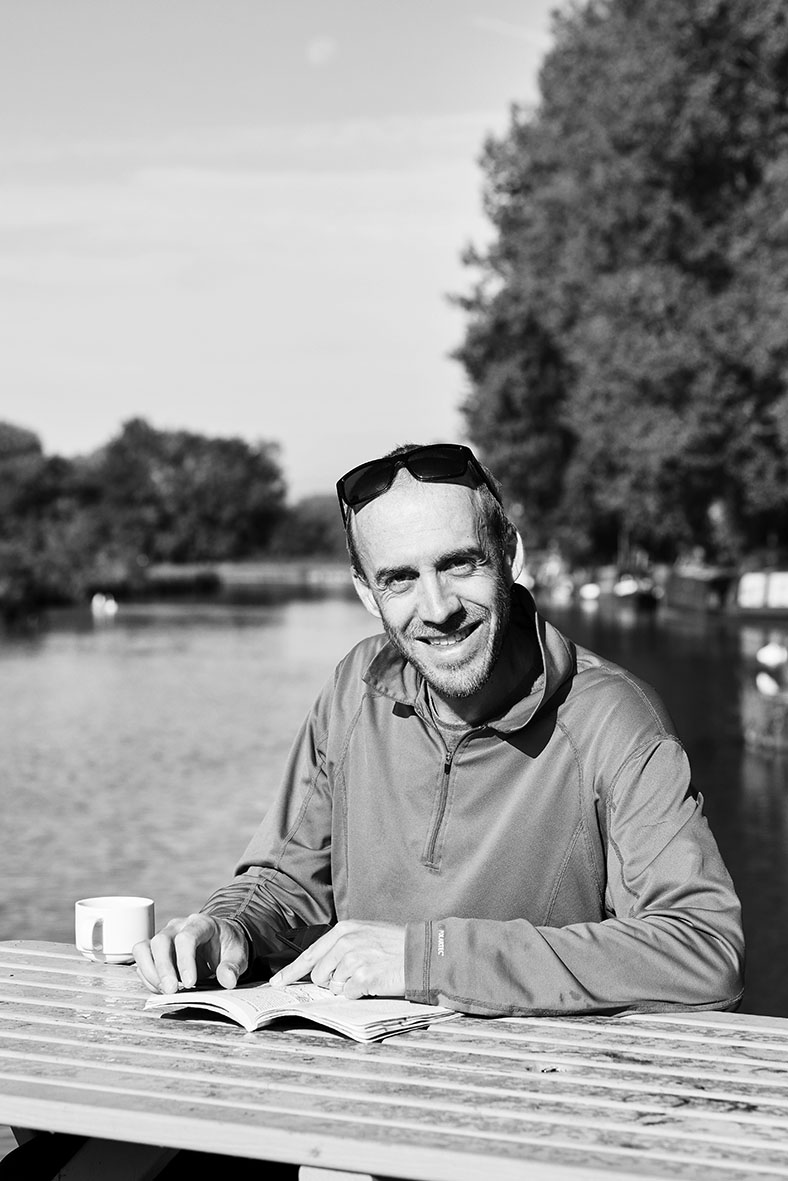
A breakfast of sea-dipping and saunas is the sort of thing that happens when you’re in the company of Andy North, the author of recently released guidebook Wild Guide Isle of Man: Hidden Places, Great Adventures & The Good Life. If the classic image of the island is one of Victorian promenades, heritage railways and TT racing – a kind of tourism time capsule in the middle of the Irish Sea with added motorbikes – Andy turns it into a vivid natural playground, a place of unrushed wonders, ancient history and outdoor exploration.
“Lichens like this can live for 10,000 years,” he says later the same morning, as we examine a yellow algae colony on a coastal rock. “Isn’t that mind-blowing?” It is. When I look up, gannets are high-diving offshore and the peaks of the Lake District are visible across the water as a mirage above the sea haze. I’ve come to the island to spend three days being guided by Andy – having made my way here by ferry from Liverpool – and I’m already learning that it’s somewhere with stirring gifts.
The island might measure just 33 miles by 13 miles, making it smaller than Anglesey, but it’s a world of its own. Neolithic, Druidic, Celtic, Viking and wartime influences all have a part to play in its past.
Only 85,000 people live here, yet it once attracted more than 630,000 visitors in a single summer during its early-20th-century heyday. Today, the Isle of Man feels more like a well-kept secret, its towns and villages unhurried and its coastal scenery as notable for its barely-there crowds as for its steepling drama. It might fly under the mainstream radar these days, but it’s true what they say – you can’t keep a good Man down.
“We’re on top of an ancient mountain range where the continents collided more than 400 million years ago,” Andy tells me not long after we first meet, pouring out a flask of hawthorn tea on the fissured southern clifftops of The Chasms. The scene in front of us is staggering: choughs are wheeling in the sunshine above 100-metre-high crags as sea stacks glimmer far below. The shallows are a clear green-blue and the water is twinkling. “Drink it all in,” he continues, gazing out from under the brim of a messenger cap. “The light, the air, the land, the waves.”

Kayaking, ancient sites and remote hilltop views
The sea is rarely out of view on the Isle of Man and, depending where you’re facing, it’s possible to spy parts of Wales, England, Scotland and Ireland on the horizon. Indeed, looked at on the map, the island is a kind of self-governing fulcrum at the heart of the British Isles. It once formed part of the Viking-era Kingdom of the Isles along with the Hebridean archipelagos, and fittingly there’s a north-of-the-border feel to its hulking green contours and surf-flecked coves.
This makes coastal exploration a joy. At the nearby seaside village of Port Erin we kayak out into the bay to reach a remote old smugglers’ cave, a wave-bashed hideout where hauls of tea and brandy were once unloaded, before paddling around the choppy turbulence of Bradda Head to see the site of a Bronze Age copper mine. The island has various celebrity connections – it’s the birthplace of the Bee Gees’ Gibb brothers and cycling legend Mark Cavendish, and physical practitioner Joseph Pilates was interned here during the First World War – but more rousing is the sheer breadth of its human past.

Secret glens, cold pools and nature's quiet corners
Back on shore, a winding clifftop trekking path leads south from Port Erin to the fast-flowing strait known as The Sound, which separates the Isle of Man from the smaller island of the Calf of Man. It’s a blustery but uplifting 90-minute hike, passing crystal-blue inlets, heathery inclines and the remains of an ancient promontory hillfort. Wheatears hop from rock to rock, and on arrival at The Sound there’s further reward in the form of a seal colony, poking stoic whiskered heads above the surging current.
The guidebook, which makes a point of highlighting hundreds of quiet corners and hard-to-reach spots that the average short-break visitor might completely overlook, is very much a passion project. Andy himself is widely travelled but has lived on the island for more than 20 years and has long seen meaningful outdoor exploration and personal wellbeing as intertwined. “The research for the book was a joy, pure and simple,” he says.
His activity recommendations are refreshingly unobvious. He suggests summiting the little-visited hilltop of Beinn-y-Phott – where I find a glorious 360° view dominated by a green ocean of windswept slopes – rather than the more popular Snaefell (pictured above). He also takes me to the secluded beechwoods of Ballaglass Glen, where among the ferns and wild fuchsia a clear stream tumbles through a series of low falls. Within five minutes of arriving, we’re bathing in one of its glacially cold natural pools; the bitter chill feels life-affirming.
Wallabies in the woods: encounters with wildlife on the Isle of Man
Along with locally sourced food, tucked-away caves and Manx wildlife, cold water is one of the recurrent themes in the book. And if the island’s numerous mobile saunas are anything to go by – where plunging into the waves between sessions is very much part of the appeal – Andy is far from alone in being a fan. Outside one, a Finnish-style sauna set in the shadow of Peel’s ruined Norse fortress on the west coast, I get talking to regular sea-and-sauna visitor Cheryl. “It’s my oasis. I come along most weeks,” she says, glowing with contentment in a changing robe. “It’s about feeling that wild force of nature.”
That evening, I head to the laid-back capital city of Douglas to wander its two-mile-long promenade. A curved sweep of grand Victorian townhouses points the way. In the fading light, a few dog-walkers and joggers are passing each other above the beach. By the time I get to the far end, night has fallen. The air is thick with a salty tang and two bass fishermen are standing waist-deep in the bay under a full moon. Like so much on the island, it’s a scene of disarming beauty.
Wildlife takes many forms on the Isle of Man, but before arriving I wasn’t expecting to be wandering around a pitch-black woodland on a wallaby safari. On my final evening Andy takes me to Tholt-y-Will Forest, a steep-sided glen of larch and spruce in the north of the island. We’re here partly to visit the remains of two deserted hamlets, their houses now mossy and root-smothered after their owners upped sticks for the coast in the early 1900s, but we’re also in search of an unlikely Manx resident: the red-necked wallaby. “A pair escaped from the island wildlife park in the late 1960s. There are now about 800 of them living wild,” he explains. “They generally come out at dusk to feed.” For half an hour we ascend steadily through the trees, pausing only to forage bilberries and blackberries. As we climb, Andy shares tales of the Celtic god Mannanan, after whom the island is said to be named. The forest is quiet and getting darker by the minute. When we reach a clearing, we flick on headtorches. We’ve got company.

A short distance away – and some 9,500 miles from their native Australia – two black eyes are staring back at us from beneath perky grey ears. By the time an hour has passed we’ve come across almost a dozen wallabies, grazing on shrubs or lolloping through the underbrush. They seem undisturbed by our presence, and before long it feels completely normal to be walking at night among pine trees and abandoned houses, watching antipodean marsupials going about their business.
It’s always eye-opening to have your impressions of a place completely remoulded. When I depart the island, it’s with a resolve to return. The past few days have shown me that when you experience a place like the Isle of Man through the eyes of a local who does things differently, the surprises come in numbers. In the Manx language there’s an expression: Hee’m oo reesht. Its meaning? See you again.
Top image: Snaefell mountain on the Isle of Man (credit: Celtic-MomentsPhotography / Getty)