
Sika stops abruptly beneath a towering Scots pine, her nose pressed into the carpet of fallen needles in Aberdeen’s Hazlehead Park before placing her front paws on to its trunk.
The five-year-old Australian Kelpie stands perfectly still, turns to look at her handler, then sits to indicate she has found the scent of a grey squirrel. Sika is rewarded with a treat – every little piece of information she can find is now vital in the fight to save one of Britain’s most iconic mammals.
I’m shadowing the team from Saving Scotland’s Red Squirrels (SSRS) and their two detection dogs, Sika and Tarka – an energetic three-year-old springer spaniel – who together have helped to create a remarkable wildlife comeback story.
Aberdeen may be better known for its granite architecture and North Sea oil, but now Scotland’s third city is quietly celebrating the return of a thriving red squirrel population. The roots of its squirrel story can be traced back to a single mistake more than 50 years ago.
In 1971, between 10 and 20 grey squirrels were brought from the New Forest to Aberdeen Zoo. Within 24 hours they had escaped from their enclosure. “No one is entirely sure how many there were but whatever attempt was made to catch them wasn’t very successful,” explains James Kennedy, Eradication Operations Lead for SSRS as we walk through the park.
The descendants of those escapees spread rapidly. Grey squirrels reached Stonehaven in the south, Banchory to the west and Inverurie to the northwest. As their numbers exploded, Aberdeen’s native red squirrels disappeared from the city.
“If we hadn’t done anything back in 2009, all the key red squirrel areas in Grampian would have been under threat,” says Kennedy. “The density of grey squirrels was so high in Aberdeen it was basically at full capacity and they were spreading out in every direction.”
When Kennedy joined the project at its launch in 2009, the situation looked bleak.
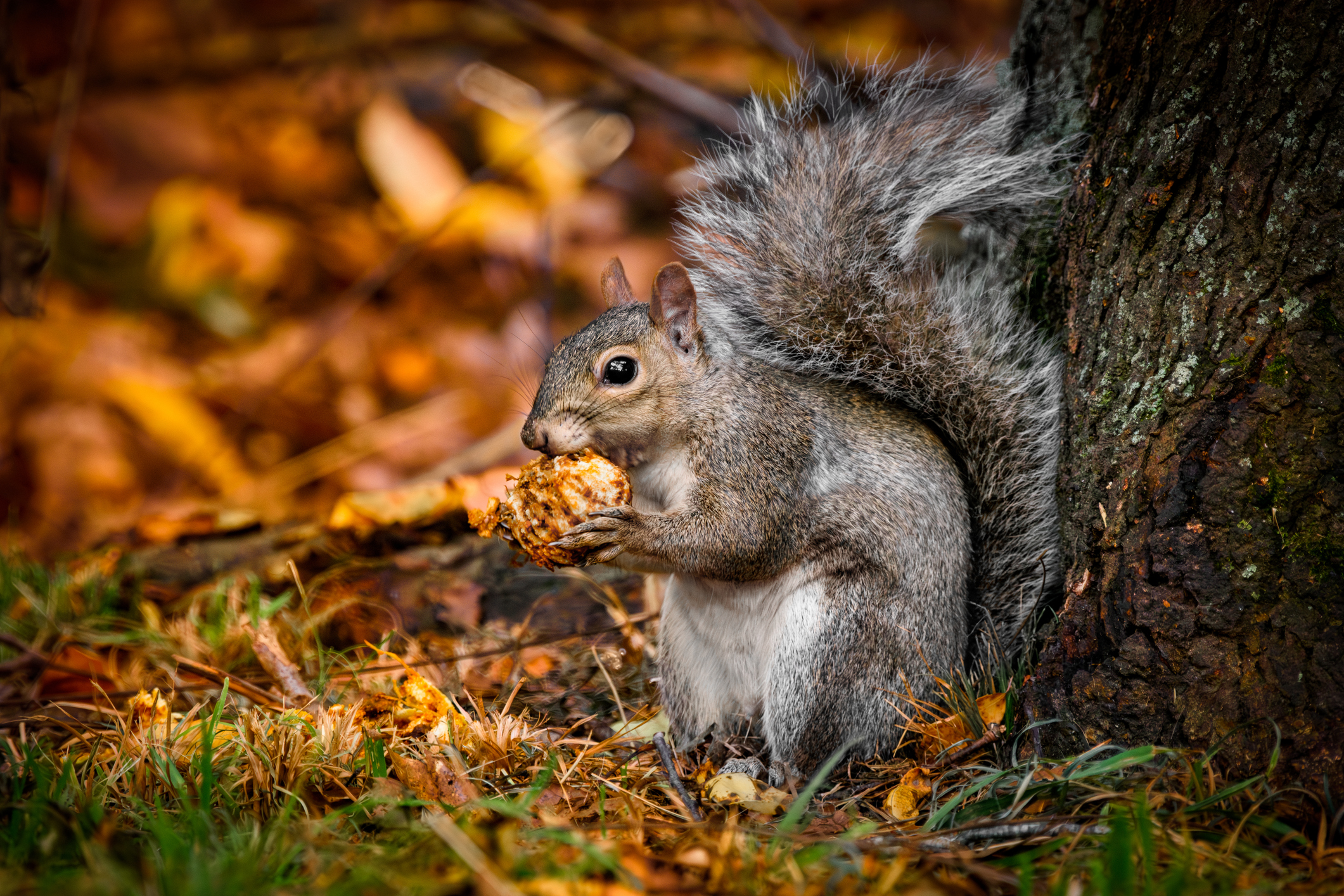
“I cannot tell you how many grey squirrels there were,” he recalls. “A lot of the woodlands had really good habitat. As soon as you emptied those they would just fill back up again. It was like a constant sink. It didn’t matter how many times I trapped them, they would just fill back up again.”
At the time, seeing a red squirrel within Aberdeen’s city boundary had become a rarity. It would be several years before Kennedy recorded a confirmed sighting.
“It was probably 2011 or 2012,” he says. “I found a litter of three young and one female right at the far end of a woodland. That was the first confirmed red squirrel sighting within the city boundary.”
Today the story is very different. Thanks to years of intensive conservation work, grey squirrel numbers have been reduced to just a handful and the project believes complete eradication could be within reach in the next few years – a feat that could represent the world’s first eradication of an invasive mammal from a mainland urban environment.
The transformation has been so dramatic that Kennedy believes Aberdeen may now support more red squirrels than it did before the grey squirrel invasion began. “I would argue there are probably more now than there were in 1971,” he says.
Conservation heroes
Across the nation the situation is much bleaker. The campaign group Save Our Reds estimates there are just 120,000 to 160,000 left across the UK, with as few as 15,000 surviving in England – compared with an estimated 2.7 million grey squirrels. It has warned that without continued conservation efforts the species could disappear from English woodlands within the next 25 years.
For me, even after years of reporting on wildlife around the world, there is still something magical about spotting a red squirrel in the wild – a feeling shared by Kennedy, who says he never tires of the sight.
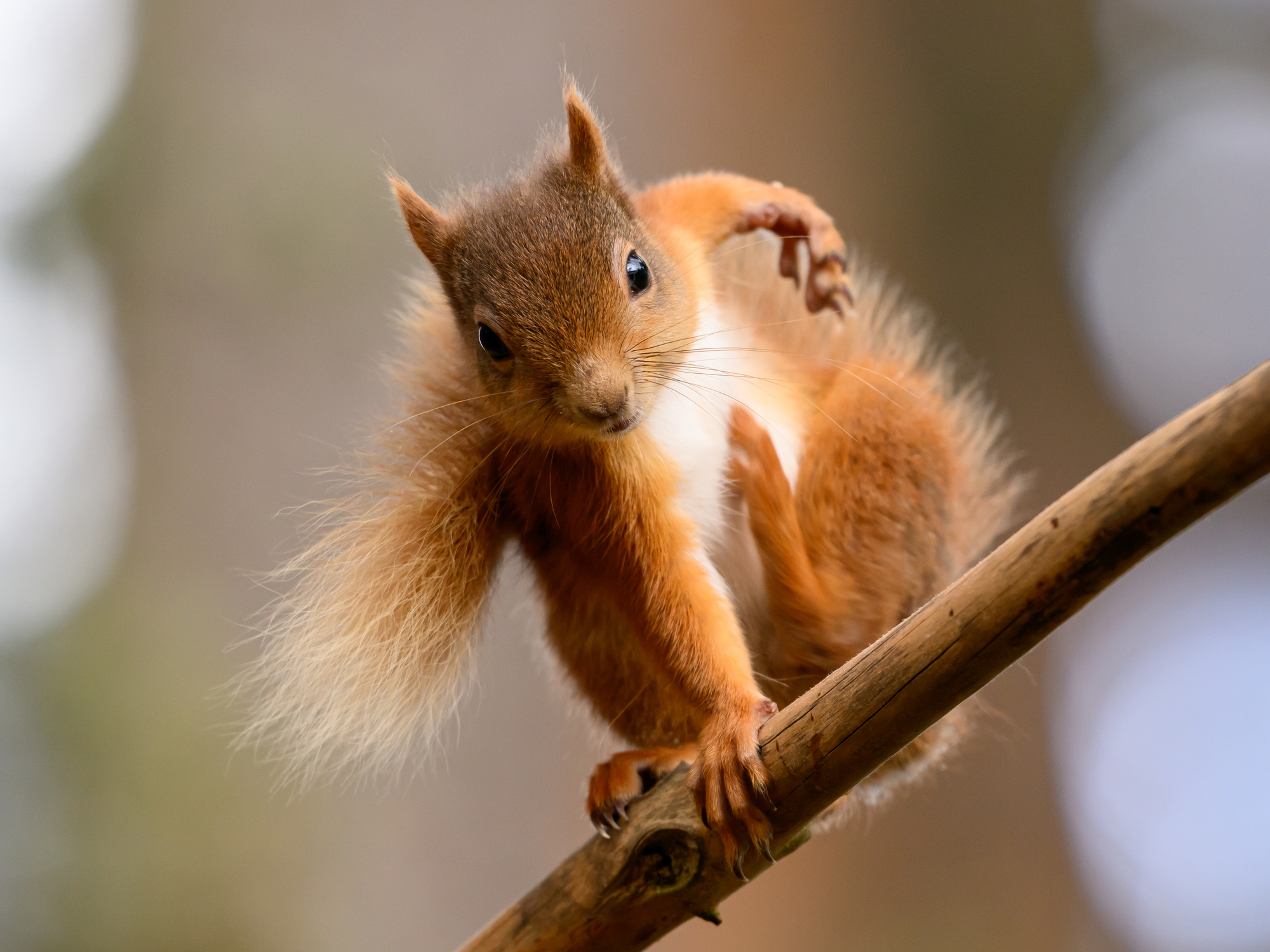
Smaller and more delicate than their grey cousins, red squirrels seem to dance through the treetops. Their chestnut coats and tufted ears make it easy to see why they have inspired characters such as Beatrix Potter’s Squirrel Nutkin. In much of England, apart from a few strongholds, such a sighting would be a rare wildlife encounter.
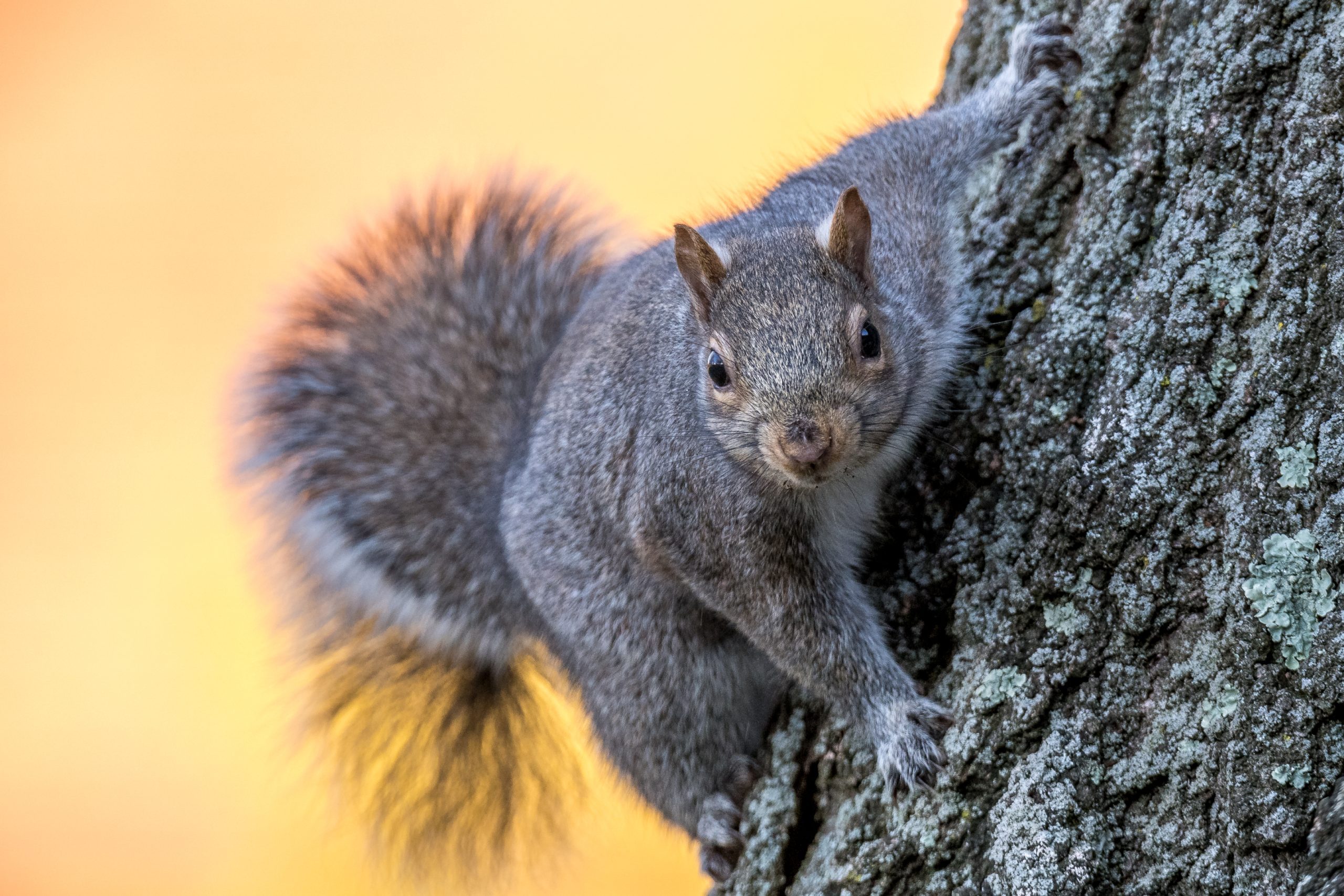
Here in Aberdeen, it has become a symbol of a conservation success story that many once thought impossible. Now the final push to make Aberdeen grey squirrel-free falls to the efforts of Sika and Tarka who patrol the city’s parks and woodlands looking for signs of the last remaining few.
When each dog – working separately so they don’t distract each other – detects a scent, they alert their handler by freezing and focusing on the source of the smell. Their indication allows the team to narrow down search areas that would otherwise take hours to investigate.
Kennedy believes they have around 96% accuracy, which is an invaluable tool in the final stages of the eradication programme.
“It is a dog’s amazing sense of smell that makes them such a perfect search tool in wildlife detection. A dog sees the world through its nose,” explains ecologist Libby Welbourne.
“Their sense of smell is at least 100,000 times more sensitive than ours. While humans have around six million scent receptors, dogs can have up to 300 million,” she adds.
Welbourne discovered the potential of conservation detection dogs after moving from the East Midlands to the Highlands in 2019. She quickly realised the value dogs could bring to frontline conservation projects and, in 2022, began training both Sika and Tarka with Conservation K9 Consultancy to detect grey squirrels. The dogs are just one part of SSRS’s work.
The team also surveys parks and woodlands through camera traps and feeders and investigates public sightings. Once grey squirrels are identified, they are humanely trapped by trained members of the team.
Under UK law, grey squirrels cannot legally be released back into the wild once captured because they’re classed as an invasive non-native species. Instead, they are humanely euthanised using approved methods in line with strict animal welfare guidance.
Conservationists say this legal framework is essential if eradication programmes are to succeed. Kennedy says the decision to cull is never taken lightly. But he warns that if the team stopped now, everything achieved over the past 16 years could quickly be undone.
The American newcomer
For thousands of years Britain’s only squirrel was the native red. That changed in 1876, when wealthy Victorians imported grey squirrels from North America to decorate country estates.
Further releases followed, and the adaptable newcomers spread rapidly through England. While the arrival of grey squirrels accelerated the reds’ decline, conservationists say the story is more complicated than a single invasive species.
Centuries of woodland loss and fragmentation had already reduced suitable habitat for red squirrels, leaving isolated populations that were less able to recover. Grey squirrels then outcompeted reds for food, particularly in broadleaf woodlands, while also carrying squirrelpox – a virus that causes them little harm but is usually fatal to red squirrels.
While both species act as forest guardians by helping to naturally regenerate woodlands by burying nuts and seeds and forgetting to dig them up again, greys strip bark to reach the nutritious sap – causing an estimated £37 million in tree losses annually in England and Wales.
But not everyone agrees that killing grey squirrels is the answer. Group Squirrel Protection UK argues that the decline of red squirrels is not just the fault of greys, also pointing to habitat loss, woodland fragmentation, disease and other environmental pressures.
“We fully support the conservation of red squirrels but we do not believe killing greys is the answer,” says founder Michael Barnett. “The species has lived in Britain for well over a century. They did not choose to be introduced here, they are simply surviving and behaving as any wild animal would. Because humans created this situation, I believe we have a responsibility to seek more humane solutions,” he adds.
Barnett also questions why grey squirrels are singled out while other long-established non-native mammals, such as rabbits, have become accepted as part of Britain’s wildlife.
Instead of culling, the group believes greater emphasis should be placed on restoring woodland habitats, protecting red squirrel strongholds and investing in alternatives, such as fertility control.
Michael, who runs a licensed rescue for injured and orphaned grey squirrels, says: “I love all squirrels, regardless of species. There must be a better way than simply killing them.”
The RSPCA takes a more nuanced position. While it does not encourage members of the public to trap or kill grey squirrels because of the welfare risks involved, it accepts that legal control may be necessary in some circumstances and says any culling must be carried out humanely using approved methods.
The charity favours the development of non-lethal alternatives, including fertility control.
Unwitting allies
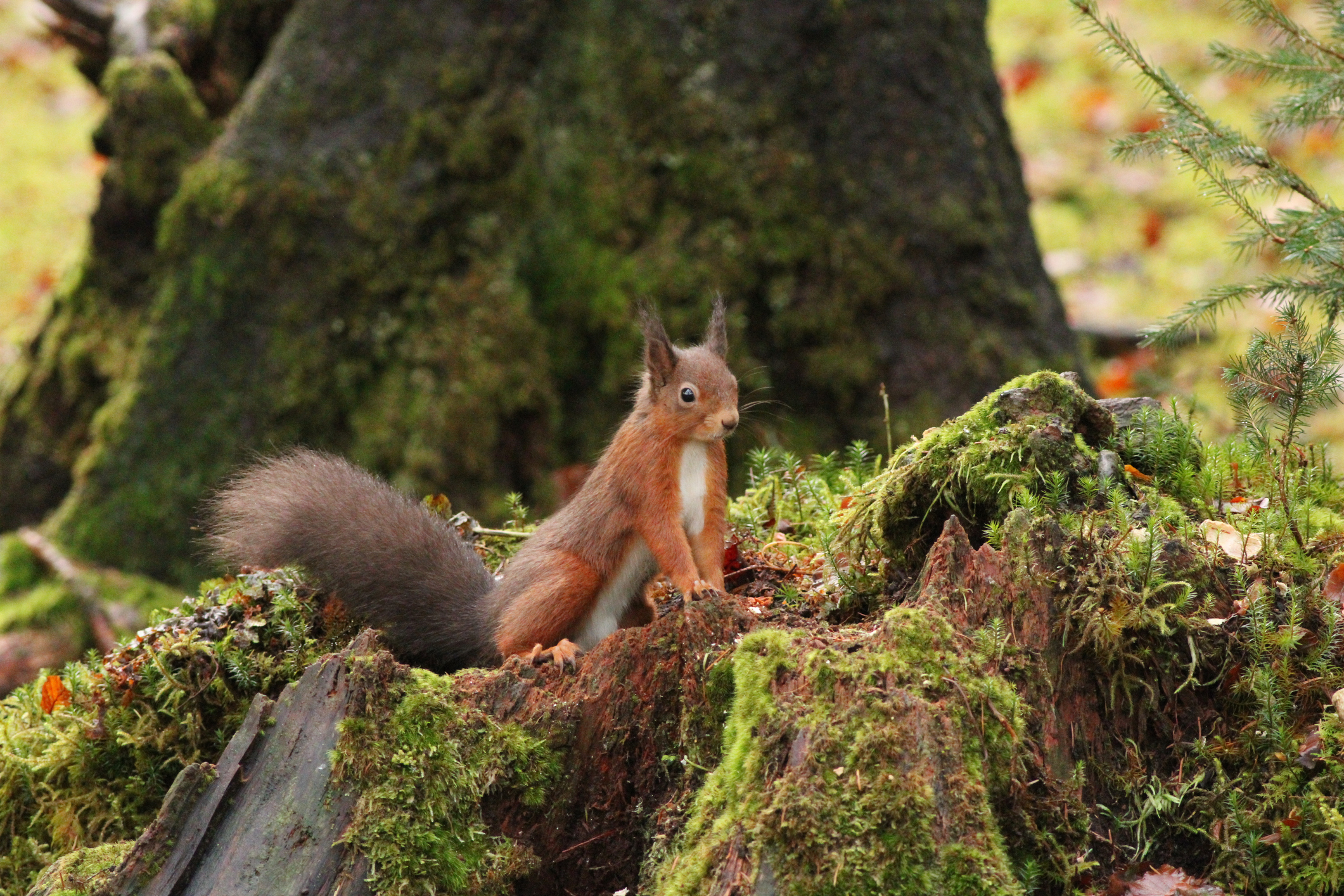
Saving Scotland’s Red Squirrels project is funded through a partnership led by NatureScot, alongside conservation organisations and local partners.
Kennedy believes Aberdeen demonstrates what can be achieved where sustained funding, public support and long-term commitment come together. Across northern England, Save Our Reds supports conservation projects to protect remaining populations, while the Red Squirrels Trust Wales has helped restore reds across much of Anglesey through sustained grey squirrel control.
Some conservationists also hope another native species could help Britain’s red squirrels – the pine marten. In County Fermanagh, natural foes have become unwitting allies in the only area in Northern Ireland free of grey squirrels.
Katy Bell, senior conservation officer at Ulster Wildlife Trust, explains: “Red squirrels have gained an unusual ally. In County Fermanagh there are now healthy populations of red squirrels and pine martens, with the two existing alongside each other. Pine martens do prey on red squirrels but at a far lower level than greys. One reason is thought to be that pine martens and red squirrels are both native to Europe and evolved together.”
Pine marten recovery and reintroduction programmes elsewhere in Ireland, Scotland and the Forest of Dean have also been associated with reductions in grey squirrel numbers. Yet researchers stress the predator is not a silver bullet and is unlikely to replace targeted grey squirrel control in urban areas.
As Sika disappears once more beneath the pines, her nose sweeping methodically across the forest floor, it is easy to forget that just two decades ago red squirrels had all but vanished from Aberdeen. Conservationists hope the city’s success can be repeated elsewhere, allowing red squirrels to reclaim more of their former range. But as greys are now firmly established across much of Britain, debates over how best to manage them are unlikely to disappear.
Whether the answer lies in continued control, fertility research, habitat restoration or a combination of all three, one thing is clear: the future of both species will depend on the choices people make over the coming decades. And Aberdeen has shown something increasingly rare in conservation: that declines once thought irreversible can, with patience, persistence and long-term commitment, be turned around.
