
Growing up, my mum always warned me about swimming after eating as it increased the risk of drowning. Turns out this is largely an urban myth with no real evidence behind it. This got me thinking about some pet related ‘myths’ or otherwise. When I qualified as a vet many moons ago we advised pet owners not to exercise their pets immediately after eating. So why do we do this and is it a myth?
The reason we advised this, especially in deep chested dogs, is that there was a study that showed an increased risk of developing ‘bloat’ (or technically known as Gastric Dilation Volvulus (GDV)) if fed immediately before exercise.
Few things scare a small animal vet as much as a GDV as it is a genuine emergency that needs rapid surgical intervention or it can be fatal. For those vets like me still doing out of hours work this is one of the few things that will get you out of bed like a shot in the middle of night.
Historically the mortality rate of this condition was about 30%, studies have shown that this is now lower, however that is with prompt intervention and no concurrent diseases and euthanasia is sometimes still the kindest option depending on the situation.
So anything that would reduce the risk of dogs developing this is obviously something we try and support, however unfortunately the advice is not quite black and white around exercise.
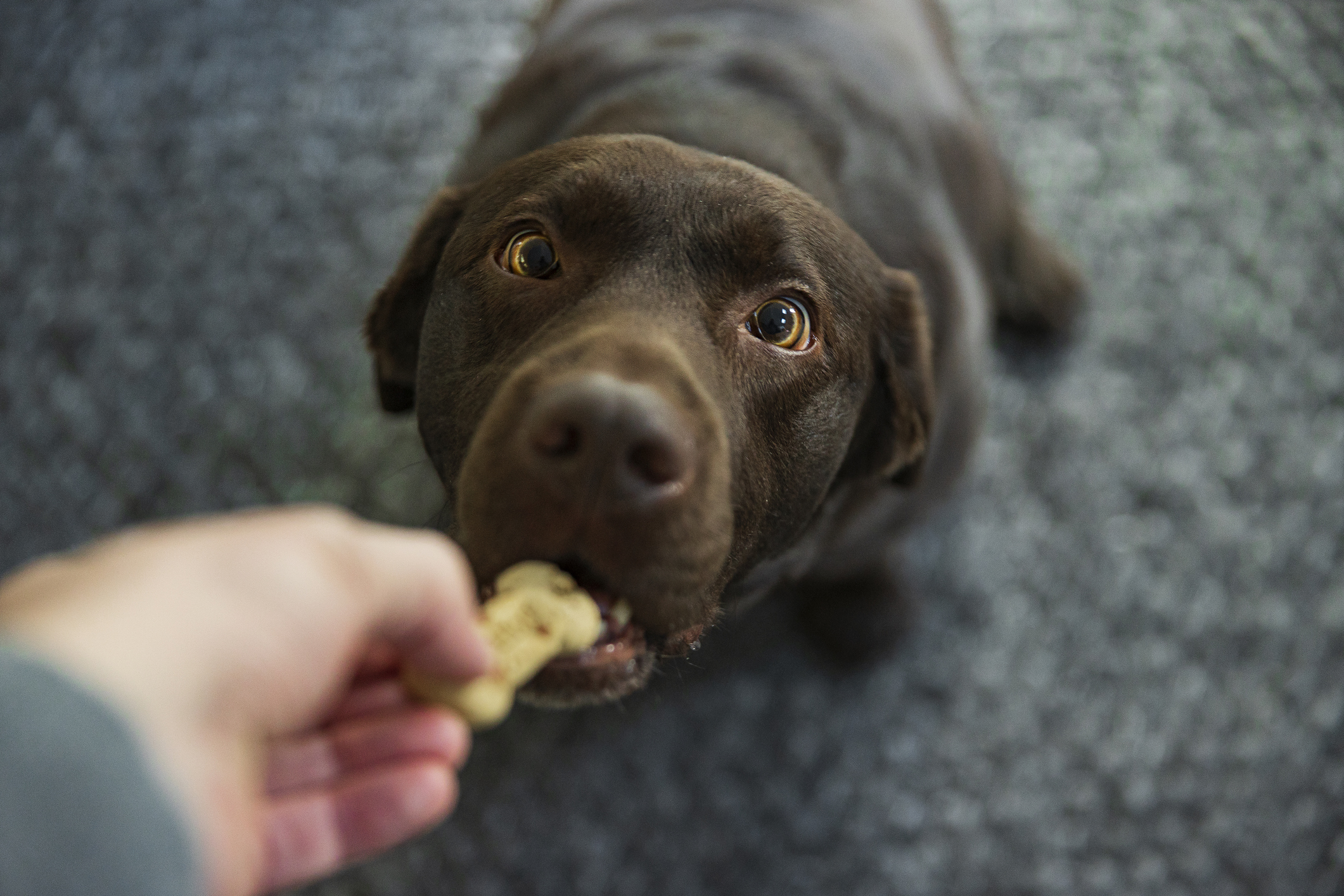
A more recent study showed that dogs that had moderate exercise after food were actually at lower risk and that the previous study’s findings were not supported! So what are the risk factors for GDV and what should you be doing with food and exercise?
Well the biggest risk factor for GDV is breed. Large and giant breeds with deep narrow chests are the most likely to develop this condition, to the point where I’ve never seen a GDV in smaller, normal chested breeds in my years in practice. Great Danes, German Shepherds, Standard Poodles, Setters are all examples of the sort of dogs that are at the greatest risk.
GDV does seem to also have a familial relationship, having a parent or a sibling that has had a GDV seems to increase the risk so ask your breeder if you are looking for a breed that might be at risk.
Dogs that are underweight are more at risk, as are older dogs and dogs that have had splenic surgery. Stress seems to play a role as well and stress factors such as car journeys, dog shows or going into kennels can increase risk.
There are several factors around food that seem to be involved. To reduce the risk feed large kibble (greater than 30mm in diameter), feed more than once a day and try to reduce feeding speed (e.g. by using slow feeding bowls). Feeding from a raised bowl seems to increase the risk so we don’t advise doing that routinely for these breeds.
Dogs that are fed table scraps and have their food supplemented with egg or fish are at less risk, however I personally wonder if that makes them less likely to be underweight so that might be the reason why! Moderate daily exercise reduces risk and doing it after food rather than on an empty stomach is also a way of reducing risk according to these recent studies.
So to conclude, like my mother’s advice on swimming after eating, not exercising your dog after eating is a bit of a myth. But I would still urge caution! I wouldn’t particularly want to get into the pool after a 3 course Sunday Roast and I wouldn’t recommend exercising your dog after a large meal, but smaller meals spread out and sensible moderate exercise might be the best way to go.

