Paludiculture – derived from the Latin palus, meaning ‘swamp’, ‘marsh’ or ‘fen’ – is the term for farming on wet or rewetted peatlands.
Many wetland areas have been drained to create land for conventional arable or livestock farming, but paludiculture involves using crops that are naturally adapted to wet habitats with a high water table.
In degraded lowland peat wetlands, paludiculture might involve blocking drains and ditches to raise water levels and ‘rewet’ the land to make it productive again. Traditional peat wetland farming remains economically important in parts of Europe and the tropics, but in the UK it has diminished over the past 150 years.
For example, the Norfolk Broads has a long tradition of managing and harvesting reeds for thatching roofs but, according to Natural England, the UK currently imports 95% of its thatching reeds.
Rather than fighting nature and draining the land, paludiculture works with the landscape, using the core sustainable farming principle: ‘right crops, right place’. This not only produces a valuable local harvest from what is often perceived as marginal land but it can also help reduce carbon emissions.
Carbon champion
Natural England estimated that emissions from drained agricultural peatlands in England in 2020 were “8.5 million tonnes carbon dioxide equivalents... around 3% of England’s emissions”.
Peat soils form when partially decomposed plant matter accumulates in waterlogged conditions, and store huge amounts of carbon. When drained, dried out or extracted, peat quickly degrades and releases carbon.
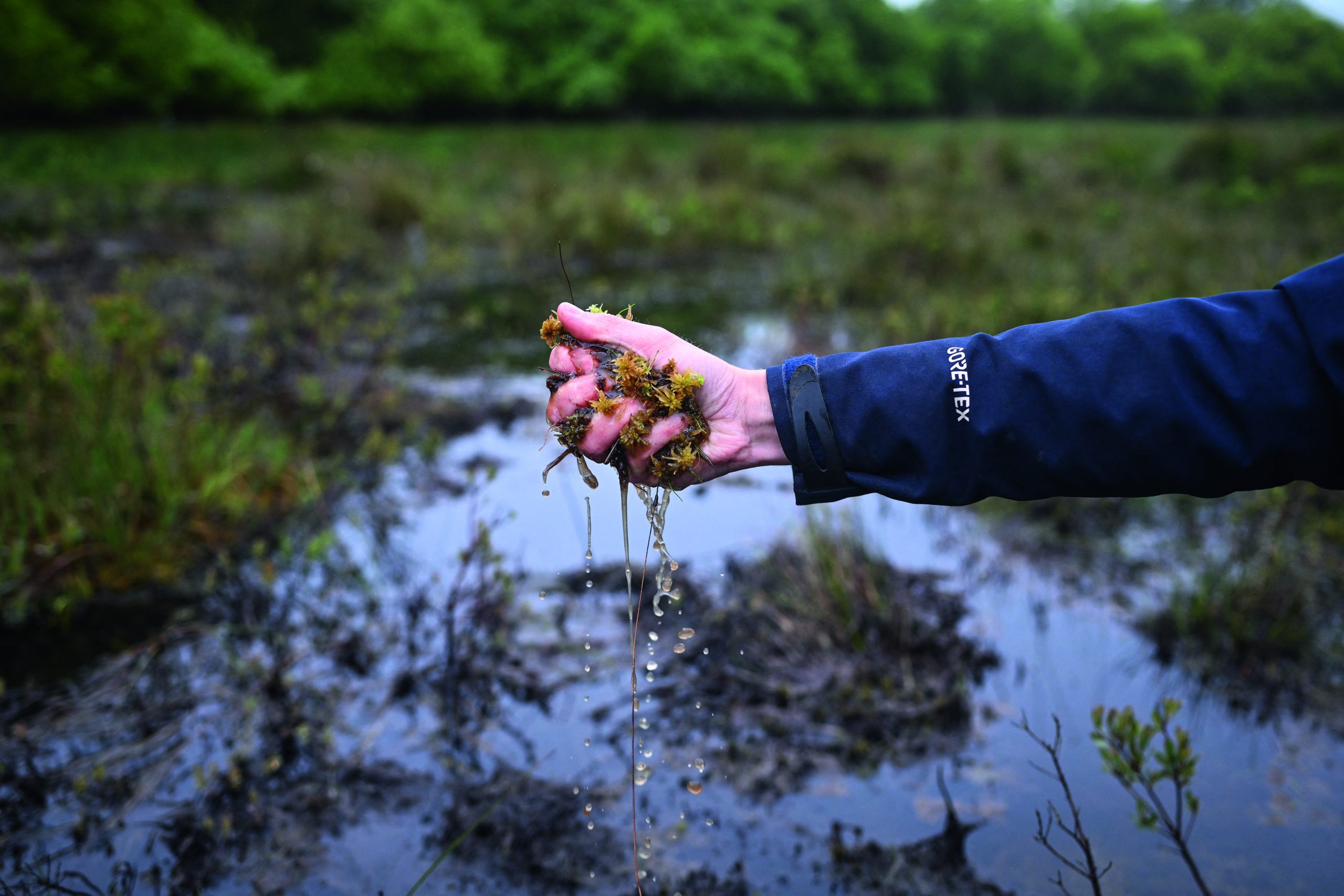
Rewetting the land and farming it sustainably can greatly reduce carbon emissions. In 2022, the UK Government announced £5 million investment in the Paludiculture Exploration Fund to promote the use of peatlands for sustainable farming.
Natural England says that 88 native UK wetland species “have been identified with promising potential for energy, food, fodder, medicinal use”. Much of the initial effort has been focused on Typha (bulrush) and sphagnum moss, with trials launched at wetland sites including the Fens and the Broads in East Anglia, the Somerset Levels, and areas of Shropshire, Cumbria and Lancashire.
Typha can be used as a lightweight building material, to make fabric for clothing and as a bioenergy crop. Sphagnum offers huge potential as a replacement for peat as a growing medium; its absorbent and antiseptic properties may have medicinal uses, and polymers in its structure could be a source of industrial chemicals.
Fast-growing wetland tree species such as willow are already valued for timber and as a sustainable fuel. Meanwhile, expanding the UK’s native-grown reed production could reduce the need to import thatching materials from eastern Europe or as far away as China and South Africa.
Natural England has also highlighted potential food crops from paludiculture, including cranberry, bilberry, celery, nettle, sedge grains, watercress and the marsh plant known as water pepper, which has a spicy flavour akin to horseradish. Under paludiculture, then, wetland could become one of Britain’s most valuable ‘liquid’ assets.