The British countryside is rich in history with many locations providing a treasure trove of precious artefacts that have helped historians uncover more about the history of Britain and paint a picture of how our ancestors would have lived.
According to a report by the British Museum, during the Coronavirus pandemic more people than ever have discovered precious artefacts in their gardens and local area with more than 47,000 ‘treasure’ finds recorded in 2020. These finds have included two significant coin hoards, a Roman furniture fitting and a seal matrix thought to have been used by a bishop from the Medieval period.
The British Museum’s Portable Antiquities Scheme (PAS) report recorded a huge boost in garden finds and in digital recording during the first lockdown when metal-detecting was prohibited or restricted.
How much treasure has been discovered in the UK?
According to the Department for Digital, Culture, Media & Sport treasure report, in 2016, there were 1,116 cases of reported treasure finds. The provisional figure for 2017 was 1,267 making this the fourth year in a row when the number exceeded 1,000. Read the report here.
Recent precious artefacts discovered in the UK
1. Coin hoard, New Forest
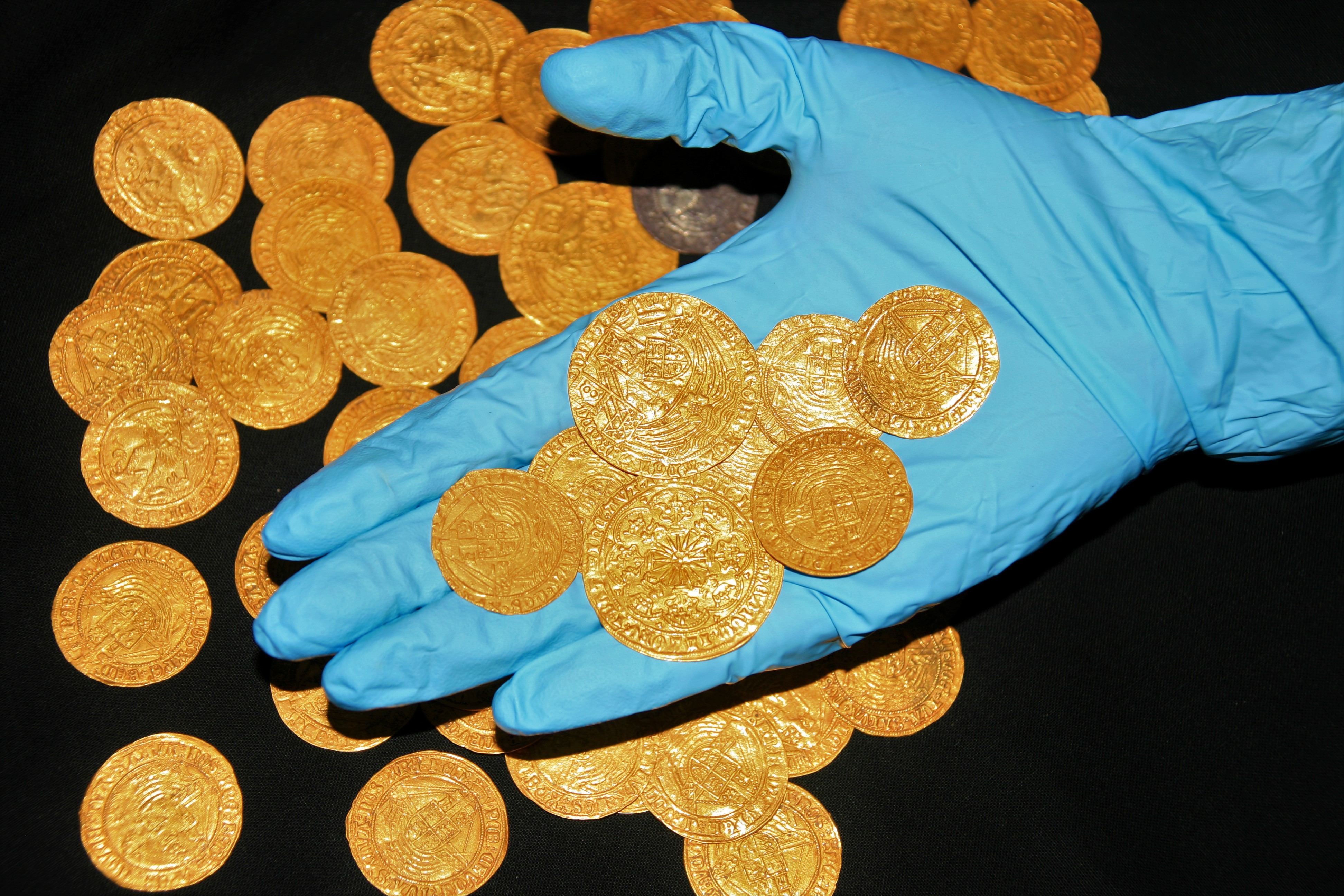
63 gold coins and 1 silver coin of Edward IV through to Henry VIII, and deposited in about 1540, were uncovered in the New Forest area, Hampshire as the finders pulled out weeds in their garden. Ranging across nearly a century, dating from the late 15th to early 16th centuries, the hoard includes four coins from Henry VIII’s reign, unusually featuring the initials of his wives Catherine of Aragon, Anne Boleyn and Jane Seymour. The total value of the coins far exceeds the average annual wage in the Tudor period, but it is not yet clear whether this was a saving hoard which was regularly deposited into or if the coins were buried all at once.
2. Seal matrix, Gloucestershire
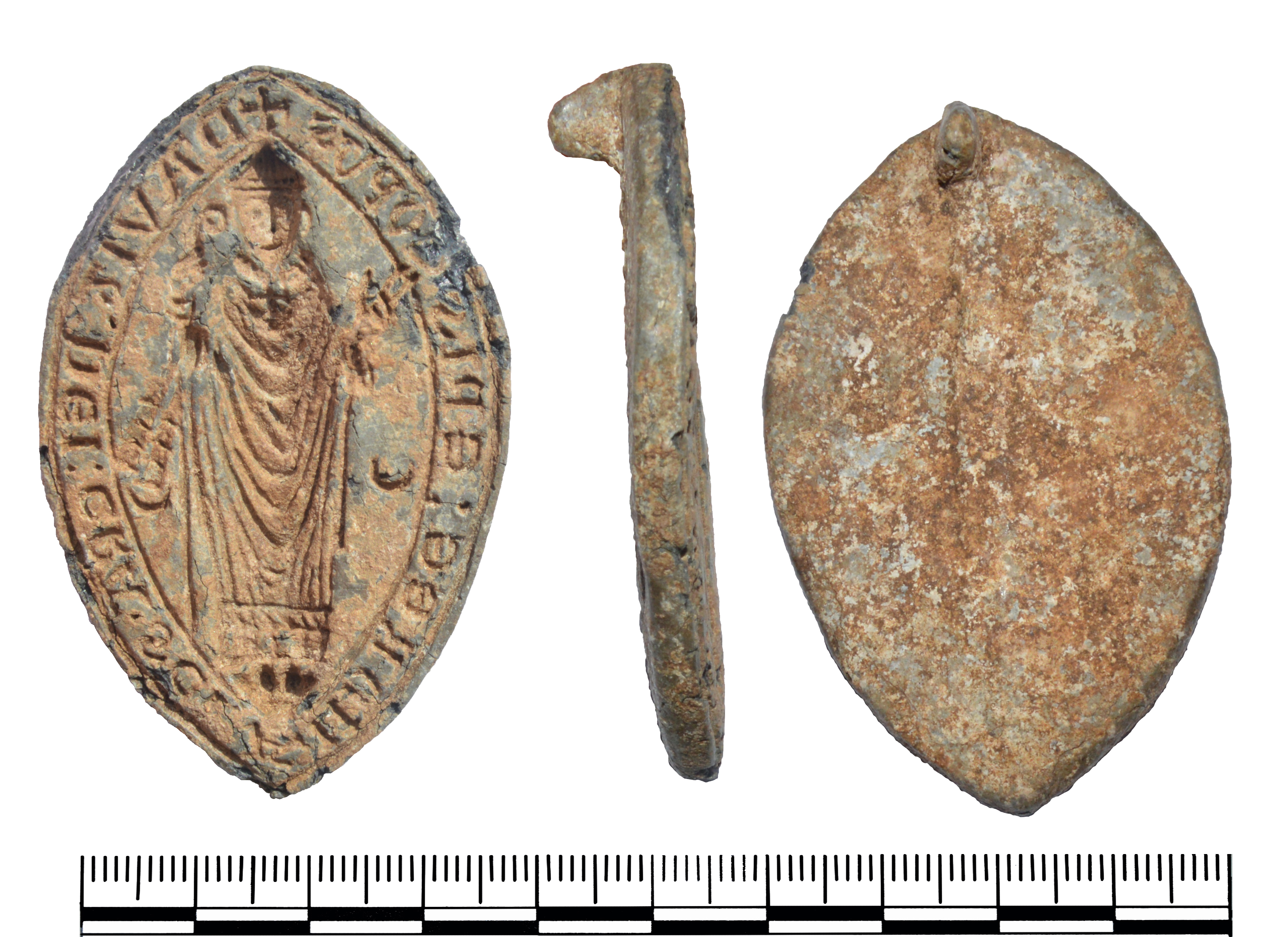
Discovered at Dursley, Gloucestershire, was a lead-alloy medieval seal matrix in the name of David, Bishop of St Andrews, identified as David de Bernham (r. 1239-53). The pointed-oval (vessica) matrix shows the bishop standing in his vestments, with a crozier in his left hand. The inscription in Latin reads ‘David, God’s messenger, bishop of St Andrews’. High-status seal matrices are usually made of copper-alloy or even silver. Given the material, and the relatively low-quality manufacture of this piece, it is thought likely that this is a contemporary forgery, perhaps used to authenticate copied documents.
3. Roman furniture fitting, Hampshire
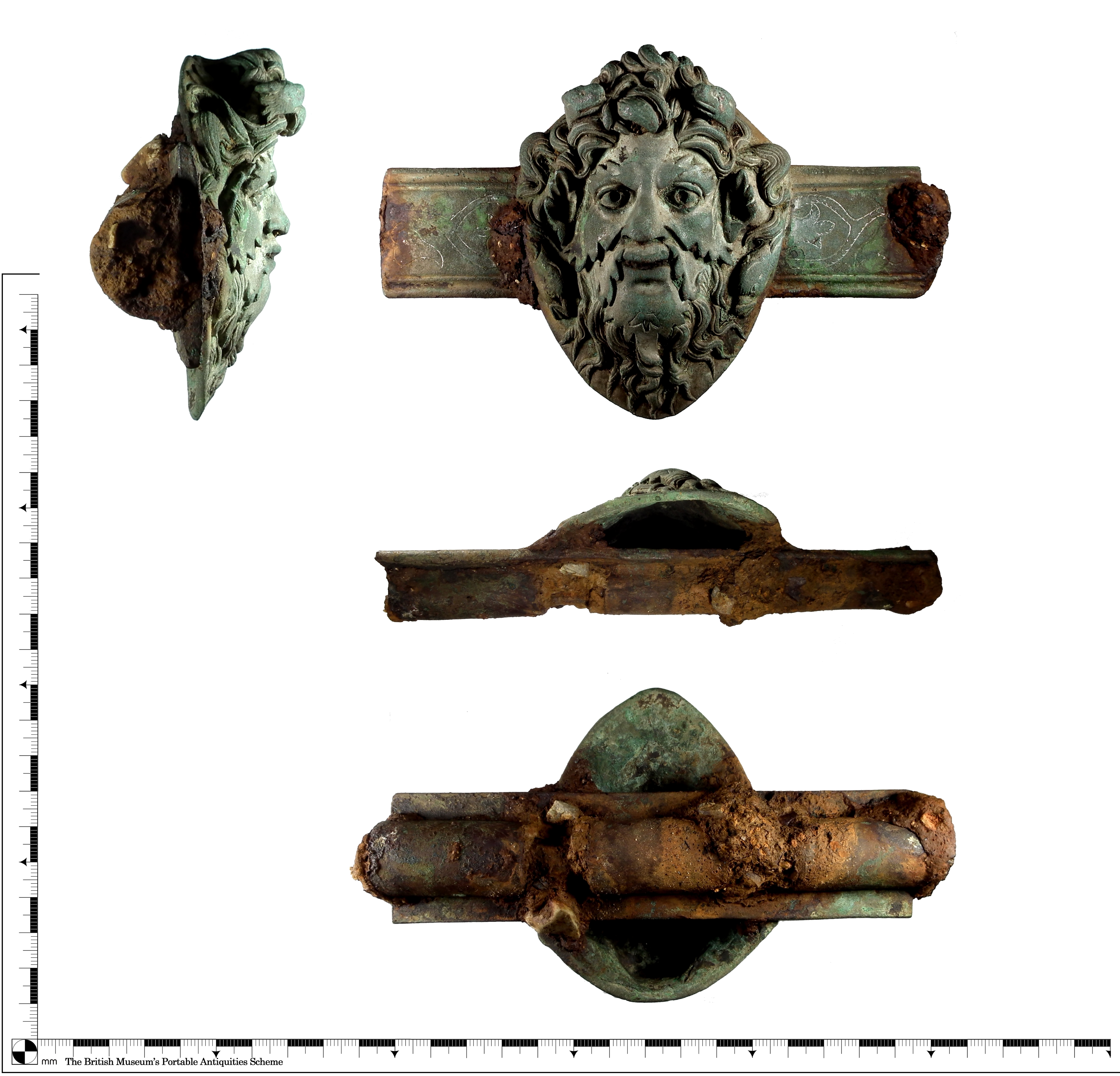
A copper-alloy Roman furniture fitting, found in Old Basing, Hampshire, and dating from c. AD 43–200. It is decorated with the remarkably well-preserved face of the god Oceanus, including intricate seaweed fronds framing the god’s face, beard and moustache. Tiny dolphins beneath each ear swim down towards the god’s chin, whilst serpentine creatures rest on either side of Oceanus’ temples – marine motifs related to the god. So far, no close parallel has been identified among the decoration on household fixtures and fittings for chests, couches or doors of this period, making this item seemingly unique.
The report also shows that an incredible 81,602 archaeological finds were recorded in 2019, an increase of over 10,000 on the previous year, bringing the total on its Portable Antiquities Scheme database to well over 1.5 million objects.
These precious treasure finds provide a vital link to the history of Britain and can be of huge cultural and historical importance.
Our expert guide explains how to hunt for precious artefacts in the UK and some of the best places to search, plus an overview of famous treasure finds. We also look at the legality of searching for treasure and what you need to do if you do hit gold and find a precious artefact.
Famous precious treasure finds discovered in Britain
Metal detectorists have added a great deal to the knowledge we have about the past. For instance, in 2010 in a field in Frome, Somerset, hospital chef Dave Crisp and his metal detector came across a hoard of 52,000 Roman coins buried in a large pot under the ground. One of the most important aspects of the find is that it contains a large group of coins of Carausius, who ruled Britain independently from AD 286 to AD 293.
Do you dream of what fascinating heritage lies under your feet? Here are some famous cases of artefact-hunters who struck gold, with details of where you can see their precious finds now.
4. Staffordshire Hoard
BURIED: c. 7th century
FOUND: 2009, near Hammerwich, Staffordshire
The largest collection of Anglo-Saxon gold and silver metalwork yet found, comprising 3,500 items, including 5.1kg of gold. It was discovered by detectorist Terry Herbert when he was searching an area of ploughed farmland. The collection includes decorations from swords and other weaponry, and was valued at £3.28 million.
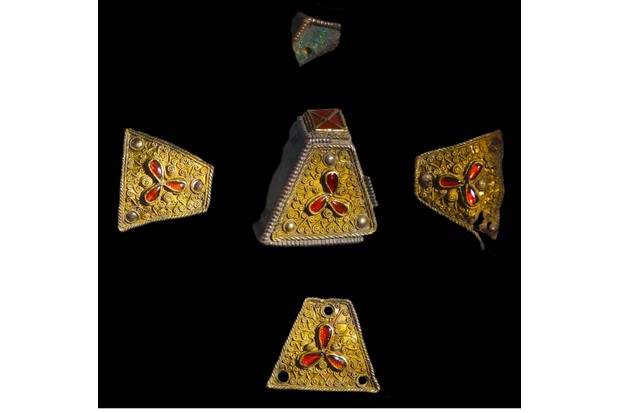
SEE: Items from the Staffordshire Hoard are on display at Birmingham Museum & Art Gallery. More items are on display in Stoke on Trent and Tamworth – see staffordshirehoard.org.uk for details.
5. Galloway Hoard
BURIED: c. 1,000 AD (research continues)
FOUND: 2014, Dumfries and Galloway
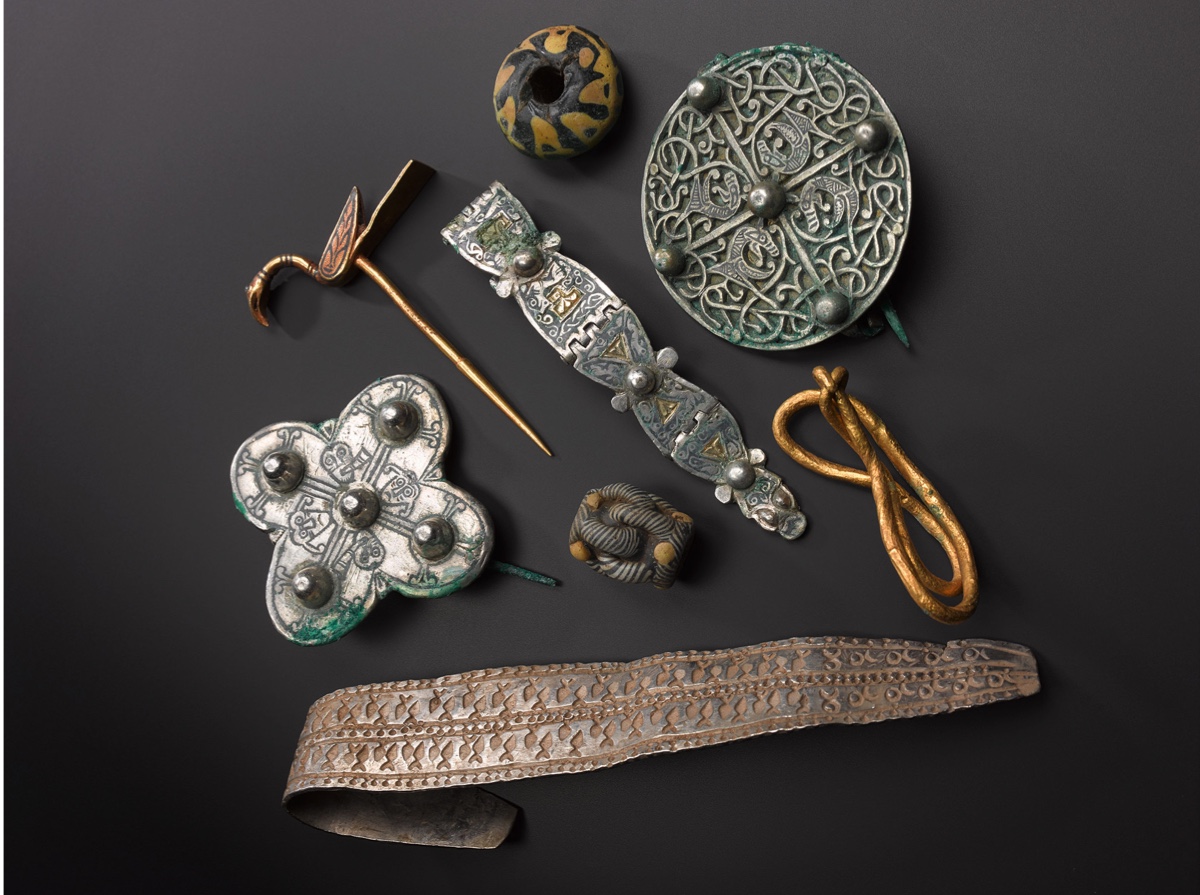
“My senses exploded, I went into shock, endorphins flooded my system and away I went stumbling towards my colleagues waving it in the air.” This was how retired businessman and detectorist Derek McLennan described his discovery of a Viking arm ring on church land in Dumfries and Galloway, in a BBC interview. His find led to the unearthing of more than 100 ancient objects valued at £1.98m. Described by National Museums Scotland as “the richest Viking-age collection discovered anywhere in Britain”, the hoard included valuable silver ingots, prized arm-rings, a silver pendant Christian cross, brooches, beads and a delicately crafted gold pin in the shape of a bird.
SEE: Items from the hoard were displayed at the National Museum of Scotland in summer 2017, but have now been sent away for an estimated two years for conservation. If all goes well, expects the hoard to be back on display some time from late 2019.
6. Seaton Down Hoard
BURIED: 4th century
FOUND: 2014, Near Seaton, East Devon
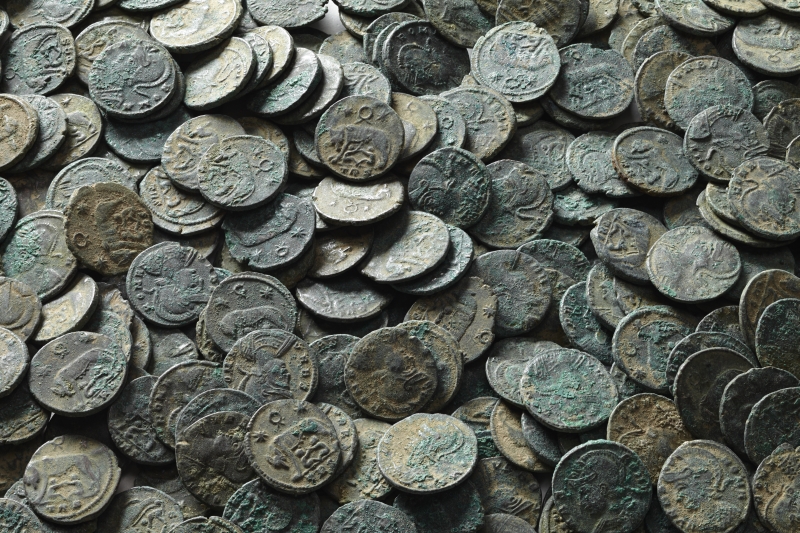
Detectorist Laurence Egerton chanced upon two ancient coins buried just under the surface of a field near Seaton. After further digging his find grew into a staggering 22,888 Roman coins - roughly equivalent to two years’ pay for a middle-ranking civil servant of the day, apparently – and the third largest such hoard ever recovered in Britain.
SEE: the Seaton Down Hoard at The Royal Albert Memorial Museum (RAMM) in Exeter, Devon.
7. Lenborough Hoard
BURIED: 11th century.
FOUND: 2014, in a field south of the town of Buckingham
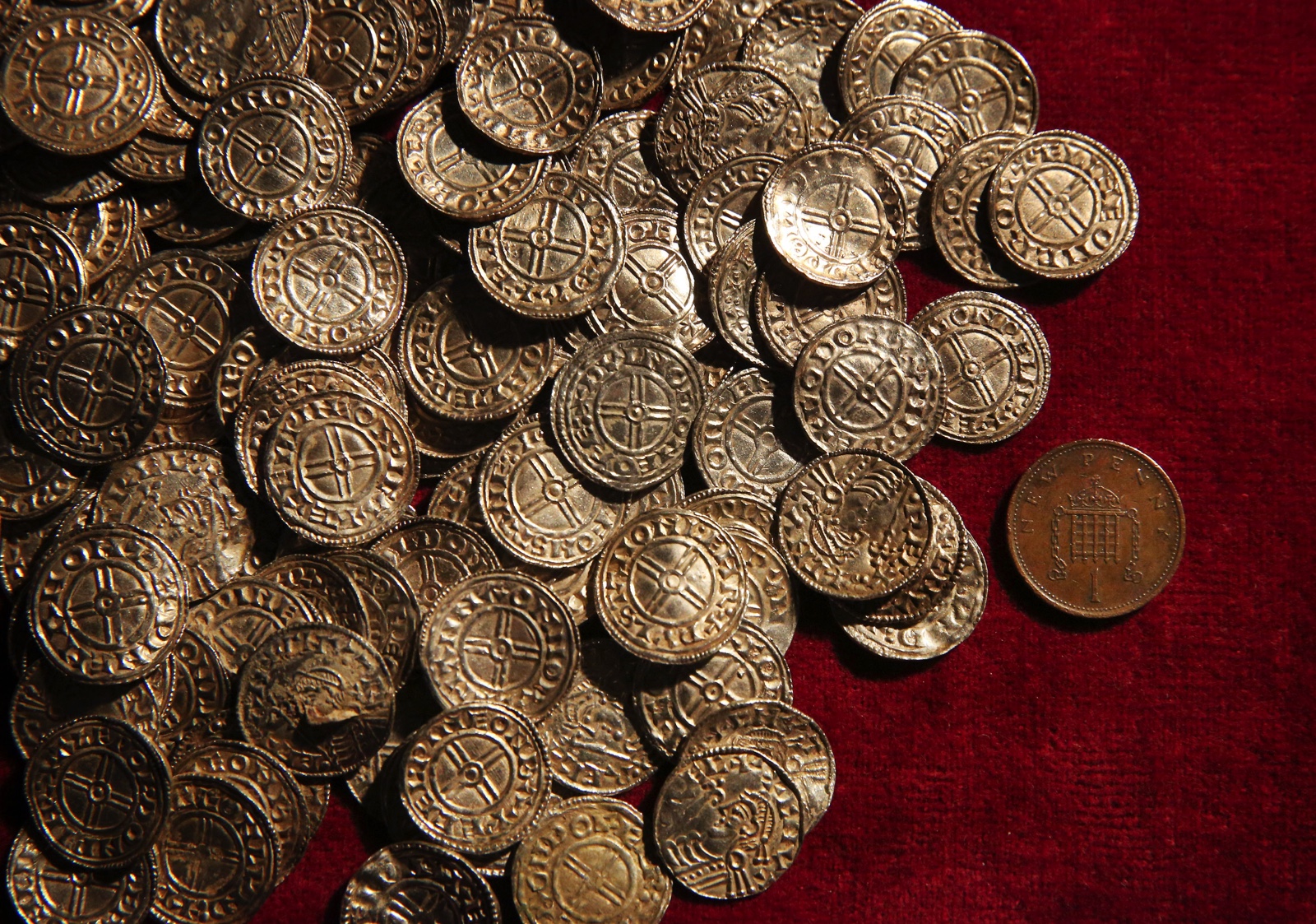
Detectorist Paul Coleman found 5,252 late Anglo-Saxon silver coins worth £1.35 million. Read more about Paul's discovery below.
SEE: 1,000 coins from the Lenbrorough hoard are on display at Buckinghamshire County Museum in Aylesbury.
8. Gaulcross Hoard
BURIED: c. 400-600AD
FOUND: 2013, Near Fordyce, Aberdeenshire
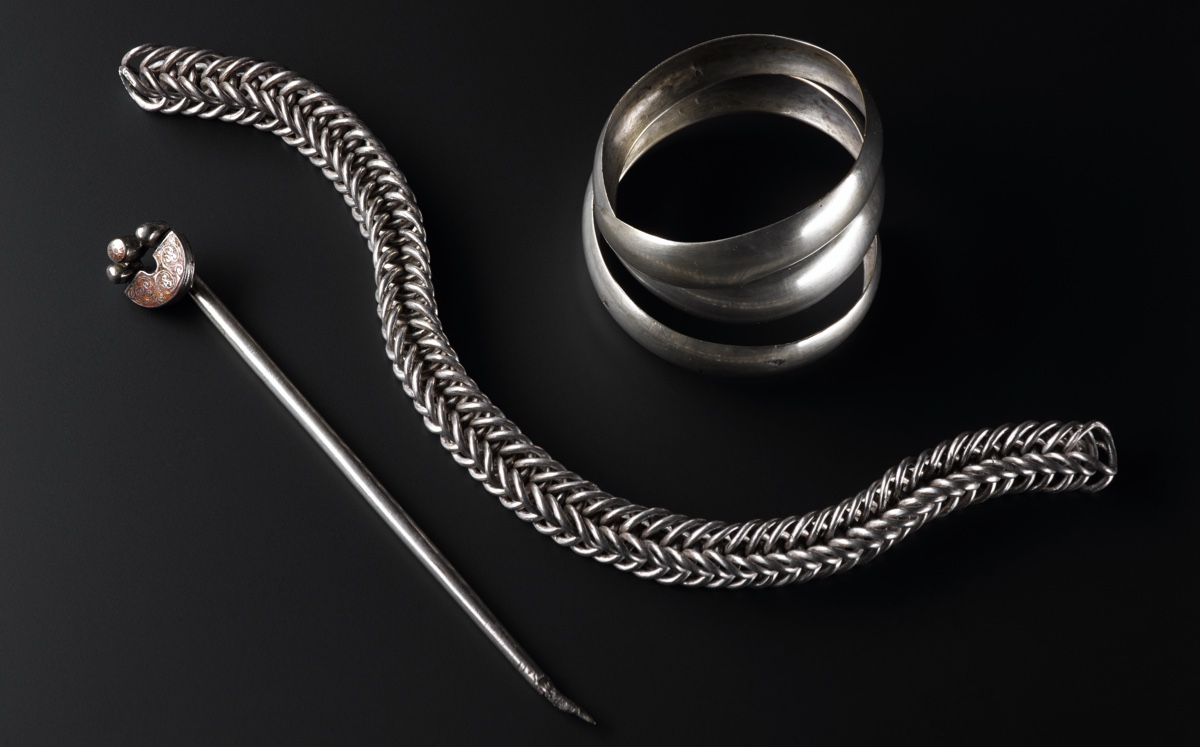
Alistair McPherson was working alongside National Museums Scotland when he discovered a hoard of Roman and Pictish silver in a field – the most northerly find of its sort in Europe. Among more than 100 pieces of silver were coins, brooches and bracelets. Alistair McPherson’s friends now simply call him “the Magnet”.
SEE: the Gaulcross Hoard on display for the first time as part of the exhibition Scotland’s Early Silver, which includes other precious finds. Until 25 February 2018 at the National Museum of Scotland, Chambers Street, Edinburgh.
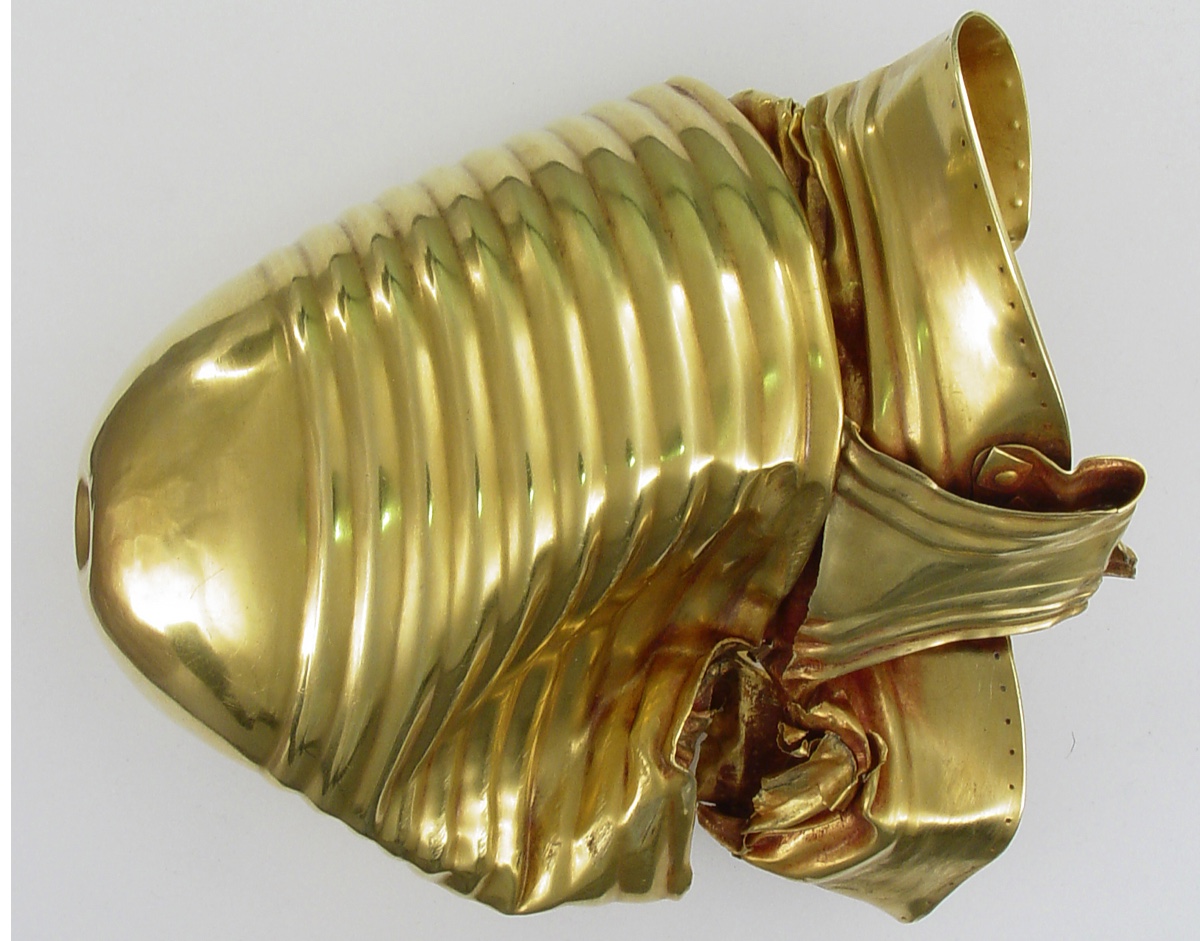
9. The Ringlemere Cup
BURIED: 1700 to 1500 BC
FOUND: 2001, Ringlemere Farm, near Sandwich, Kent
Cliff Bradshaw discovered a beautiful Bronze Age golden chalice in a muddy field. The badly-crushed cup, decorated in a cordware style, would have originally stood 14cm high with a rounded base. It is one of only two ever found in Britain. The British Museum bought the cup for £270,000, the money divided between Bradshaw and the landowners.
SEE: The Ringlemere Cup on display in the prehistory galleries of the British Museum in London.
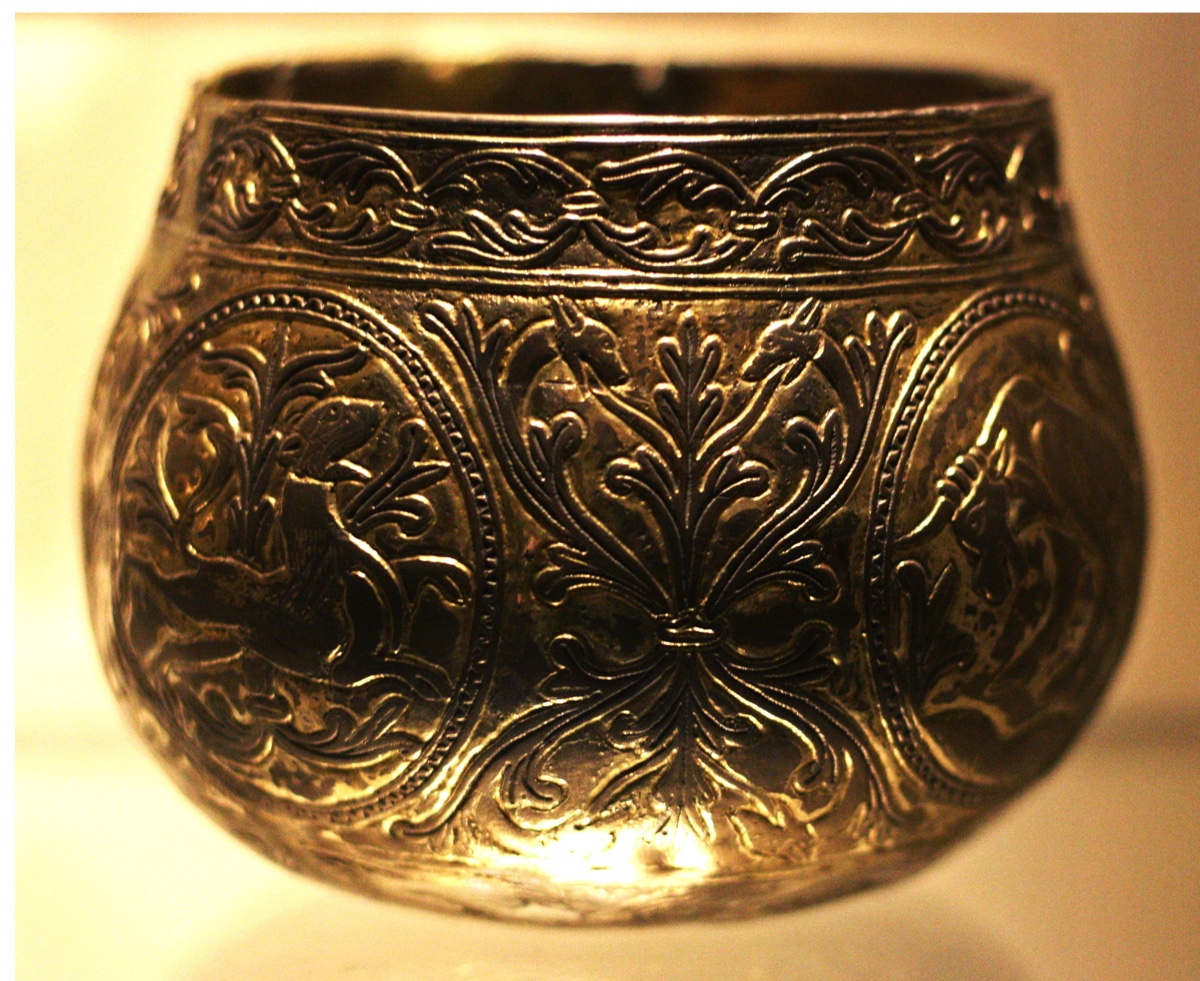
Vale of York Hoard
BURIED: c.927AD
FOUND: 2007, near Harrogate, Yorkshire
David Whelan and his son Andrew were exploring a field when they discovered a finely engraved Viking bowl of silver. Their discovery inspired a full dig that uncovered the largest Viking hoard found in Britain since the Cuerdale hoard of 1840. The 617 silver coins and 65 other pieces of silver items were later valued at Valued at £1,082,000 by the independent Treasure Valuation Committee.
SEE: the Vale of York Hoard: Items from the hoard form part of a touring exhibition, Viking: Rediscovering the Legend, on display at the Djanogly Gallery in Nottingham from 24 November 2017 to 4 March 2018, and after that in Southport, Aberdeen and Norwich. More details from yorkshiremuseum.org.uk.
10. Roman coins, Frome
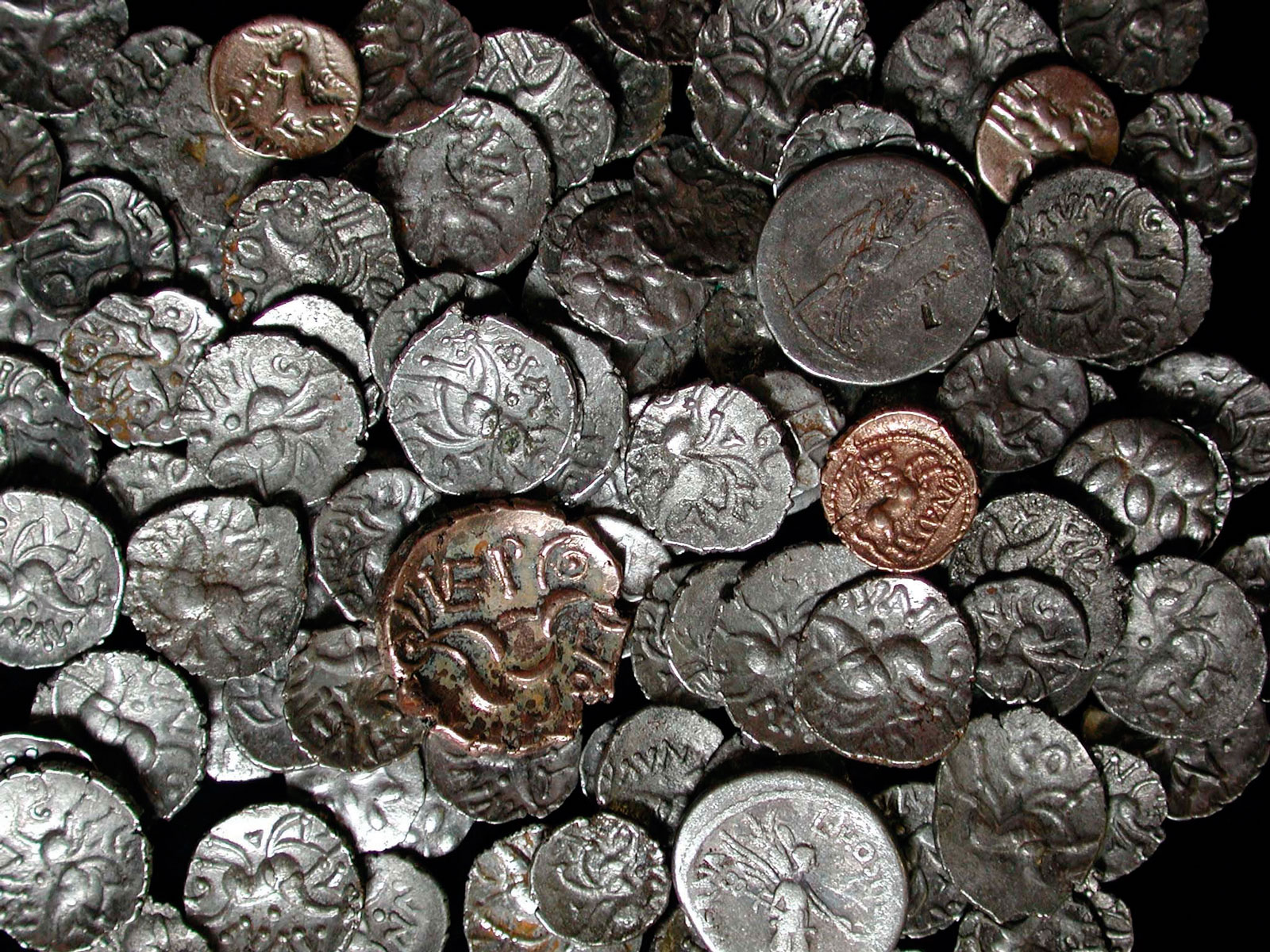
In 2010 in a field in Frome, Somerset, hospital chef Dave Crisp and his metal detector came across a hoard of 52,000 Roman coins buried in a large pot under the ground. One of the most important aspects of the find is that it contains a large group of coins of Carausius, who ruled Britain independently from AD 286 to AD 293.
11. Gold and silver artefacts, Hammerwich
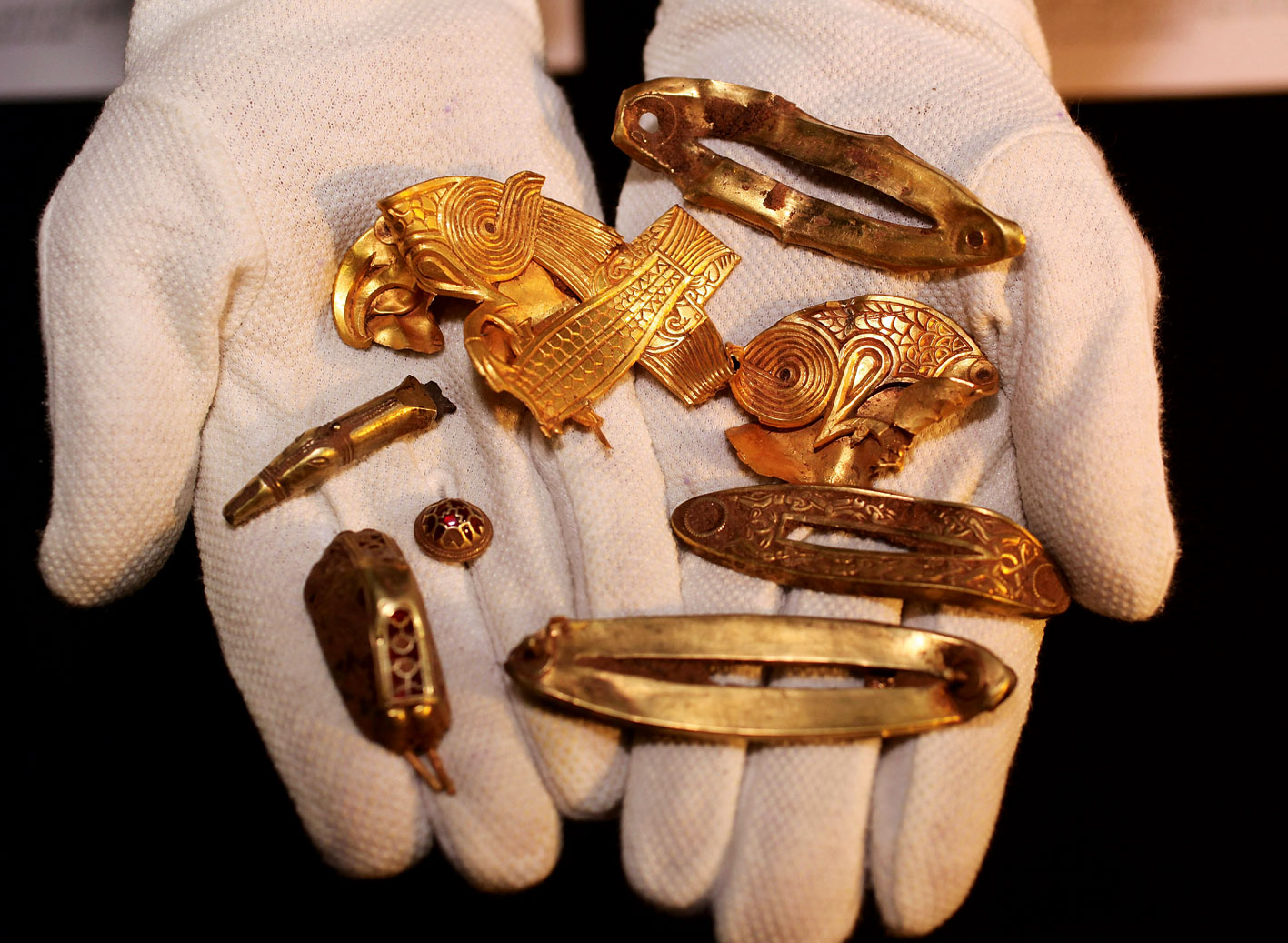
Metal detector enthusiast Terry Herbert found more than 3,500 gold and silver artefacts in a field in Hammerwich in July 2009 in what became known as 'The Staffordshire hoard'. The vast majority of items in the hoard were martial gear, especially sword and helmet fittings. It is the largest hoard of gold from the period ever found.
12. 900 silver pennies, Anglesey
With the exact location withheld, over a six-year period amateur enthusiasts found over 900 silver pennies on an Anglesey beach. Dates of the pennies ranged from 1272-1307 and while most were English, there were also coins from Scotland, Ireland and some European countries.
13. A treasure chest, River Ribble
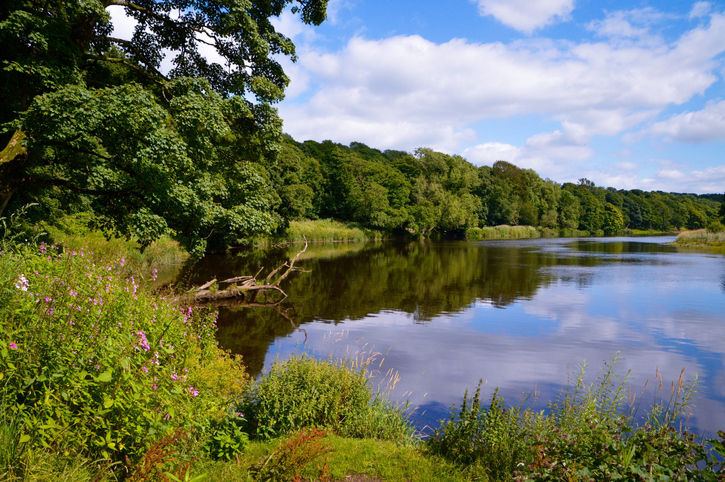
In 1840 workmen hauled a lead-lined chest from the bank of the River Ribble. Inside was over 8,500 pieces of silver consisting of coins, ingots, amulets, chains, rings, cut-up brooches and armlets. It is the largest Viking Age silver hoard found in northwestern Europe.
14. Gold dollar coins, Hackney
In 2007, 80 gold dollar coins were found in the back garden of a Hackney property in London. All were $20 denominations known as ‘Double-Eagle’ minted in the US dating from 1854 – 1913. However, they were ruled not to be treasure as the previous owner’s son was eventually traced.
What's it like to find treasure?
Paul Coleman was in a Buckinghamshire field in 2014 when his metal detector began to beep.
“You can gauge the size of the buried metal by listening to the sound. This was a loud signal, and I could tell the object was quite large, but you can’t really know for sure until you dig.”
So Paul began took out his trowel. As he shifted more clay and silt, the anticipation mounted. “The signal seemed to indicate it was getting larger and larger. By the time I had gone to two feet, I could tell that whatever I was about to unearth was huge.”
At last, Paul struck metal: a humble lead container. He thought it was junk. But then he spotted the bright coins inside, stacked neatly.
Paul had found more than 5,252 silver coins, around 1,000 years old. They bore the faces of their kings: Ethelred the Unready and Canute, who ruled between 978 and 1035. The hoard was unusual partly because the first was an Anglo-Saxon king, the second a Viking; and coins from both are rarely mixed. They were later valued at £1.35 million.
The secret of treasure hunting
Paul’s success didn’t come overnight. “Forty years,” he says. “I’ve been doing this for that long.”
Unsurprisingly, he says that perseverance is the key to metal detecting. “If you put enough time in, you’ll get lucky – you’ll find something really interesting"

The waiting, he reckons, enhances the joy of making a find. "Like angling, or cricket, very little happens for a long time and then you get the big reward. And the time between those moments increases the anticipation.”
Peter Welch runs the 1,000-strong Weekend Wanderers Detecting Club, and was at the scene with Paul when he found the hoard. “Lots of people try detectoring and get disappointed quite quickly when it turns out that it’s not a path to instant riches, that they have to put in the time walking up and down fields,” he says.
The real reward
Some detectorists argue, though, that the real treasure of detectoring is time spent in the countryside.
“People who have taken up and continued detecting tend to appreciate the value of just being outdoors,” says Steve Critchley, a member of the UK’s National Council for Metal Detecting.
Peter agrees: “Some of us are there really to relax, and swinging a metal detector provides a purpose for a walk in the country.”
For Lance and Andy, the main characters in Detectorists, the pleasure of each other's company is also part of the attraction – although of course they would never say so.
But surely all that fruitless wondering gets a little... dull? Paul is adamant: “It’s never boring because, like fishing, it’s the quiet times that make that lucky catch worthwhile.”
Just as well, because there's no guarantee of success, no matter how long you spend looking. “People think I’ve achieved something big," says Pail, "but it’s just a stroke of luck, really.”