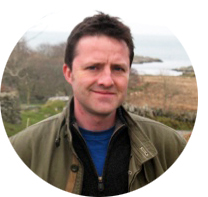
“Dad used to call me a feckless environmentalist,” Hugh Crossley says warmly of his father, the 3rd Baron Somerleyton. “But he was a conservationist in his own way – he’s the reason we have good hedgerows, and why it’s a traditional mixed farm.”
We’re walking in parkland at Somerleyton Hall, a magnificent Victorian stately home and the heart of the 4th Baron Somerleyton’s 2,023-hectare estate on the Norfolk-Suffolk border. We’re talking about rewilding – in particular, Hugh’s dream of seeing 20% of Britain devoted to nature.
With friends Argus Hardy and Olly Birkbeck, Hugh is launching WildKingdom, which aims to link nature-friendly farming and gardening projects across Britain through a ‘Map of Dreams’ – “to inspire and accelerate societal change”. If more of us set aside land, time and energy for biodiversity, he says, we can “pay back our debt to nature”.
It’s been an interesting journey – and not without controversy. Two of the biggest barriers Hugh has faced are stalwarts of the British countryside: convention and tradition. It takes a certain rebelliousness – or “contrariness”, as Hugh calls it – to overcome these, even as a landed peer. And there’s an element of mutiny in the way the former restaurateur dresses, eschewing the rural gentry’s regular uniform of cords, checked shirt and gilet for old jeans and a fleece.
The story starts with a 12-hectare block of parkland at Somerleyton. Even in November, this rough grassland is studded with wildflowers and herbs. “Until about 12 years ago this was a wheat-growing field, having been turned over to production in the war,” explains Hugh. “I wanted to return it to wildlife, and the grants for converting arable back to parkland were generous. It took a big battle with my old farm manager, because it was seen as ‘good land’. But I wore him down eventually.”

Hugh is the same age as me, and has witnessed the same nature loss over the past 50 years. “As a younger person, I had classic eco-anxiety, which is part of my motivation,” he says. “But some of it might have been just to be contrary to the more traditional management of my father and his farm manager. Dad liked things to be neat in the Victorian tradition. The idea of grass being unmown was unthinkable. If there was an old oak with a staggy top, he’d worry that people would think it was messy – and he’d get someone to trim it back.”
Hugh recalls marshes on the estate being drained, fields being levelled, and scrapes and ponds being filled in with waste potatoes. So when he came into possession of the estate, he saw it as a chance to repay that nature debt.
Biding time
As with many rewilding projects, the dreamed-of mosaic of natural beauty did not materialise immediately. In her book Wilding, Isabella Tree recalls how sow thistles initially dominated the grasslands of her pin-up rewilding estate at Knepp in Sussex, to the consternation of her neighbours. Here, Hugh was faced with thistles and ragwort – for some landowners, botanical enemy number one.
By that time, he had made friends with local farmer Rob Raven, who had progressive ideas of his own about nature-friendly farming. Rob encouraged Hugh to reduce livestock pressure in the parkland.
“Looking at the ragwort, I thought how Dad would wince,” smiles Hugh. “So I said to Rob: ‘should we dial this back?’ He replied: ‘hold your nerve’. And he was right. After a few years, things balanced, and now we have a blaze of wild meadow flowers.”

Hugh also has some helpful grassland managers in his employ: a herd of Welsh Black cattle sourced at Llandovery, from where his mother’s family hails. As we wander close to them, these gently curious creatures surround us. “I probably should have got some Suffolk Red Poll cattle,” Hugh smiles, “but I just love this connection to my Welsh heritage.”
Hugh invited Rob to become his farming manager. Backed by Hugh’s enthusiasm, Rob has used his agricultural nous to make the estate’s farmland more nature-friendly, accessing grants and subsidy systems such as higher-level stewardship and the Sustainable Farming Incentive. When I met Rob the previous evening, he rejected the “binary argument that farming and nature can’t go hand in hand”.
“My dad didn’t care about breaking the mould, and I learned from that,” he told me. “I can prove that you can be an efficient food provider, create a profitable farming model – and include nature restoration throughout the whole farmed environment.”

Rob also helped Hugh identify a bigger opportunity for nature. In the north of the estate lies Fritton Lake, a spring-fed Victorian creation. The water is such good quality that it supplies the nearby town of Lowestoft, and the lake forms the heart of a tourist enterprise on the estate. But it is also surrounded by 404 hectares of sandy, gravelly, or marshy land that has always been hard to farm. Rob proposed taking it out of arable production altogether and returning it to heathland.
Ten years later, this area of scrub and woodland is ready to welcome rare species such as nightingales and turtle doves; in fact, 39 of Britain’s 70 Red-Listed species of birds and 900 moths have already been recorded. But it was not easy going at the beginning.
Hugh recalls his frustration with what he felt was a lack of support from Natural England. “I was a bit naive, but the system was taking literally years to catch up,” he says. “Natural England and the Government were wary about supporting more Knepps until they knew what we all know now: that it’s a tremendous asset and success.”
Global inspiration

As he waited for official sanction for his project at Somerleyton, Hugh read widely and travelled to experience other related ventures, visiting the influential Dutch rewilding project at Oosvaadersplassen and the great bustard reintroduction on Salisbury Plain. But the initiative that most helped him write his manifesto was American Prairie, based in Montana, which aims to create one of the largest nature reserves in the USA.
“It is very much a grassroots project,” says Hugh. “They were saying to farmers: ‘we’ve got this idea to restore the ecosystem.’ At the beginning they were just asking farmers to self-score their actions for nature rather than have standards imposed on them. This score eventually became a badge or a mark of distinction.”
These landowners were proud to display their nature-friendly credentials, and consumers love products labelled as Wild Sky. “Basically, it’s a kind of cooperative. They were pretty small farmers without the capacity to be big brands in their own right, but now they operate at scale.”
Inspired by Zoom calls with American Prairie organisers and farmers during and since lockdown, Hugh decided to launch an East Anglian version, WildEast – which forms the basis of WildKingdom. Together with Argus and Olly, and using their land as exemplars, he set out to convince farmers, growers and gardeners to work towards setting aside land for nature – again, self-scoring. “On an exam, 20% is a terrible score – but it would be enough [to contribute to nature recovery].”
WildKingdom’s map of dreams

Hugh Crossley believes it’s important to take action for nature beyond simply watching it or passively supporting conservation organisations. Whatever you do for nature, it’s easy to become part of WildKingdom.
Whether you are growing pollinating flowers in a window box, creating a wildflower meadow in a local park or turning over your garden to nature, you can add your project to the Map of Dreams alongside all of the other projects, big and small.
Here you can add a pin to mark your nature-friendly actions and add text, images and video. Hugh and his team are keen to feature as many projects as possible as they grow the WildKingdom community, so you might even be asked to record a video about your efforts.
Again, it was not plain sailing. “We probably didn’t get that across very well at the beginning, particularly with our farming friends,” explains Hugh. “A few of them rounded on us for not consulting them properly.” He ruefully recounts the cool reception he received from peers when he outlined WildEast at Groundswell, the regenerative farming festival.
“Some friends who own reasonable chunks of land felt we were being dictatorial – as in: ‘you have to give 20%!’,” he says. “But the 20% is an aspiration and, as Rob has shown, you can create space for nature without losing farmland. Just look at awkward, hard-to-farm corners of fields, or allow hedgerows to become the cathedrals of biodiversity that they should be. So you save time, save money, save carbon, save nature.”
Though the project has broken ranks, funding for marketing and publicity has come in from private donors and the new energy sector, such as renewables and Sizewell, the nuclear power station on the Suffolk coast.
After a couple of years “in the wilderness”, as Hugh puts it, WildEast has found traction among many in East Anglia. Already it has inspired hundreds of pledges and attracted councils, community groups, farmers, schools and gardeners to share its mission, adding their own actions and projects to the Map of Dreams.
“There’s this wonderful lady in Felixstowe – we call her Mrs Miggins to protect her identity – who joined the map at the beginning,” smiles Hugh. “She said she was heartbroken about the state of nature so, when she read about WildEast, she went out into her backyard and lifted some patio stones to let nature come through.”
Making dreams a reality

On the Map of Dreams, East Anglia is a blur of pins, each one representing a spot with a commitment to rewilding. These range from large farms and nature reserves to places where very personal efforts are being made – a garden here, a park flowerbed there.
WildKingdom is the ambitious expansion of WildEast across the whole country. Hugh hopes that it will turn these “individual acts of stewardship into a collective story of national restoration”. I put it to Hugh that he’s in the fortunate position of having land, title and time to make a difference.
He admits to the “difficult issue of privilege” but counters that “Argus, Olly and I could just sit here allowing a few school visits and being pleased with ourselves, but we’re in a position to do more. We don’t need one Mrs Miggins – we need hundreds of thousands, and that needs funding and energy and determination.
“I have to say it was me being a bit headstrong on the Kingdom bit [of the name] – I was outvoted two to one. But I said: look, we’ve done five years – it’s a good moment in our history. It would be great if we can get the King on board,” he adds with a wink. “It is his kingdom, after all.”
As we wend our way back to the hall, serenaded by the calls of recently returned ravens, Hugh observes that “Essentially, WildKingdom is a platform celebrating positive change. Can we make enough space in our hearts and heads and on our land for the rest of the things we share the world with? All that nature wants and needs is just what we need: connectivity, community and space to thrive. Imagine if you could live in a nature reserve, not just visit it.”
Branches of the WildKingdom
Here are a few of the many other initiatives pledged to WildKingdom, along with the major rewilding projects that inspired Hugh:
Alladale, Highlands. This 9,300-hectare former sporting estate in the Scottish Highlands was bought by Tim Lister in 2003 with a vision to restore native flora and fauna and create a more dynamic but balanced environment.
Blyth Woods, Wenhaston, Suffolk. A local community charity manages a mix of ancient and newly planted woodland for the benefit of wildlife and local people.
Bistern Avenue Community Garden, Walthamstow, London. A patch of land on a council-managed estate has been transformed into a biodiverse, wildlife-friendly garden.
Primal Runners, Kent. This social enterprise helps disadvantaged communities experience and connect with wild nature first-hand through a range of outdoor activities.
Hadleigh High School, Suffolk. Concerned by local housing developments impinging on space for wildlife, pupils have formed an eco-team creating a pond and wildlife area in a corner of the school playing fields to provide havens for nature.