
The robin is one of our best-loved British birds. With its iconic “redbreast”, perky demeanour and year-round song, the diminutive songbird is a common fixture in our parks, woodlands and outdoor spaces. But this familiar garden visitor has an extraordinary secret.
While many British robins stay put throughout the year, others arrive from mainland Europe in winter. These migratory birds typically travel at night, navigating long distances with few visual landmarks to guide them. So how do they find their way?
Back in the 1960s, German scientists had a hunch. They suspected that birds could sense the Earth’s magnetic field and use it to orient themselves. To test this, they placed European robins in a specially designed test cage and manipulated the direction of the magnetic field around them. The robins changed their orientation accordingly.
It was one of the first experiments to demonstrate that an animal could use the Earth’s magnetic field as a compass – a sixth sense, if you will.
But the study raised more questions than it answered. If birds have an internal compass, where is it located? What is it made of and how does it work?
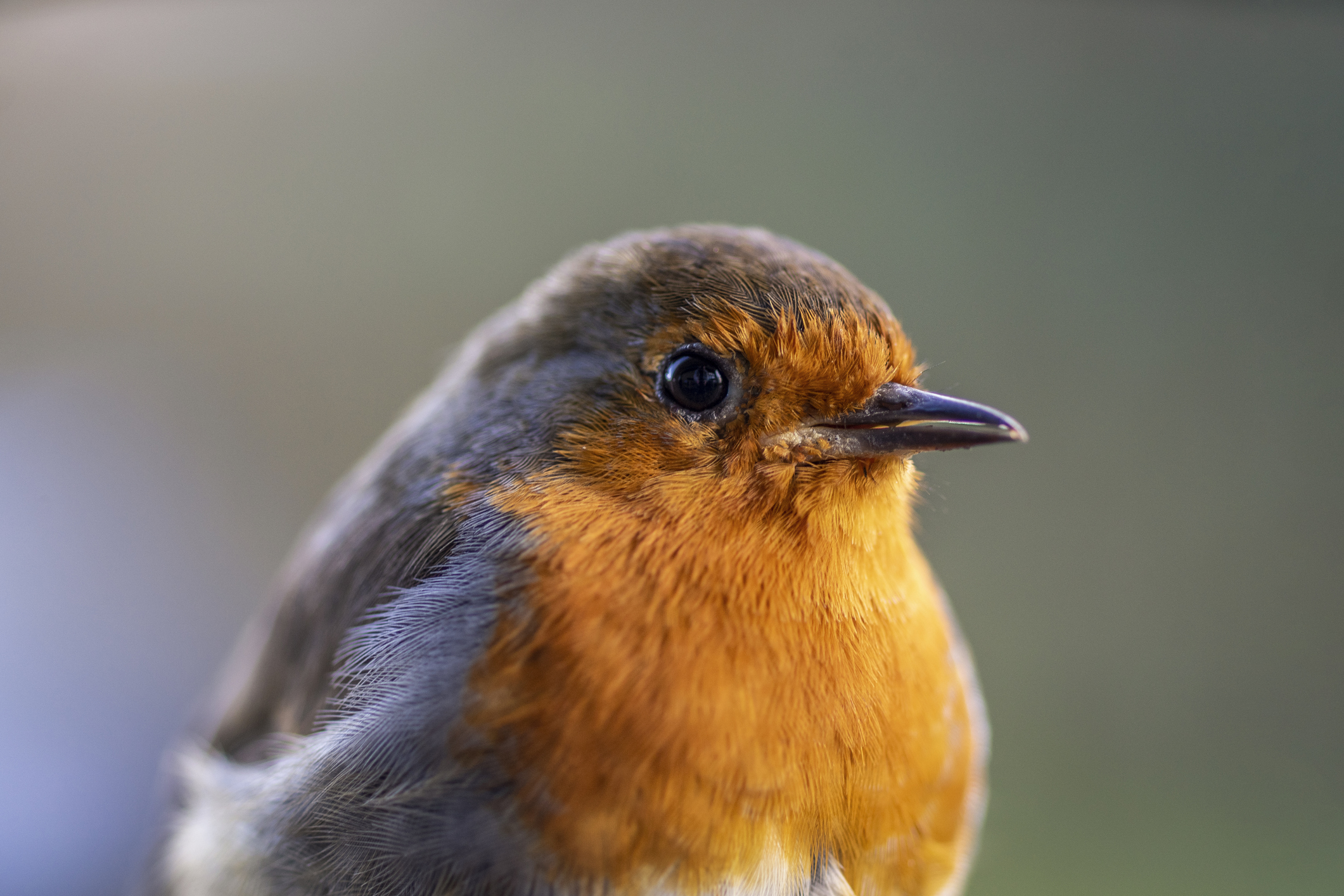
A breakthrough came when biologists noticed something strange about the way birds navigate in captivity: their ability to orient themselves using the Earth’s magnetic field depended on the wavelength of light around them. Since the eyes detect light, this suggested that the birds’ compass might be hidden there.
The retina is the light-sensitive layer of cells at the back of the eye. In a landmark 2021 study, Peter Hore at the University of Oxford and colleagues investigated a protein found there, called cryptochrome 4 (CRY4). They made synthetic versions of the protein and tested how they responded to magnetic fields.
In the lab, the European robin version of the protein was more sensitive to magnetic fields than its chicken counterpart. European robins are migratory, while chickens tend to be homebodies. This suggested that CRY4 might help robins detect the Earth’s magnetic field and navigate.
In other words, the compass might be in the eye and it could be made of CRY4. How it works takes us into a fiendishly cryptic realm of science.
Quantum physics describes the behaviour of the very smallest objects. Think atoms, molecules and negatively charged particles called electrons. Electrons like to hang out in pairs, but when light hits CRY4, it can trigger the production of molecules with unpaired electrons. These solo electrons have a quantum property called spin, which can be influenced by magnetic fields.
So, the Earth’s magnetic field alters the chemistry inside CRY4, potentially giving the robin a way to sense the direction of the magnetic field. And because the reaction occurs inside the eye, it raises another intriguing possibility – that robins can literally see the Earth’s magnetic field. Not as lines on a map, but perhaps as a faint pattern or shadow that is superimposed on their normal vision.
So, the next time you see a robin perched on the end of your pitchfork, remember: this little bird may be exploiting the quirks of quantum physics to find its way around. There’s more to the robin than meets the eye.

