It might have floated into British waters straight off a medieval seafaring map: a beast too fabulous for reality, too disproportionate to exist.
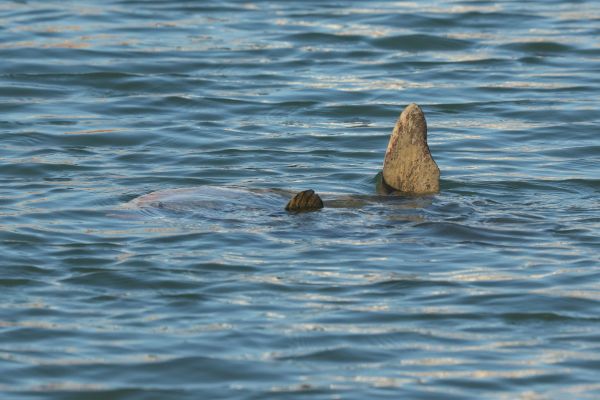
On the south-western coast of the UK, a strange apparition greets those looking down into the turquoise water: a fish as pale as the moon, as round and flat as a dustbin lid, lying on its side as it apparently basks in the sun. It's an ocean sunfish, or Mola mola.
- Ocean giants: 10 of the UK’s most colossal sea creatures
- From an animal the length of a double-decker bus to a bird that has a spoon for a beak, here are the 10 weirdest animals in Britain
- From breathtaking beaches to spotting dolphins, these are Britain’s best boat trips
What is a sunfish?
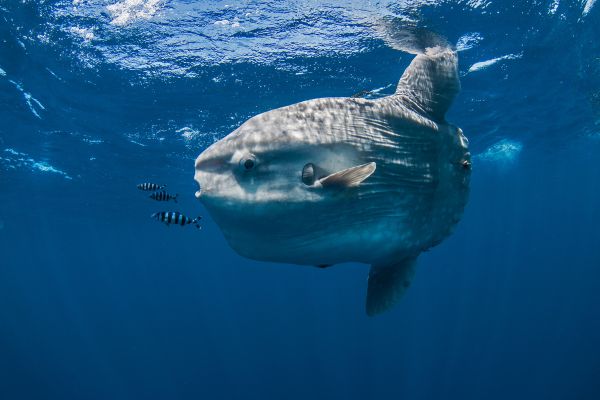
Nothing about the sunfish seems quite believable. Its body is like an old-fashioned doorknocker – circular, truncated, with a fixed, open-mouthed expression and a tall dorsal fin that cuts the water like a blade. This improbable shape belongs to the second-largest bony fish on Earth.
A creature of warm and temperate waters across the globe, it has acquired many local names which, when translated, signal universal bewilderment at the missing rear half of the body: “Cut Short” in the Philippines, “Swimming Head” in German.
The ocean sunfish’s tail is little more than a rippling, fan-like edge, but it travels well, with slow and steady persistence. One tracked individual covered over 2,500km in just a few months.
What do sunfish eat?
Sunfish don’t visit British waters to be idle; they are drawn here to hunt prey, particularly the barrel jellyfish, a pale golden giant of the Irish Sea. Sunfish gather where jellyfish are abundant and can be seen drifting near the surface between feeding dives, their tall dorsal fins slicing through the water like slow-moving sails.
Are sunfish under threat?
In terms of breeding, the sunfish is astonishingly prolific. A single female may release up to 300 million eggs in one season – more than any other known vertebrate. The young begin life as tiny, spined larvae, utterly unlike the smooth giants they will become. Despite these vast numbers, survival is brutally low; only a minute fraction will reach adulthood.
Global population sizes remain uncertain, as sunfish roam widely across oceans and are difficult to count. However, they are classified as an internationally vulnerable species. Like dolphins, thousands of sunfish are estimated to be caught each year as bycatch in fisheries targeting tuna and swordfish, particularly in drift nets and longlines. In UK waters, sightings have increased in recent years, likely reflecting both warming seas and improved reporting rather than a clear population boom.
How big is a sunfish?
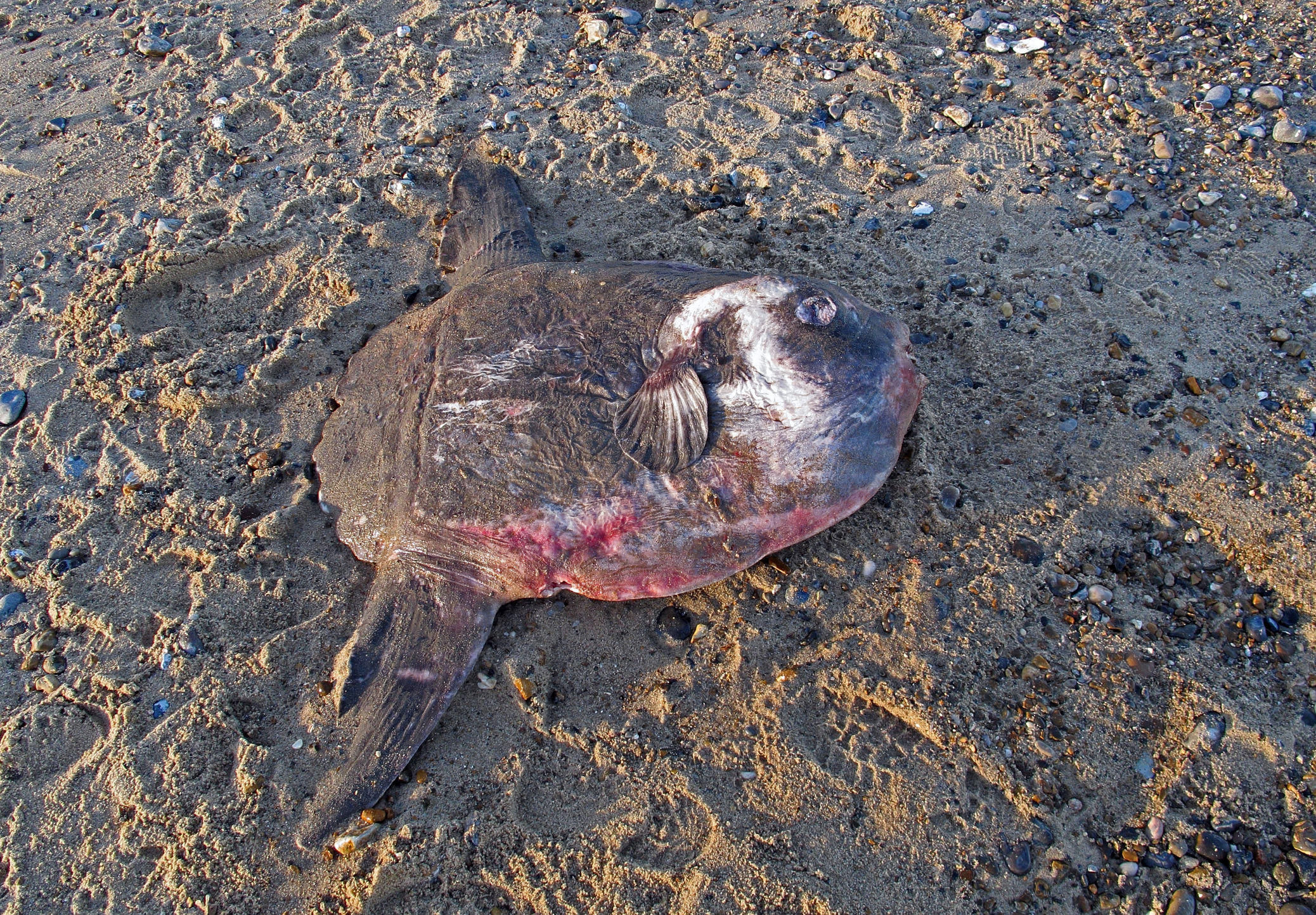
This is the second-largest of all bony fish, topping 1,000kg on the scales – the weight of a small car – and over three metres in length.
Those sunfish reaching UK waters are usually smaller, but no less strange – thin as though pressed flat, like a fish sketched in pencil and suddenly given life.
Why do sunfish sunbathe?
On good summer days in the sparkling Cornish seas, sunfish are lying on their sides at the surface, bobbing like a swimmer on a lilo. They may be warming up after a dive into deeper, colder waters; it could also be that they are inviting birds to peck away any parasites. Strange they may be, but sunfish still add to the ocean’s charm.
Where to see sunfish in the UK?
In UK waters, sightings have increased in recent years, likely reflecting both warming seas and improved reporting rather than a clear population boom.
These summer visitors are primarily spotted off the south and west coasts of England, especially around Cornwall and the Isles of Scilly, with occasional sightings extending into the Irish Sea, Wales (Pembrokeshire) and western Scotland.
You can even book boat trips from Padstow harbour on the north Cornwall coast to catch a glimpse of this remarkable species.
Find out more
What else lurks beneath our UK waters? Check out our expert guides, from jellyfish to small river fish and from seahorses to bluefin tuna.
Main image: sunfish (mola mola)/Getty