
As UK wild bird populations drop to their lowest levels since records began, the RSPB is determined to save our rarest breeding raptor from national extinction.
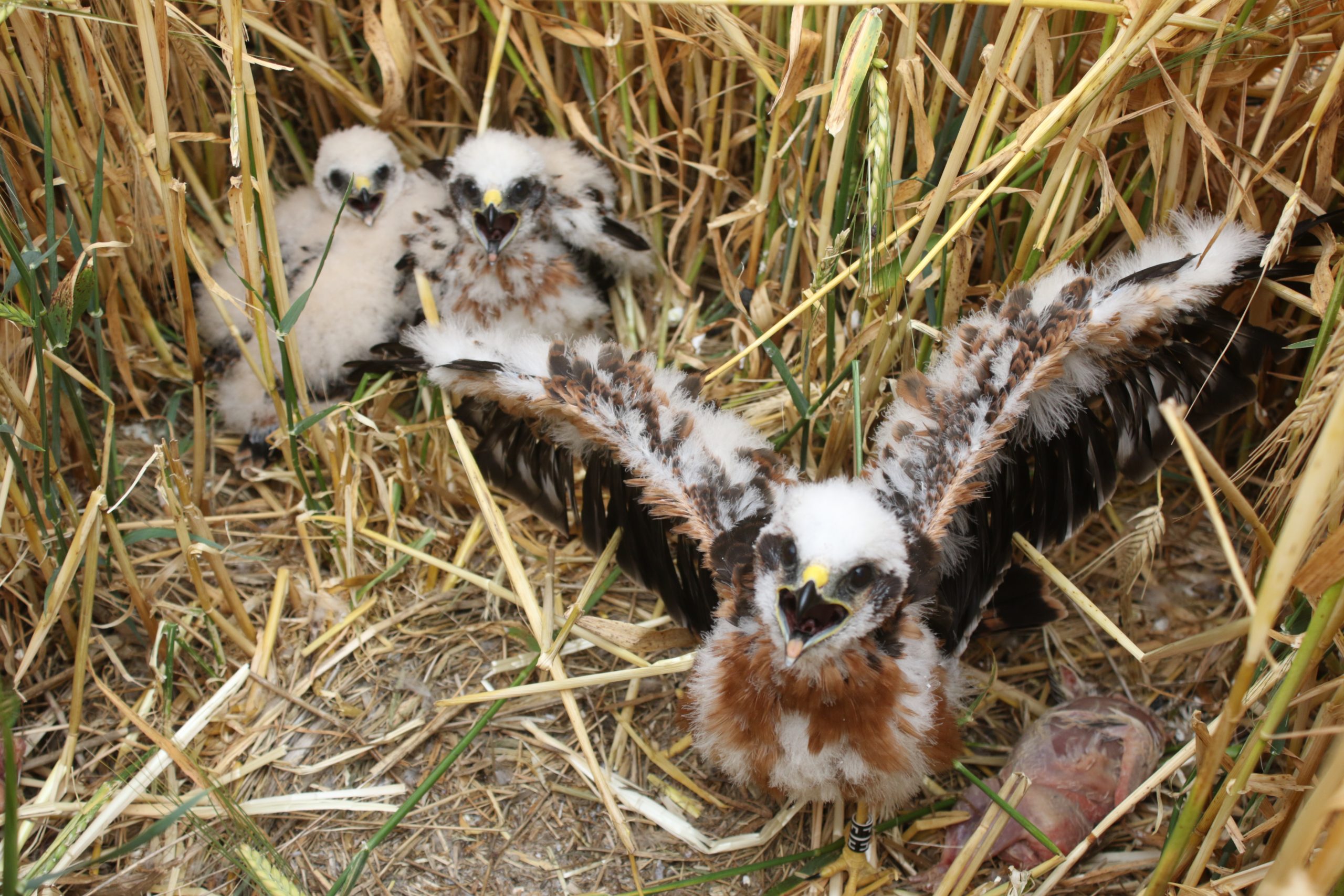
Montagu’s Harriers nest across Eurasia and winter in Africa. The UK marks the northwestern edge of its breeding range and, last summer, just six chicks fledged from two nests nationwide—up from zero fledglings between 2020-2023.
In a UK first, the RSPB fitted chicks named 'HV’ and ‘FH’ with satellite tags to demystify juvenile migration. Now, their tag data reads like a page-turner, with twists and turns that will shape the next chapter of their conservation.
The Tales of FH and HV
Hatched less than 1km apart, these female chicks started life feeding from the same male parent and hunting nearby grounds. The similarities ended there. Whereas FH collided with a train soon after fledging, HV was “like a toddler on some great migration,” said RSPB Montagu’s Harrier Lead Mark Thomas, who led tagging efforts.
Within 11 days of leaving the UK, HV had reached Africa. She began migrating on August 30th and crossed the Netherlands, Belgium, Germany, Luxemburg, France, Switzerland, and Spain in a large southeastern arc.
Her route mirrored a pathway Dutch Montagu’s Harriers are known to take, indicating HV flew among—but not in tandem—with other raptors. She crossed the France-Spain border through a high mountain pass in the Pyrenees, most likely in a miscellany of migrating raptors, landing in Morocco on September 10th.
Then, Mark’s team braced for the riskiest, final leg of her journey to the western Sahel. “That was always going to be the really interesting part,” said Mark, explaining that “after Marrakesh, it’s facing desert for weeks.”
Tag data indicated that HV stopped to feed for several days, which Mark deemed “a good strategy.” But, when the tag’s temperature dropped, so too did Mark’s hope for HV’s survival. “We instantly poured over the data. The most logical reasoning was the bird was dead.”
Despite the RSPB trying to recover HV for a post-mortem, Mark’s team could not locate her along the hilly scrub of Ourika. The cause of HV’s death is just one of the many mysteries this chick left in her wake.
Insights from HV’s Migration
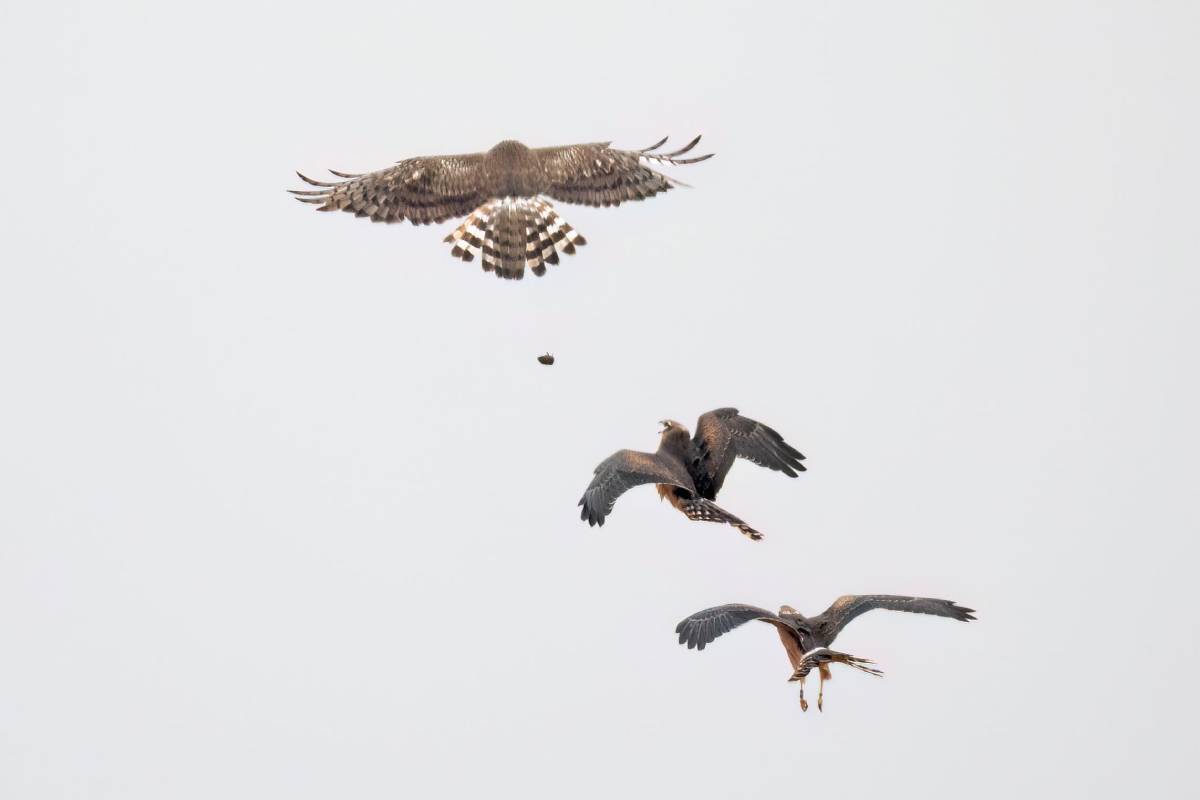
Juvenile migration is among the most mysterious wildlife phenomena, especially for species like Montagu’s Harriers that fly independent of parental guidance.
“Raptors generally migrate in the daytime, using landmarks and visuals,” Mark explained. “But on its first migration, it hasn’t got those markers because it’s not been there before—it’s going on something instinctive.”
Mark had guessed what those instincts might be, but was shocked. Three aspects of HV’s migration surprised him: first, that HV had left the UK within 24 hours of leaving its nest site. “We thought she’d take around a week flying South, finding feeding areas and probably ending up in Kent to cross the channel at the narrowest point,” Mark said.
Instead, in a second surprising turn of events, HV took a wider crossing over the North Sea, setting off near Lowestoft. “It found itself at the most eastern point of the UK, which I don’t suppose in any way was by mistake.”
By the time HV had hit the Spanish coast, Mark wasn’t surprised by her crossing the Mediterranean Sea at a much wider point than the “easy option” via Gibraltar, but he was taken aback by HV leaving so late. “If you’re going to fly 140kms or more across the Mediterranean, you don’t do that at 3pm knowing it’ll be dark by 7pm.”
Crossing seas in darkness is dangerous for Montagu's Harriers. They could lose their bearings and tire with nowhere to land, exposed to avian predators. Mark credited HV’s landfall in Morocco shortly before dusk as either “incredible luck” or else “it knew exactly what it was doing.” The latter explanation is strengthened by the fact that the weather the week after would have been inconducive to migration.
The next chapter
Tagging FH and HV has revealed unexpected risks and realities facing Britain’s rarest breeding bird. Whether FH’s death and HV’s migration were representative or random, only more tags can tell.
Come April 2027, Mark’s team will again search for skydancing males and decide whether to tag any juveniles. In the meantime, Mark is considering finishing the journey HV began. “I’ve had multiple years of seeing half of Montagu’s Harriers lives. As Species Lead, I want to visit Senegal to get a feel for their wintering grounds and get to know the complete bird.”
