It’s an archetypal image of the British countryside: green hillsides dotted with grazing cattle. Sometimes, however, such a scene isn’t so idyllically serene. Cows are largely docile animals, but their sheer size – they can top 500kg – means that they also pose a weighty risk to unlucky walkers.
Countless UK footpaths lead through cow fields. In the overwhelming majority of cases, following one of these trails will provoke nothing more than an idle bovine glance. But serious incidents involving cattle are well documented, including walkers being charged, injured and, occasionally, even killed. How concerned should we be?
Are cows dangerous?
Stories of cow encounters appear with unsettling frequency. In June 2025, a Cornish farmer was fined after one of his cows trampled a 75-year-old walking the South West Coast Path. In August 2025, an experienced hillwalker in the Scottish Highlands was left with 10 broken ribs after being “crushed” by cattle. And in early 2026, an Isle of Wight man had to be rescued by the local fire service after climbing a tree to escape an agitated cow. That might sound like sitcom material, but any walker who’s had such a too-close encounter will find it anything but amusing.
Health & Safety Executive (HSE) data reveals that 26 people in the agriculture, forestry and fishing sector were killed by animals in Britain over the past five years. This figure includes 14 workers and 12 members of the public; according to the HSE, it is “likely that a significant number” of these incidents involved cattle.
Are cow attacks on walkers on the rise?
Are attacks on walkers on the rise? It’s hard to say. There’s certainly a growth in awareness around the issue, but that may be because anecdotal evidence and local news stories tend to travel farther in this age of social media and 24-hour news websites.
How to keep dogs (and people) safe around cows
From a walker’s point of view, there are patterns to note. For example, the incidents in Cornwall, the Highlands and the Isle of Wight all involved walkers with dogs. Owners are advised to keep dogs on leads around livestock unless you feel in danger of attack from cows, in which case you should let your pets run free.
Two of the cases mentioned also involved cows with calves. Cows are known to be more protective and unpredictable when their young are around, especially if walkers stray between mother and offspring. The UK’s main calving season usually falls between February and April, with a second season in the autumn.
This doesn’t mean, of course, that we should stop taking dogs on public footpaths or avoid walking at certain times of year. Nor does it mean that, if we’re pet-free and hiking outside the calving season, cows will pose no danger. But it does highlight the value of being risk-aware.
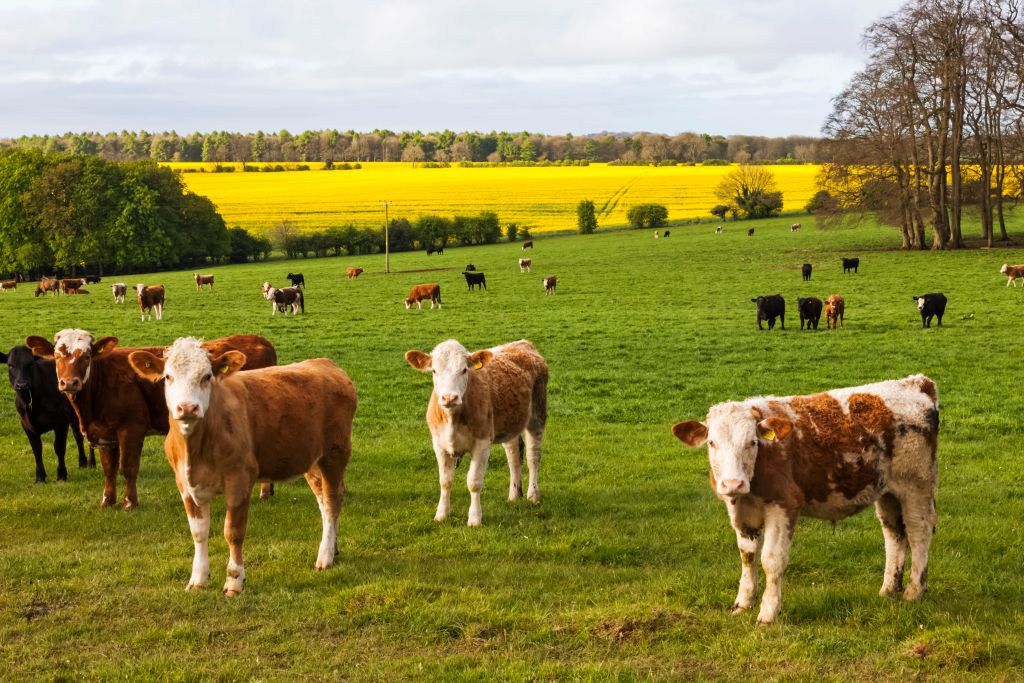
What should walkers do if they meet cows on their walk?
1. Keep your distance
Guidance to walkers is clear. “Keep a good distance from the cattle,” says Rebecca Birrane of the Ramblers. “If you’re following a public right of way and the cattle are on the path itself, you’re allowed to go off the path to walk around them. If cows approach, stay calm and keep walking quickly and quietly. If you panic or run, they may also start running.”
2. Avoid sudden movements
Sam Durham of the National Farmers’ Union agrees. “Try to avoid sudden movements. Running can make cattle jumpy,” he says, also pointing out that cattle moving nearer to a walker generally signifies curiosity rather than danger: “They’re quite short-sighted – their depth perception isn’t great.”
3. Look ahead – and take note of any obstacles
Taking stock of the situation early can help, too. “When you come to
a stile or gate, check what’s in the field,” continues Sam. “If there are cattle, check where they are and plan a route around them if you need to.”
What if the way ahead looks hazardous? “Cows with calves are the most common cause of problems,” says Rebecca. “If you come across a herd with calves blocking your route, you may wish to take an alternative path or wait until the herd moves on. Even if no calves are present, it’s best to be patient and give the cattle space.”
4. Don't worry too much!
Regulations are in place to keep potentially dangerous cattle away from walkers. Bulls, unless they’re under 10 months old or not of a recognised dairy breed, are not allowed to be kept in fields with public footpaths, and the same is true of any cow known to be dangerous, says Sam: “If a farmer knows that an animal has aggressive tendencies, that animal should not be kept in fields with public rights of way – it’s an offence.”
Did you know? Dogs are still statistically the UK’s most dangerous animal. In England and Wales, six deaths from being “bitten
or struck by a dog” were reported in 2022, 19 in 2023 and nine in 2024.
- The truth about cows and methane: How much cattle farming contributes to the climate crisis and what can be done about it
- How long do cows live?
- How many stomachs do cows have? The biology behind the myths
Visit cattlesafety.co.uk, a dedicated website set up by walkers to campaign for safer footpaths posts regular updates of incidents reported by its users.