
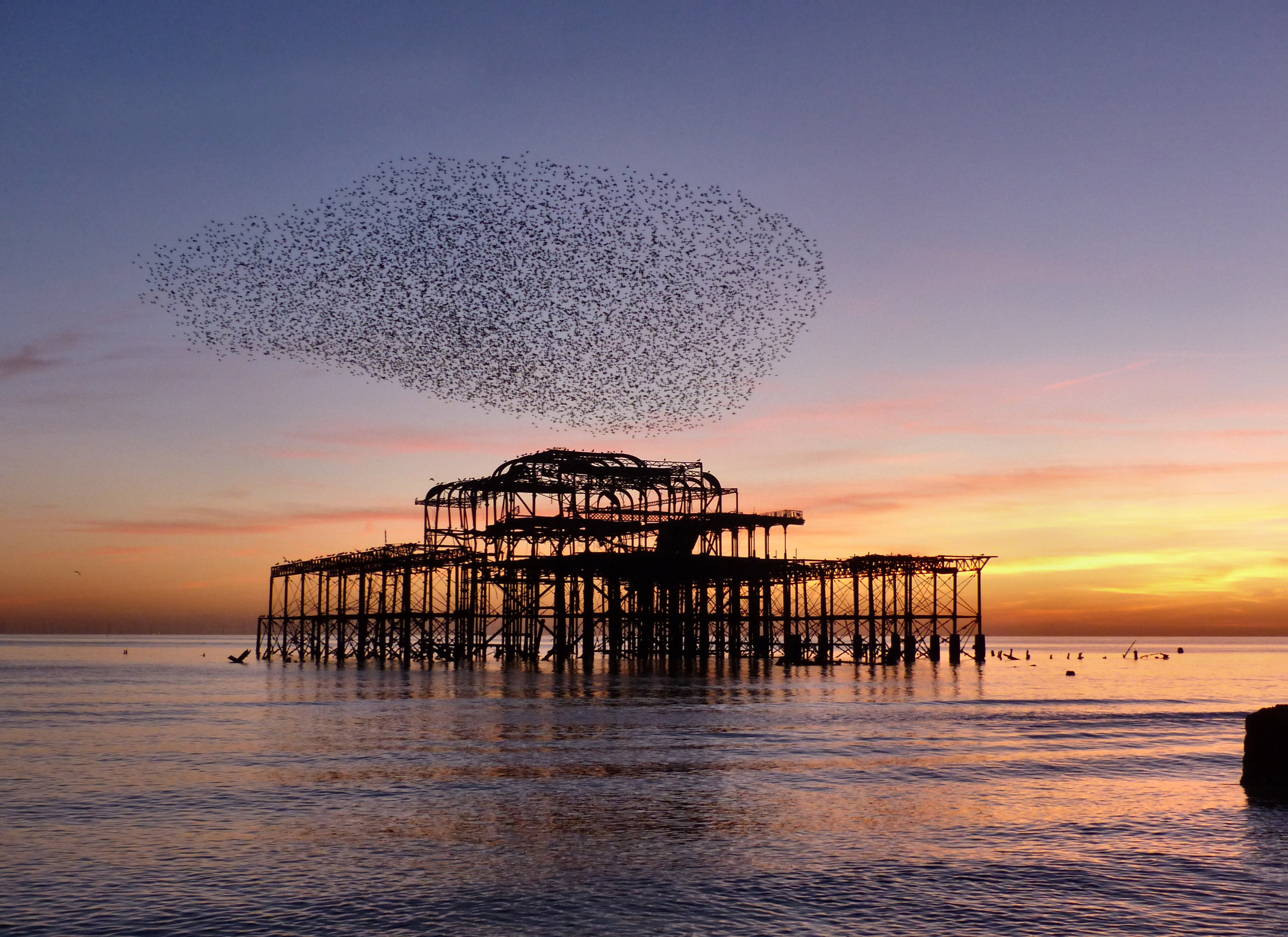
A starling murmuration is an incredible sight. A flock of birds flying so close together that they practically merge before your eyes. But how on Earth are they able to do that without crashing into each other?
Unlike humans, who have a bit more of a tendency to lose coordination, Starlings operate in perfect conjunction with each other. Each starling responds quickly to the movements of nearby birds, constantly adjusting its own speed and direction.
In fact, research has suggested that each bird pays particular attention to around seven of its neighbouring friends. If one gets too close, the others adjust their flight paths to avoid a collision. This is the main key to the strategy with each bird focusing on their own flight path.
Equally, when one bird changes direction, those nearby quickly follow suit. This movement can quickly move through the group, creating what looks like a wave or unique shapes from the ground.
Starlings are known for their incredibly quick reaction times. When a starling suddenly turns, the movement can spread through thousands of other birds within a fraction of a second. This behaviour is especially useful when dealing with predators such as peregrine falcons.
In these situations, a flock can twist or even split into a variety of smaller groups and then reform almost instantaneously. It is their quick thinking that allows them to operate in these unique patterns.
Where to see Starling flights in the UK?
We are now into the starling murmuration season across the UK. They are typically visible between now and Feburary and can mainly be seen on wetland and estuary sites.
Well known areas include Brighton Palace Pier, Aberystwyth Pier and RSPB Ham Wall in Somerset. They can typically be seen performing this behaviour just before sunset. Aim for a calm, dry evening for the best chance of seeing a show.
