
Reusable straws have become an increasingly popular option, both for at home and in restaurants, bars and venues. But are they actually any better than using disposable straws or is this all green washing?
There are actually many different types of reusable straws, each using a different material to be used again and again. While some, like stainless steel straws, are more common, there are lots to choose from.
So what materials are being used, and should you be buying some for yourself to use at home?
Types of reusable straws
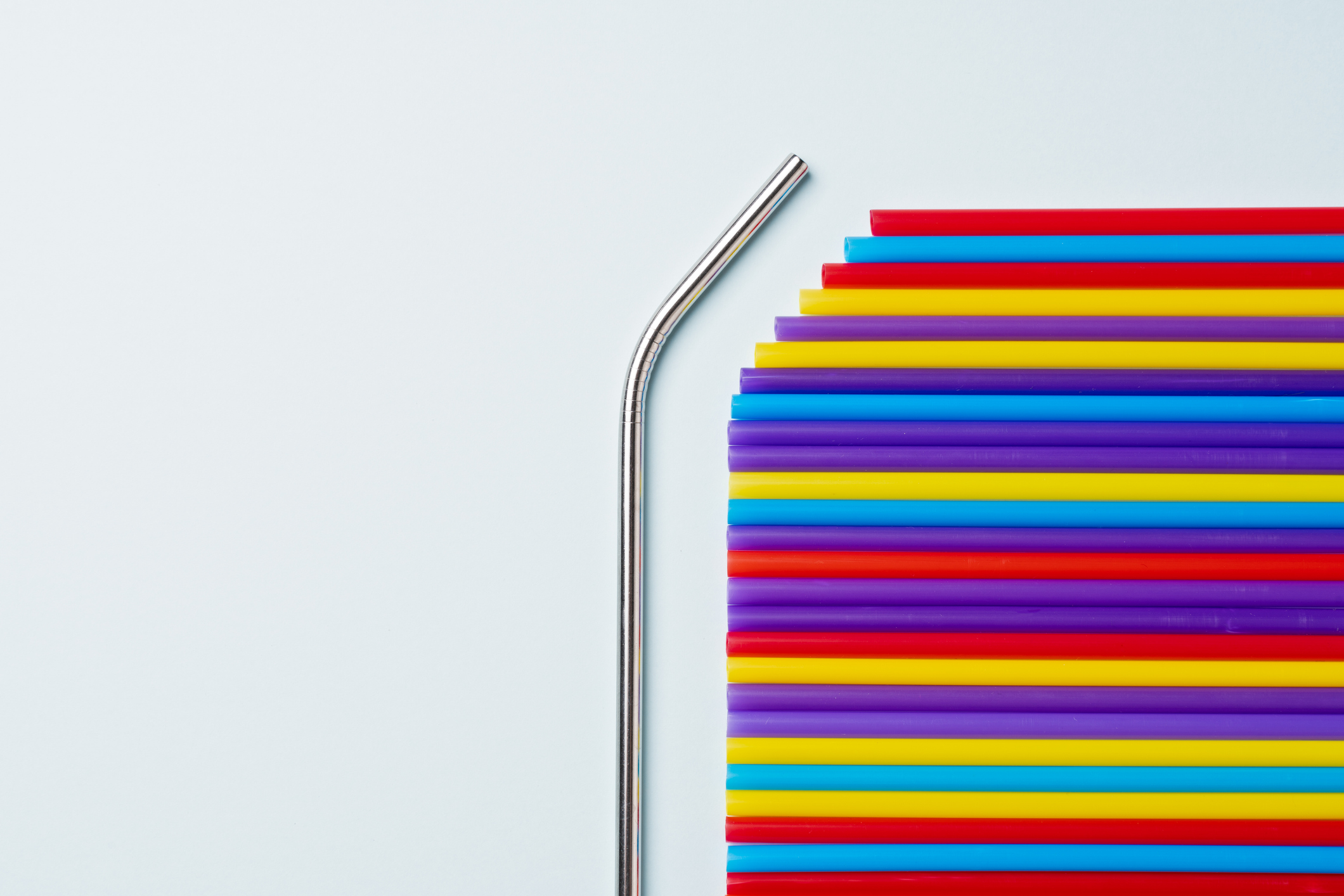
Stainless steel
This is one of the more common types of reusable materials for straws. Stainless steel is a great material for kitchen utensils and the same goes for straws.
They are durable, rust-resistant and can last for years. Not to mention that they can be washed at high heats for a proper clean.
Stainless steel is often used for for cold drinks. As a conductor of heat it can be challenging for those with sensitivity issues.
Silicone
Flexible, soft and usually made from food-grade silicone, these types of straws are often given to children due to their lower risk of causing injury. They aren’t as durable as stainless steel and can be harder to clean due to the risk of being warped in high heats.
The main raw material is silica, commonly obtained from quartz sand. This is processed into silicon and then chemically transformed into compounds used to manufacture silicone polymers.
While they don’t rust or corrode, they can absorb smells and flavours and can be harder to keep clean.
Glass
Glass straws are usually made from borosilicate glass. This is a type of glass that is made using silica, boron trioxide and sodium oxide. This is similar to the type of glass used in laboratory equipment and cookware.
These are made by melted the raw materials together at high temperatures making molten glass. They are then formed into long tubes, which are cut, shaped and bent.
They are non-porous and don’t absorb flavour. They operate in much the same way as a glass that you would drink out of. That means they are easy to clean and resistant to staining or corrosion.
However, the obvious issue here is that they are the most dangerous due to the high risk of breakages. Even small bits of damage can release small shards of glass.
Bamboo
Made from the hollow stems of bamboo plants, these types of straws have grown in popularity over the years. Unlike some other reusable straws, bamboo products can be made from a relatively simple natural material without extensive chemical processing.
To make these kind of straws, bamboo sections are cleaned, dried and sanded to smooth their edges. Some manufacturers apply natural oils to improve their resistance to moisture.
These are arguably one of the most natural forms of reusable straws out there right now. There is little work done to the materials and bamboo grows quickly and can be harvested without killing the whole plant.
However, they can crack or split with repeated use and can be harder to keep clean compared to some of the options above.
Plastic
Plastic is one of the best known types of material for straws. Usually, polypropylene is used. They are made by heating plastic pellets until they melt and then pushing them through a shaped opening using an extrusion process.
The resulting continuous tube is cooled, cut to length and sometimes bent or shaped. In a lot of cases, colouring will be added at the end of the process.
While these are lightweight, inexpensive and fairly durable, they are often manufactured from fossil-fuel-derived materials. They are also at risk of leaking microplastics over time which can be a risk for your health.
They are the best option for affordability, but not so much for the environment or your health.
Which is the best for the environment?
It is difficult to say which is the most environmentally friendly reusable straw material. It will come down to the exact process that was used to make the straw that you end up buying.
Stainless steel has a relatively high manufacturing footprint, but it can in theory last you for years. It is also a fairly easy material to recycle or reuse.
Silicone and plastic utilise industrial processes and can be hard to recycle. They are usually the more affordable option but often at the risk of a larger footprint.
Glass, while a raw material found in abundance, requires a fairly intensive manufacturing process. Bamboo on the other hand is renewable and potentially compostable. However, it is unlikely to last as long as glass or stainless steel.
Are they better than single-use straws?
Technically, any reusable material will be better than single-use, but only if you use it enough times. A stainless steel straw has a worse footprint than a single-use one if it is only used a handful of times.
Just like with other reusable tools, such as water bottles, reusable straws have a high initial footprint. You would need to use them for a long enough time for them to outperform the environmental cost of single-use straws.
Conservative estimations assume that a stainless steel straw needs to be used roughly 37-63 times to break even on its footprint. This effect will purely depend on how much you end up using the straw.
