
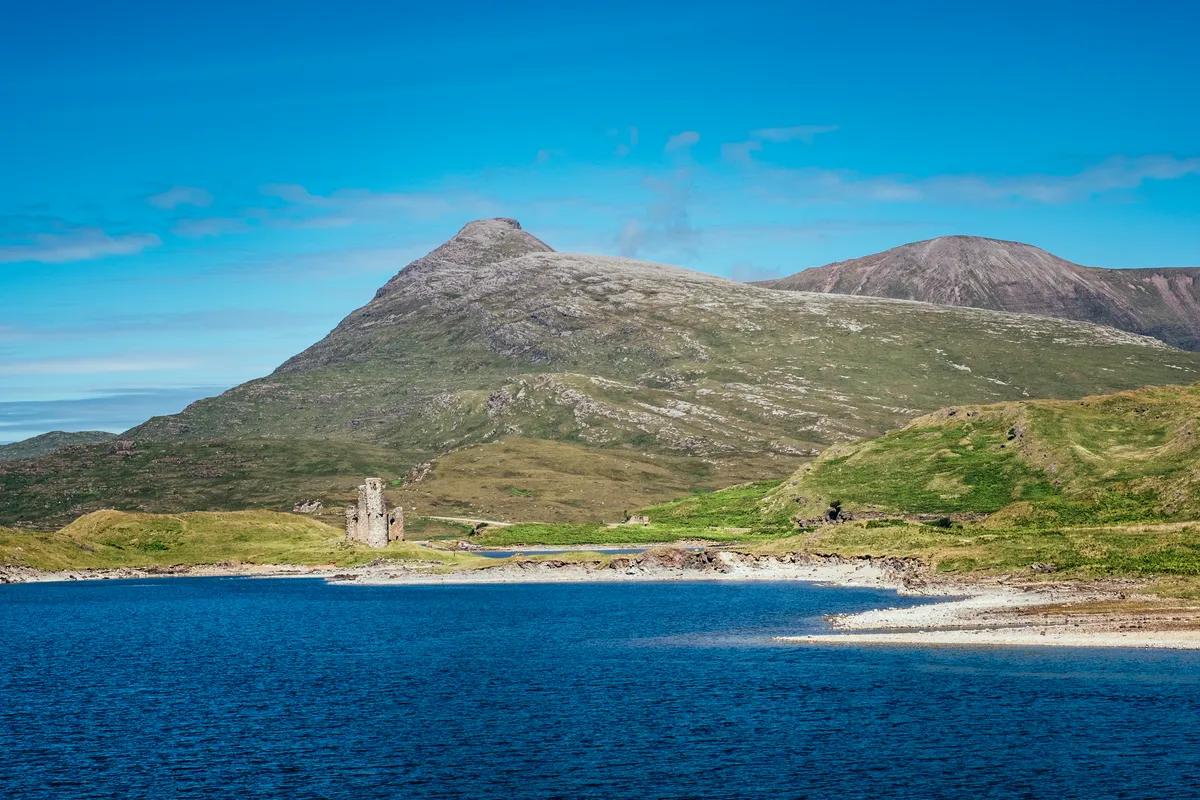
Narrow windows, spiral staircases, vaulted cellars and turreted walls – Ardvreck Castle once resembled a fairytale fortress. Today, it stands half-wrecked on the sandy shores of Loch Assynt, left to ruins by siege, murder and fire.
Ardvreck’s foundations were laid more than 500 years ago by Angus Mor III, a member of the MacLeod Clan. Initially, the structure would have been simple – perhaps three or four storeys high with a brewhouse, bakehouse, stables and berthing port for easy access to the loch.
It wasn’t until the end of the 16th century that Donald Ban IX added the iconic cylindrical tower, part of which remains today.
Clash of the clans
Brutality reigned for much of the 17th century at Ardvreck, with numerous conflicts between branches of the MacLeod family and with more distant enemies.
But perhaps the castle’s most infamous episode came in 1650. After defeat at the Battle of Carisdale, soldier and poet James Graham, the Marquis of Montrose, sought refuge at the castle. But with a reward on his head, the MacLeods betrayed Graham, surrendering him to the authorities who sentenced him to death in Edinburgh.
The MacLeods’ long rule of Assynt came to an end in 1672 following a 14-day siege by the MacKenzies of Wester Ross. Then, over 100 years later in 1795, a bolt of lightning cut Ardvreck Castle in two.
These days, the ruins sit peacefully on the Aird Breac peninsula like the bones of a dragon, a short stroll from a parking area just off the A837.
Riches to ruin
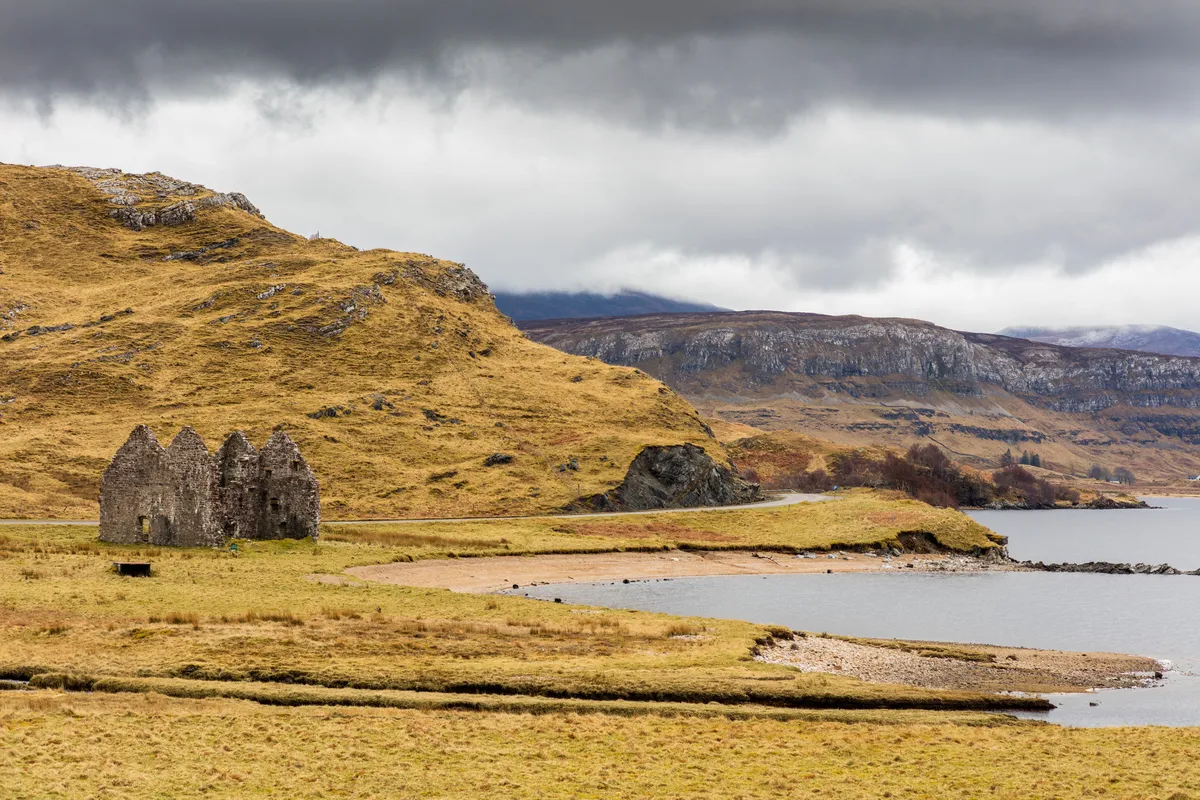
To the south of the car park is a second relic, Calda House, commissioned by Kenneth MacKenzie in 1726 for his wife Frances, who considered Ardvreck to be too grim a dwelling.
The two-storey mansion is thought to have had up to 16 bedrooms – lavish even by today’s standards – and played host to many riotous parties. But it was a luxury that the increasingly indebted family couldn’t afford.
Unwilling to see Calda in the hands of their enemies, supporters of the MacKenzies looted the house and set it alight in 1737.
- This Roman massacre is a myth, say scientists. Here's what actually happened
- Roman gladiator skeleton dug up in York reveals first evidence of human vs big cat combat
Top image: Ardvreck Castle in Scotland. Credit: Getty
More historic marvels
- Almost 2,000 years old, 73 miles long and once taller than an elephant – this colossal Roman structure spans an entire country
- The last castle to be built in England looks like it was created on Minecraft: Castle Drogo, a modern medieval oddity
- Ghosts, grief and grandeur in Cumbria: Is Muncaster Castle Britain's most haunted castle?
- Stonehenge: 6 bamboozling facts about the planet’s most famous prehistoric monument


