
After a long, hot summer, many of our lawns have been looking distinctly brown and crispy. But look closely and you may spot islands of green among the dried grass. Many wildflowers that hide among the lawn grasses, such as yarrow, with roots that can reach moisture deeper in the soil, can remain green and even continue flowering when the surrounding grass has stopped growing.
It’s a glimpse of what greater plant diversity can offer. A lawn dominated by only a few grass species can respond uniformly when conditions become difficult; a more diverse grassland contains plants with different characteristics, helping it cope with a wider range of conditions.
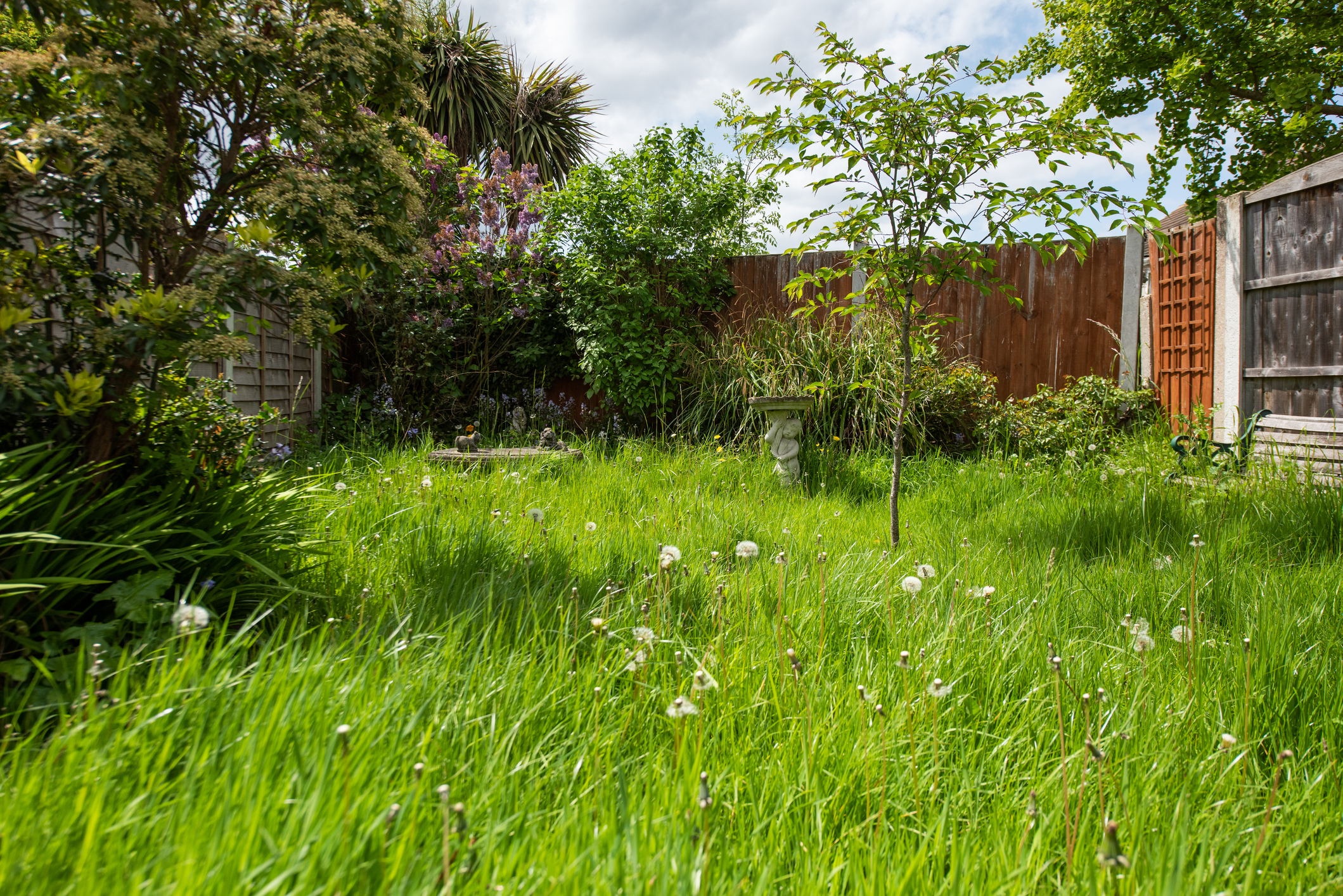
You might also have noticed this summer that areas that haven’t been mown as often have stayed greener for longer. This is because taller plants cast shade and create a cooler microclimate at ground level, allowing plants to stay hydrated under difficult conditions. Reducing the pressure of constant mowing can help support a more diverse plant community.
So, could we create more resilient, wildlife-friendly lawns simply by putting away the mower?
Reducing mowing is certainly a good place to start. Allowing grass to grow provides shelter for invertebrates and other wildlife, while giving flowering plants already present a chance to bloom. You might be surprised by what appears.
But there’s an important caveat: leaving the lawn to grow won’t necessarily create a wildflower meadow.
What lies beneath?
The outcome depends partly on what is already in your lawn. Many established lawns have a thick sward of vigorous grasses, leaving little space or light for other plants to establish. Garden soils can also be relatively nutrient-rich, favouring fast-growing grasses. Wild flowers don’t stand much of a chance.
Then there is the soil seed bank – dormant seeds beneath the surface waiting for suitable conditions to germinate. If yours contains a good diversity of wildflower seed, reducing mowing could allow some of them to emerge.
But after years of intensive lawn management that seed bank may be limited. Even when seeds are present, chances are they need bare ground and light before they can germinate.
My research shows that seeds that germinate from within the soil seed bank tend to be of a weedier nature; even if you strip the grass away, you’re more likely to end up with thistles, plantain and the like.
These species have a place but are perhaps not as desirable in a garden context. And stopping the mowing did not equate to more species appearing.
Give nature a hand
Flower-rich grasslands aren’t necessarily unmanaged landscapes. Traditionally, many are maintained through periodic grazing or cutting, which removes vegetation and helps prevent vigorous species from taking over.
Stop management altogether and, over time, natural succession may see grassland develop into scrub and eventually woodland. These are valuable habitats too – but perhaps not in the garden environment, and certainly not the wildflower meadow you may have been hoping for.
None of this means getting the mower back out every weekend. Mowing less is an easy and worthwhile way to make a lawn friendlier to wildlife. Try leaving an area uncut and see what appears.
If you want to create a genuinely diverse wildflower grassland, though, you may need to lend nature a hand. A late summer/early autumn cut-and-remove is a must, and will help reduce soil fertility, while creating small areas of bare ground can give seeds somewhere to germinate.
But beware the weeds- what comes up from the seed bank first tends to be weedy species, and wind-blown weeds like thistle and ragwort can quickly take advantage of open ground.
Where few wildflower species remain, introducing suitable seeds or plug plants can increase diversity much more quickly.
So, can you rewild your lawn just by stopping mowing? You can certainly make it wilder – and more useful to wildlife.
But if your goal is a thriving wildflower meadow, putting away the mower may be the beginning rather than the end of the story.
