
A spell of hot, dry weather has lifted the veil on a forgotten chapter of Blenheim Palace’s history, revealing the ghostly outline of a grand 18th-century parterre that disappeared from view some 250 years ago. Blenheim was the ancestral home and birthplace of Sir Winston Churchill. Despite not being his main residence during his illustrious life, Churchill often returned to Blenheim for parties and holidays.
The rare sight at Blenheim emerged this week due to the prolonged heat from the UK's relentlessly hot summer, causing areas of grass above buried garden features to dry out at different rates, creating visible patterns known as parch marks. Seen from above, the markings trace the scale and symmetry of the formal garden that once stretched across the southern side of the UNESCO World Heritage Site.
Where does Blenheim's lost garden come from?
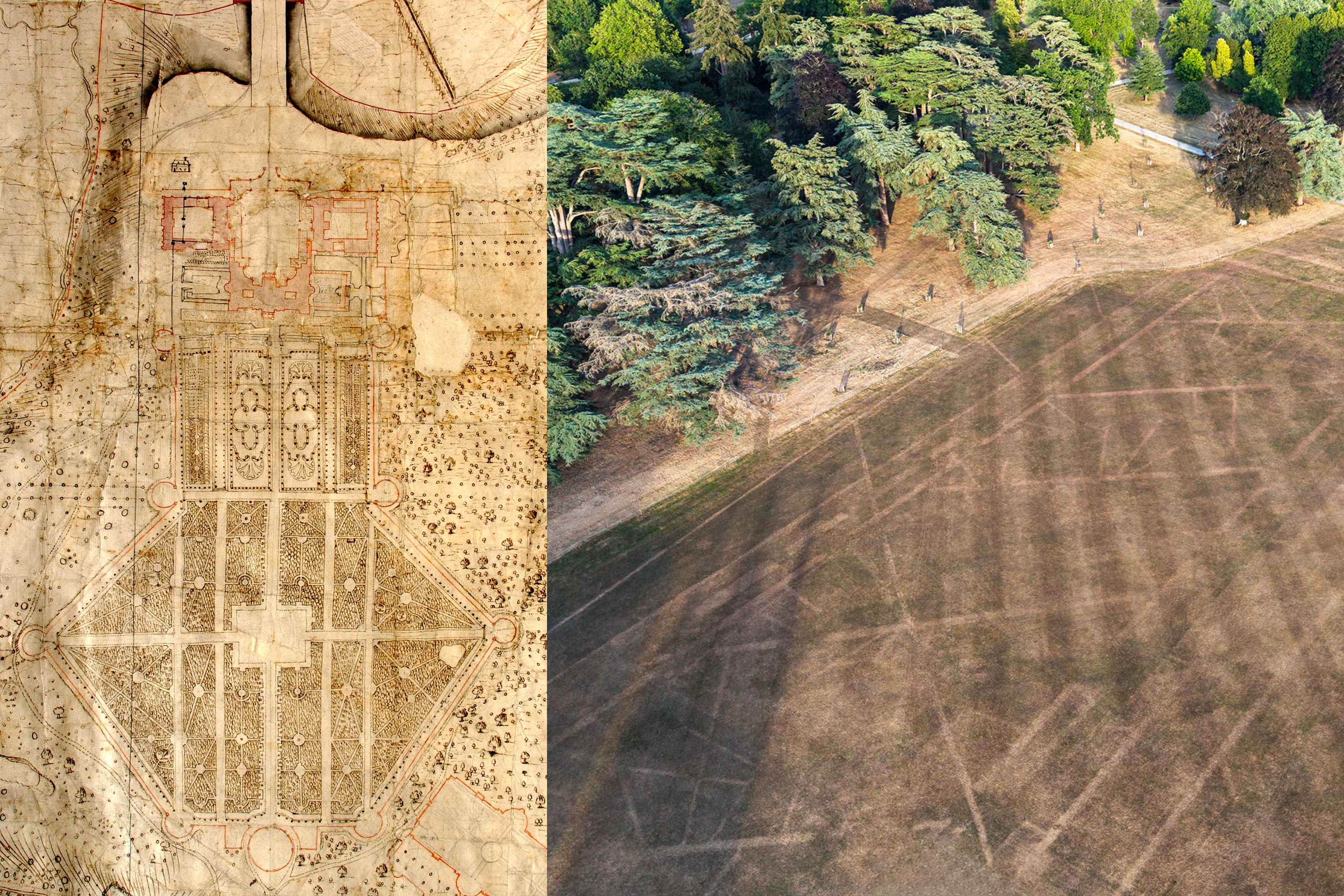
The rediscovered parterre design dates back to the early years of Blenheim Palace, when royal gardener Henry Wise created an elaborate formal landscape for the first Duke and Duchess of Marlborough in the early 1700s. As you can see from the plans above, the parterre formed a central feature of the gardens, featuring geometric planting schemes, pathways, and ornamental details designed to complement the architecture of the palace.
The formal layout that we see in the scorched etchings of today was later replaced by renowned landscape designer Lancelot “Capability” Brown, who introduced a more naturalistic style to the estate during the 1760s. Brown made big changes, including replacing rigid patterns with sweeping lawns and lakes to form carefully curated views.
Will the lost gardens be reinstated?
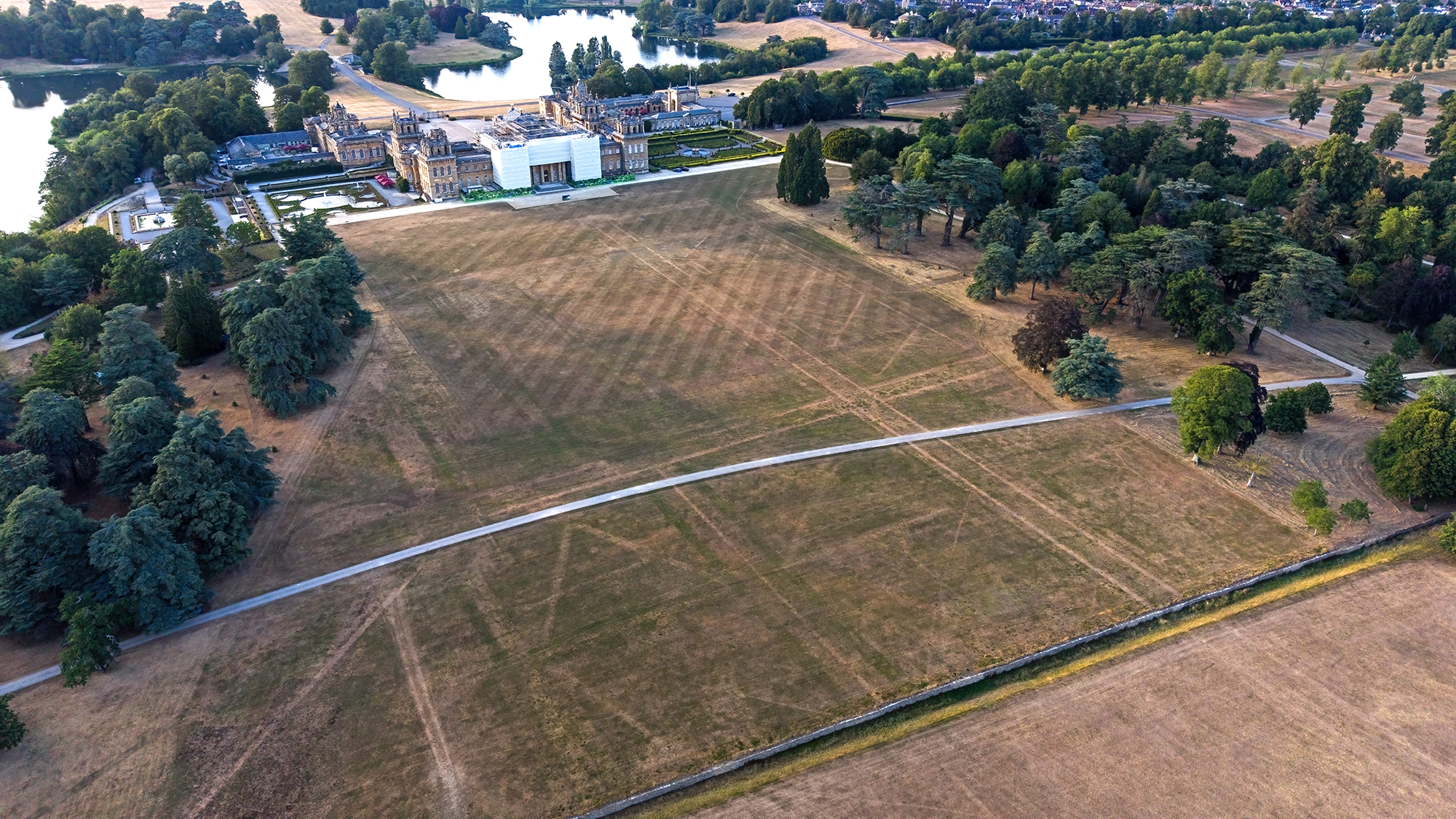
The sudden appearance of the buried garden has offered staff and historians a unique opportunity to study a landscape that has not been visible for centuries. Andy Mills, Head Gardener at Blenheim Palace, said the hot conditions provided an extraordinary glimpse into the estate’s past.
“The excessively dry weather has given us a fascinating bird’s-eye view into Blenheim’s past, allowing us to trace the intricate design and scale of the original parterre,” he said. “It’s a brilliant reminder of the formal gardens that came before and the layers of history that continue to shape the palace’s landscape.”
The discovery comes as Blenheim Palace embarks on a major programme to transform its Formal Gardens, with plans to restore lost features and reconnect the landscape with elements of its historic designs. Led by Mills, the 10-year project represents the most significant change to the gardens in more than a century, aiming to revive forgotten aspects of the estate while adapting the landscape for the future.
Why are we only seeing the gardens now?
Parch marks occur when buried features such as walls, paths or planting beds affect the soil and vegetation above them. Areas with less soil depth or different ground conditions dry out more quickly, leaving behind visible outlines of structures that would otherwise remain hidden.
While the marks will eventually disappear when wetter conditions return and the grass recovers, this temporary window into Blenheim’s past reminds us that historic landscapes can still reveal their secrets, at any time.

