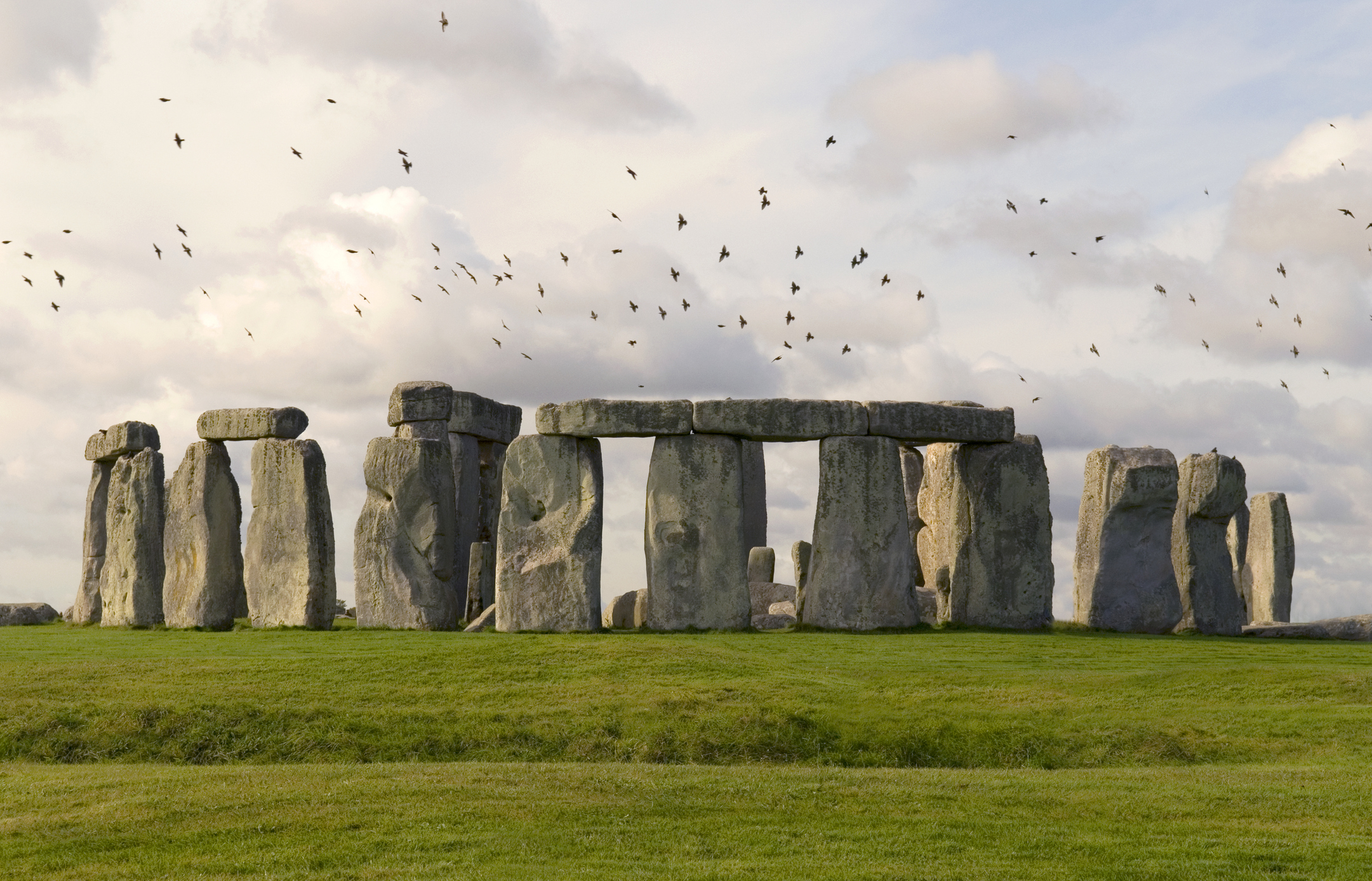
It seems that just when archaeologists think they’ve discovered something about Stonehenge, the ancient stone circle in south-west England has a little chuckle to itself. Now it’s confusing scientists who thought they had a lead on the origins of the monument’s famous Altar Stone.
Just last year, following analysis of the material that makes up the six-tonne sandstone slab, it was confidently declared that it had not been quarried from the Brecon Beacons, as had been previously believed, but from north-east Scotland – specifically the Orcadian Basin. It was then said to have been transported to Wiltshire either by land (over 450 miles) or sea (over 600 miles). The search for the exact location of the Scottish quarry was still on-going.
Given that there is plenty of well-documented evidence that the monument’s bluestones were somehow conveyed about 140 miles from west Wales, the idea that a single 4.9m-high stone might have been transported from the far north-east of Scotland did not seem entirely fanciful.
However, it now very much looks like archaeologists were on a wild goose chase. A new study led by Professor Duncan Pirrie from the University of South Wales has poured cold water on the Scotland theory.
After a thorough survey of Old Red Sandstone outcrops in the Orcadian Basin – something Pirrie described as ‘the most comprehensive geological investigation of the Altar Stone ever undertaken’ – the geochemical and mineralogical data gathered by the team did not match material from the Altar Stone. As a result, they’ve failed to find a single viable candidate for the quarry from which it was hewn.
But there is some good news. Having discounted north-east Scotland, Professor Pirrie declared that their results mean they are ‘far better equipped to focus on the areas most likely to yield an answer’. So rather than seeing this is as a trail gone cold, it should be viewed more like a detective slowly narrowing down the field of suspects.
Last year, University College London professor Mike Parker Pearson, one of the foremost experts on Stonehenge, posited the theory that the Altar Stone was taken to Wiltshire to ‘unite early farming communities across the island of Britain at a time of cultural stress’. At least we now know that, if that’s true, it wasn’t a community from the north-east Scotland that bonded itself to others in this way. And so the search continues…