
For us, a British winter is challenging. It is dark, cold and aggressively rainy. And yet, for roughly 400,000 geese, a British winter is the perfect opportunity for a migration, offering up their ideal climate.
Most notably, the pink-footed geese come to the UK in flocks, arriving from September all the way through the winter months. For them, a British winter supplies a milder weather, plentiful food and safe places to rest.
A lot of these geese are coming from countries like Iceland and Greenland, which makes Britain look tropical in comparison. These geese switch out their home through the winter to allow for an easier survival.
It’s not just because of the cold making it hard for them to survive in their homes. The icey temperatures freeze the ground, limiting food too.
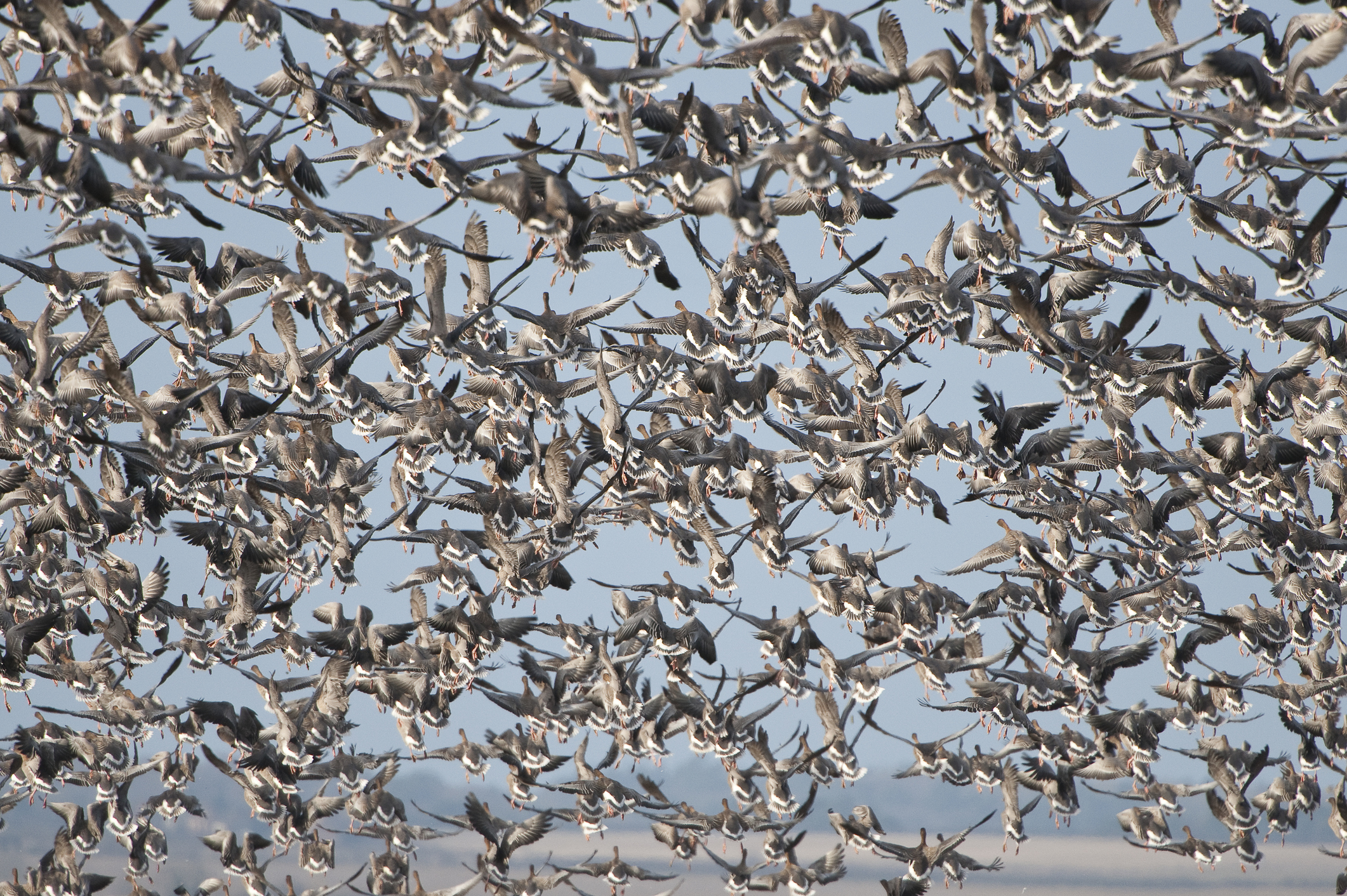
Surprisingly, pink-footed geese are herbivores. This makes the frozen ground of Iceland and Greenland a challenge, but explains why they are so drawn to Britain. There is plenty of grass and clover, leftover crops and lots of roots and vegetation.
Because of this, you will often see huge groups of them descend on seemingly normal fields and farms. However, you are more likely to see them on one of Britain’s many wetland patches.
While they tend to feed on farmlands, wetlands, lakes and estuaries provide important roosting sites for them. By sleeping on water, they can avoid predators like foxes. Britain has long extensive areas of wetlands, giving them plenty of choices for resting locations.
The British countryside perfectly fits their needs, but it is also fairly easy for them to get to. Crossing the North Atlantic is no easy feat, but Britain is one of the nearer accessible countries for them.
Where will you see pink footed geese?
These geese arrive in huge numbers and they stay together once they arrive. They have adapted social behaviours with clear advantages for them. Like other animals, by staying in a big group, they are able to stay safe from predators.
They can also communicate feeding locations to each other and large communal roosts simply provide more communication opportunities for them.
You are most likely to see them in eastern Scotland, Lancashire and Norfolk, where huge amounts of them swarm from Iceland and Greenland. They are more commonly found in the North of England and Scotland.
