
In September, we received a press release from the Scottish Conservative North East region. “New statistics from the Scottish Government show 570 crashes resulting in injuries happened on 20mph roads last year marking a five-year high,” read the statement.
“This compares to 254 crashes on 40mph routes where people were hurt, 165 injury collisions on 50mph roads and just 268 on 70mph dual carriageways that resulted in a driver or passenger being injured.”
The press release, quoting Scottish Conservative transport spokesman Tim Eagle, came off the back of the Scottish Government’s national strategy to introduce 20mph limits on appropriate roads in Scotland's towns, villages and urban areas.
Though the ire focused on a blanket 20mph limit, many in the countryside feel particularly aggrieved, with critics citing that blanket policies designed for urban environments are poorly suited to the geography of, in this case, rural Scotland.
Opponents argue that while 20mph zones are highly effective outside schools and hospitals, applying them broadly to connective roads ignores varying local terrain and road safety realities.
Rural residents often travel longer distances by car because alternatives such as public transport, walking and cycling are less available, with Scotland’s 2024-25 consultation highlighting concerns about the impact on those travelling long distances to work and essential services.
The impact on speed
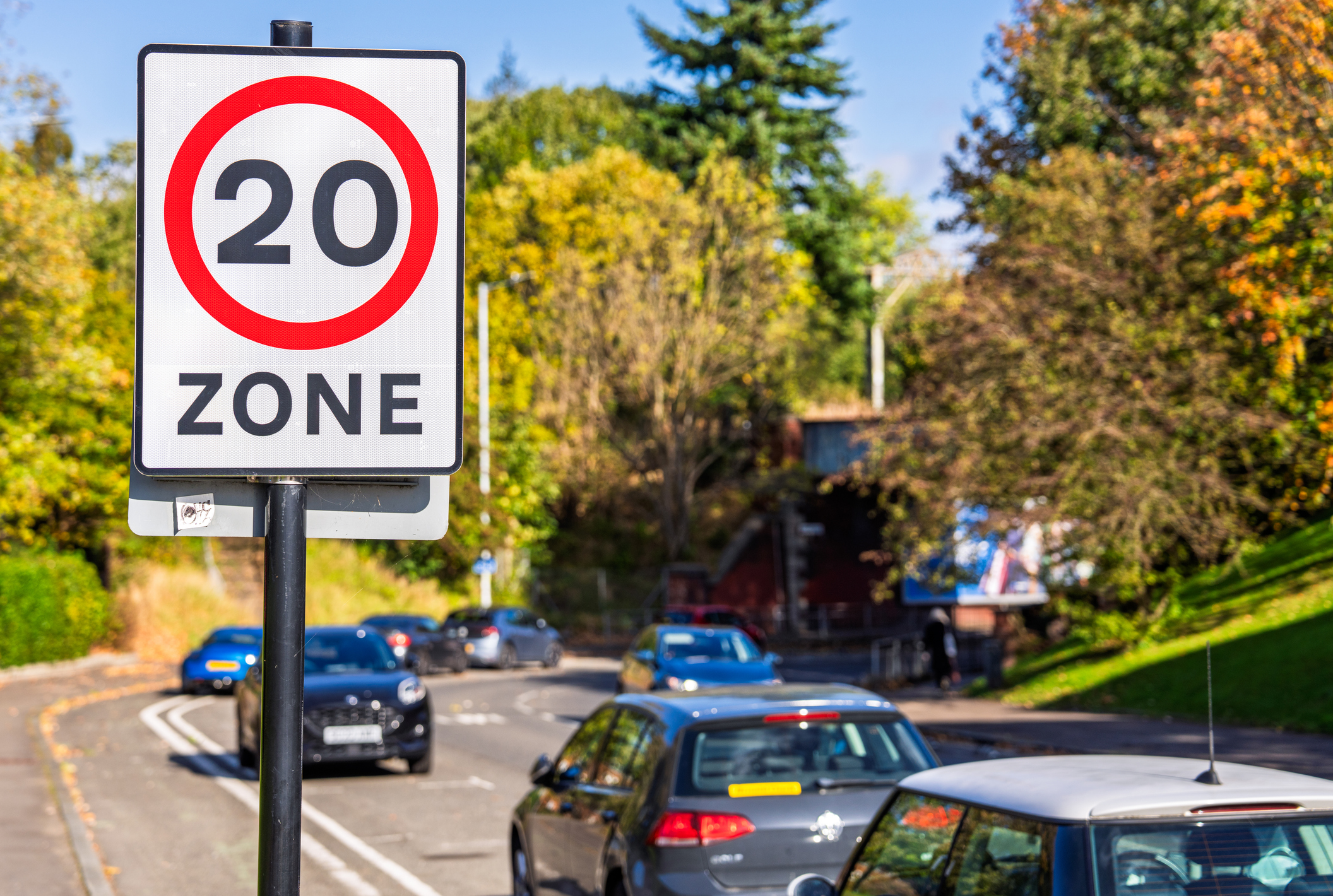
The impact of speed on injury is an issue that Brake are fully aware of. The road-safety charity campaigns to prevent road deaths and serious injuries, and support around 2,000 individuals who have been bereaved or injured in a road crash.
“The risk of injury increases exponentially with impact speed,” a spokesman for Brake told us. “Roads where the speed limit is 20mph are typically roads that would previously have had a 30mph speed limit. So, when looking at collision and casualty data, the most accurate evaluation is one that compares 20mph with 30mph limits.”
The press release from the Scottish Conservative North East region highlighted comparisons with 40mph, 50mph and 70mph roads, but did not include the 30mph category, where 1,729 injury collisions were recorded – just over three times higher than at 20mph.
“A crash at 30mph has twice as much energy and destructive potential as a crash at 20mph,” says Brake. “Official Department for Transport statistics show that in Scotland in 2024, 27 people were killed or seriously injured in crashes on rural roads where a 20mph speed limit was in place. On 30mph rural roads, that number jumped to 95. That means 3.5 times more people died or sustained serious, life-changing injuries from a crash on a rural 30mph road than on a rural 20mph road.”
The spokesperson at Brake also adds that criticism of 20mph speed limits is often based on false assumptions of a blanket approach.
“In reality, this isn’t the case and where speed limits have been reduced from 30mph to 20mph, local authorities have agency to maintain some roads at 30mph where safe and appropriate.” For many this is the nub of the argument – that the debate is no longer about whether 20mph speed limits are possible, but where they work best.
