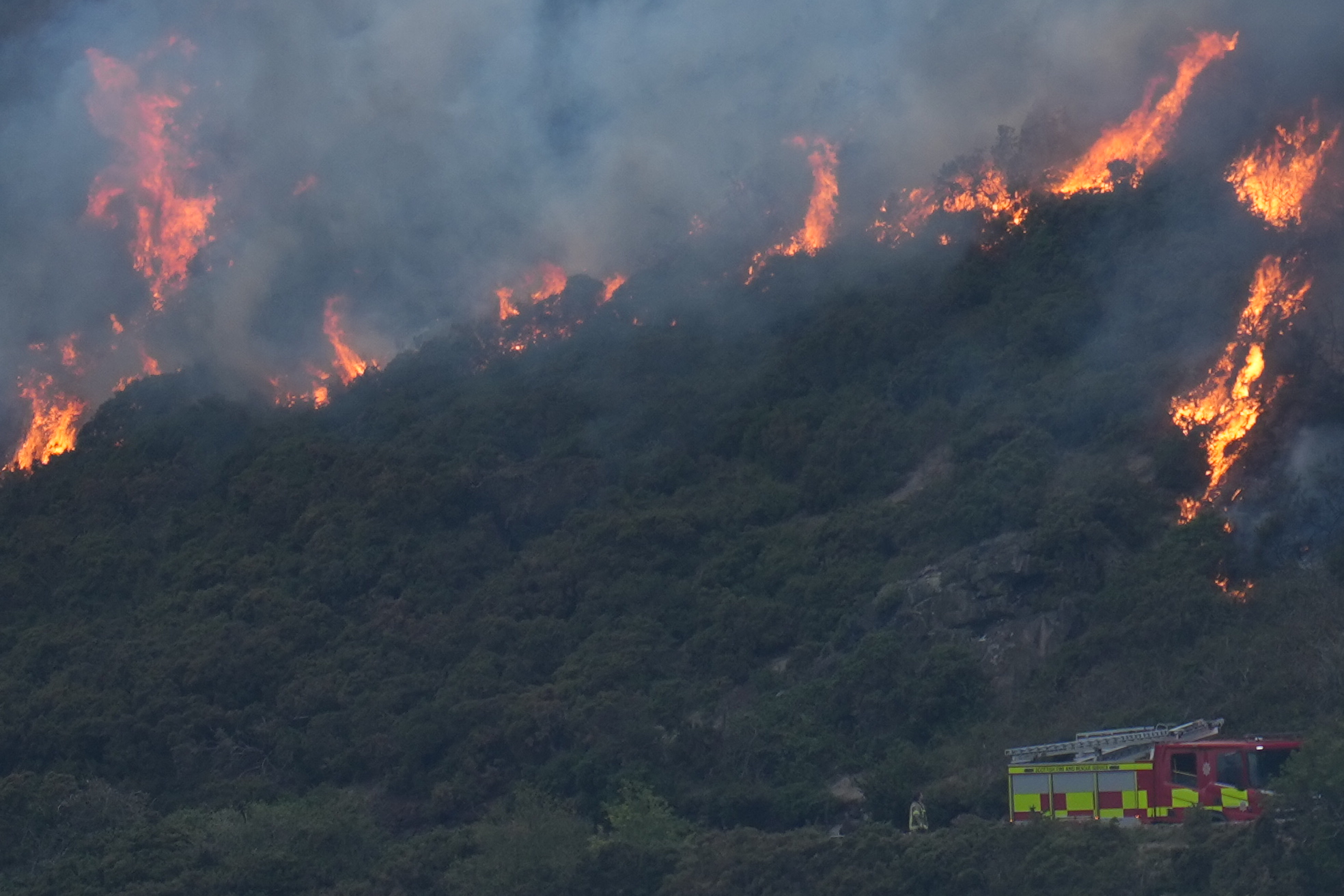
A wildfire that raged across the Scottish Highlands last summer was classified by scientists as the UK’s first-ever megafire. In four days, it burned nearly 12,000 hectares of peat-rich moorland and released a huge amount of carbon into the atmosphere. It turns out, this was merely a warning of things to come.
And come it did. This July's massive wildfire in the Cairngorms National Park has covered approximately 2,500 hectares of moorland and forestry near Aviemore since it started one month ago. It's a worrying confirmation of the growing threat wildfires pose to both people and nature, from the obvious immediate dangers to the longer-term effects of smoke and pollution.
An all-time high
In the UK, 2025 broke all records for wildfire damage with almost 48,000 hectares being torched, the equivalent to 120,000 football pitches. And in June, the Government promised £3.3m to help restore a huge swathe of the North York Moors devastated by a wildfire last summer. As of 10 August this year, after several record-breaking heatwaves across the UK, wildfires have already burned through over 23,000ha.
We don’t associate the UK with wildfires; we see them on the news consuming parts of Mediterranean countries, Australia and the US. But that’s now changing. It was scientists in California, which knows all about megafires (defined as a wildfire that burns more than 10,000 hectares), who led research into the big blaze on Dava Moor near Grantown-on-Spey in the northern Cairngorms.
Their findings, reported in the journal Nature Geoscience, revealed that flammable vegetation and unusually dry conditions meant the fire could burn deep into the peat soil. One of the team, Professor Adam Pellegrini, said: “This study demonstrates why there needs to be more attention paid to preserving peatlands and addressing wildfires in areas where peatlands have served as long-term carbon reservoirs.”
A hot topic
It is, if you will forgive the word, a ‘hot’ topic because ‘controlled burning’ has played its part in managing the uplands for centuries. According to the British Association for Shooting and Conservation (BASC), the practice, done by professionals, skims the surface of grouse moors without harming the peat, improves habitats, stimulates new growth and mitigates wildfires.
In Scotland, there are strict regulations on burning and, in England, new rules introduced by DEFRA last year will ban burning across 676,628 hectares of peatland – three times the size of the previous area where burning was not permitted.
By contrast, controlled burning can be used to contain wildfires. An area is set on fire opposite an oncoming outbreak and by the time the two meet, the controlled fire has created a large enough firebreak to stop the wild one in its tracks.
Wildfires six times more likely than before
Right now, a careful watch is being kept across the UK because this year’s warm, dry spring and the seemingly endless heatwaves have created perfect wildfire conditions: the government’s Climate Change Committee says fires caused by extreme weather are now six times more likely, due to climate change.
While the elements provide the tinderbox, it’s often people who provide the spark by throwing a cigarette butt, starting a campfire, using a disposable barbecue, or discarding a glass bottle that intensifies beams of sunlight. These might accidentally start a fire, but it’s been reported that around 30% of wildfires are the result of deliberate action by arsonists.
- Best British summer holiday ideas in 2026: Enjoy what the UK has to offer from coastline to mountain
What can you do?
This summer, everyone heading into the countryside is urged to be on the lookout for wildfires and, should they spot one, call 999, keep a safe distance and not tackle it themselves. “Avoid walking towards the fire out of curiosity as conditions can change rapidly and put you at risk,” warns Rob Kenning, manager of Peak District National Park rangers.
“What starts as a small flame can spread rapidly across moor and grassland, destroying habitats, endangering wildlife and nearby communities,” Kenning adds. “For us rangers, they’re unpredictable, exhausting incidents – smoke reduces visibility, shifting winds can change fire direction suddenly and the scale can escalate far quicker than people expect.”
Nationally last year, fire crews were called to 181 large wildfires and thousands of smaller ones. Often, as in the Peak District, they are assisted by gamekeepers, rangers and staff from environmental charities and water companies. “Effective wildfire response isn’t just about emergency services,” says Kenning. “It relies on strong partnership with those who know the landscape best.”
In Dorset, dog owners are being trained to spot early signs of wildfires while walking their pets. Community efforts like this could help prevent the next megafire.