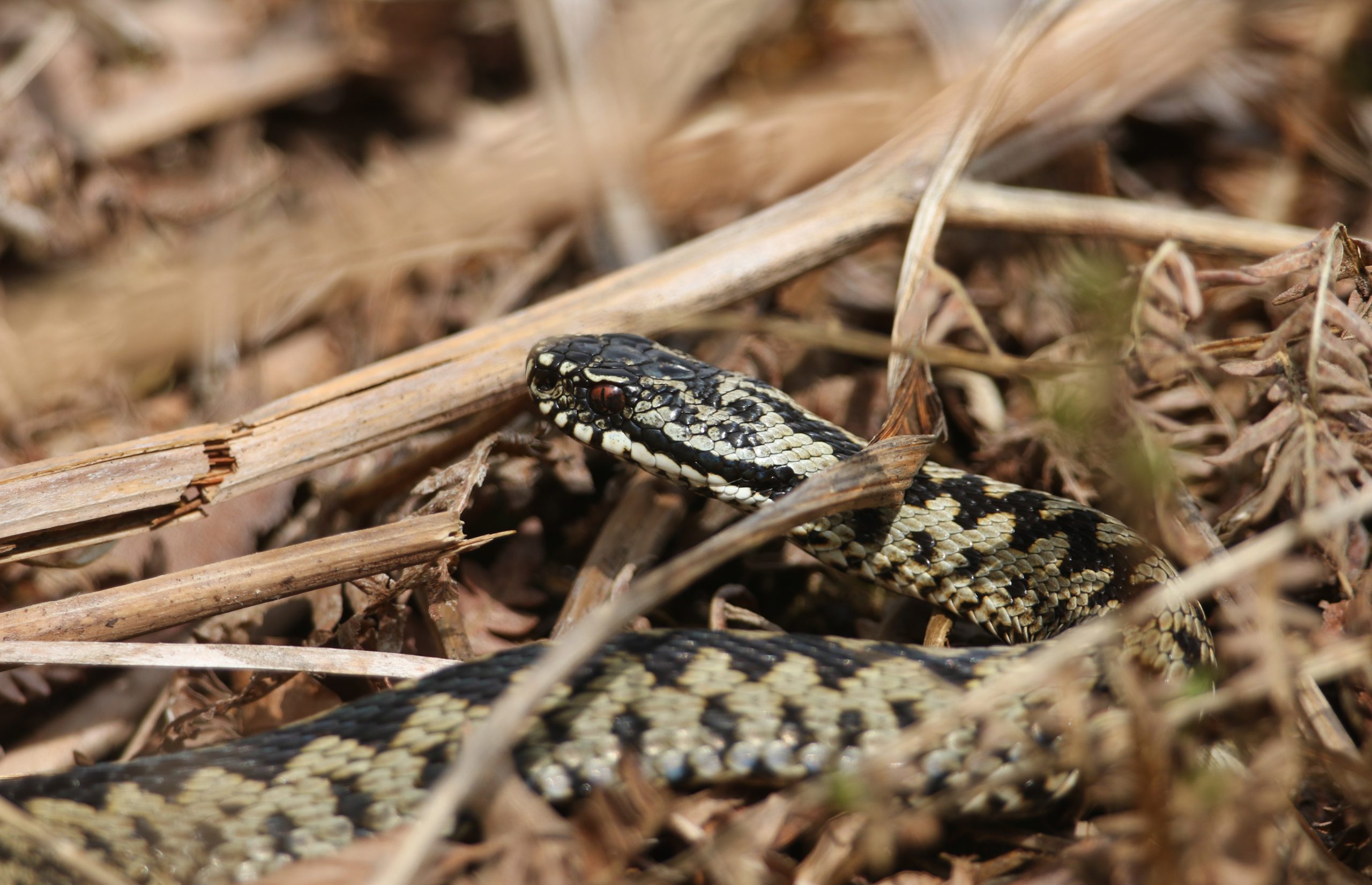
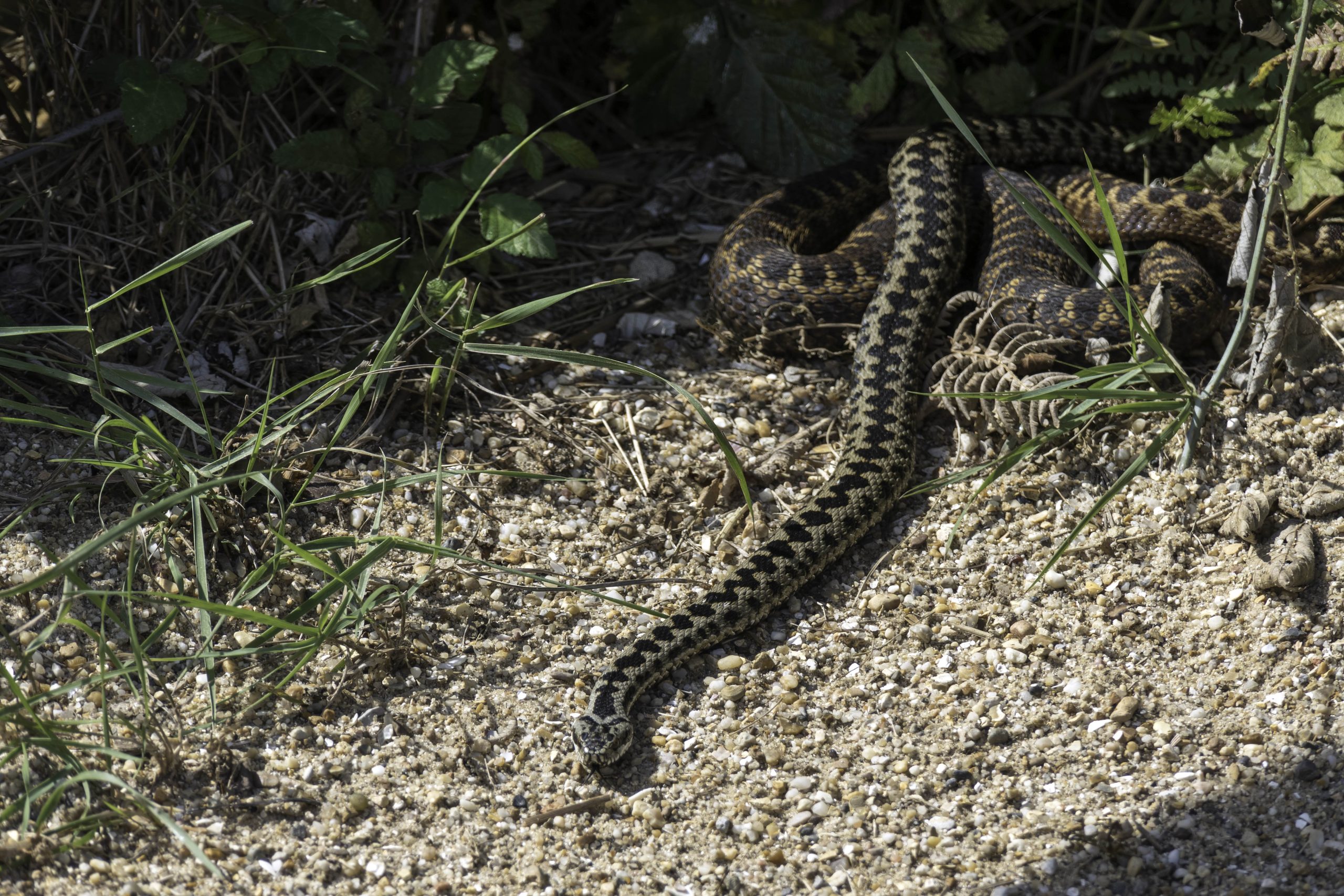
When I finally spot it, it's impossibly delicate and detailed. Like a fine woodcut, but jewelled with black diamonds. I’m looking at an adder, basking in a patch of sun – the first we’ve seen after an hour’s reconnaissance of this scrubby common in the Malvern Hills on the Worcestershire/Herefordshire border.
Perhaps it catches our scent – adders have a superb sense of smell – but before we can get any closer, it uncoils and, with no obvious convulsing of muscles, glides into a tangle of bramble and bracken where even our eyes can’t follow.
It is the first of many we see this bright and slow-to-warm March morning. I’m ridiculously grateful to my guide, local adder expert Nigel Hand. I’ve been following in his careful footsteps, straining to hear his whispers. Adders are hard to see at the best of times, but these aren’t the best of times for Britain’s only venomous snake.
This population is one of the last strongholds in Worcestershire, a county that in the 20th century held many thriving colonies. This severe decline has been echoed across the UK, leaving fragmented and vulnerable populations. It’s heartbreaking for Nigel, who has devoted his life to studying and conserving the species. It’s especially distressing as much of the problem stems from human ignorance and misguided fear.
Serve the serpents
I first encountered Nigel when he appeared on Hamza Yassin’s Hidden Wild Isles BBC series. As with me, he skillfully guided Hamza to within easy camera lens of many beautiful snakes. But the most striking moment on film was when Nigel shed a tear telling Hamza how he fears for the adders when he’s no longer around to protect them.
When I meet Nigel, I’m glad to see he is a fit, young 60ish, with plenty of adder-conserving years in him. Most of those 60 years have been in the company of snakes.
“I grew up in Black Country in the West Midlands, renowned for its canal network. So I cut my teeth on the reptile-amphibian thing with grass snakes on the canal,” he tells me as we stalk more adders along the scrubby banks. “I saw my first adder at primary school in the 1970s. There was a bank on the edge of the playing field, a remnant bit of heath, and I found them there. My teacher couldn’t believe it. But it sparked something in me.”
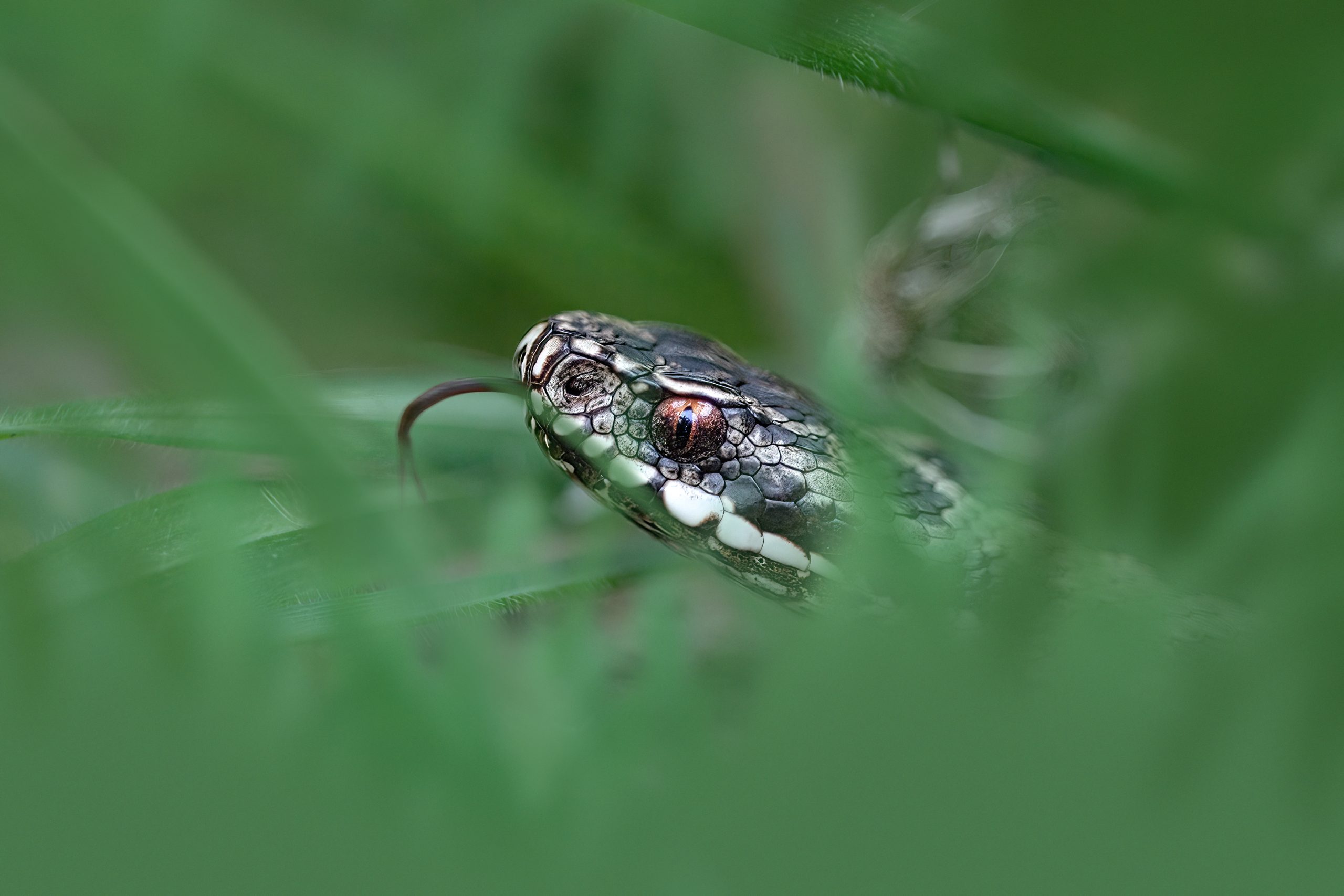
Nigel didn’t train in ecology and forged his early career in textiles. “I did my A-levels, then a fine art course, before a textile course at a university in Farnham. One of the reasons I chose Farnham is that there were sand lizards and smooth snakes not far away! My textile career took me to Ledbury to work for a rug weaver. And I had commissions: I made rugs for famous people including Steven Spielberg and Caroline of Monaco for her yacht.”
Adders were the big attraction for coming to Surrey, however, and eventually, after the move to Ledbury, Nigel was able to turn his passion into full-time work as a reptile and amphibian consultant. He’s now recognised as one of the country’s leading adder experts.
We’re out today because sunny days in February and March are often the best times to see adders. “It always surprises people how early they’re out and how tough they are,” he says, pointing a handheld thermal gauge into the patches of sunlight at the base of the scrub. It’s not quite warm enough yet.
“At this time of year, they’ve come out of hibernation and mostly doing this warming up. They’re getting their metabolism going. As they’re cold-blooded or ectothermic, they are reliant on an external source to get warm. That external source is the sun.”
Nigel reveals that the adders hibernate under the soil beneath these clumps of bracken and bramble. “They’ve gone all those months without feeding, and they won’t feed until the end of April, maybe May, until breeding’s finished. So they’re reliant on all that body fat reserve to keep them going through all this breeding and birthing.”
Wild misconceptions
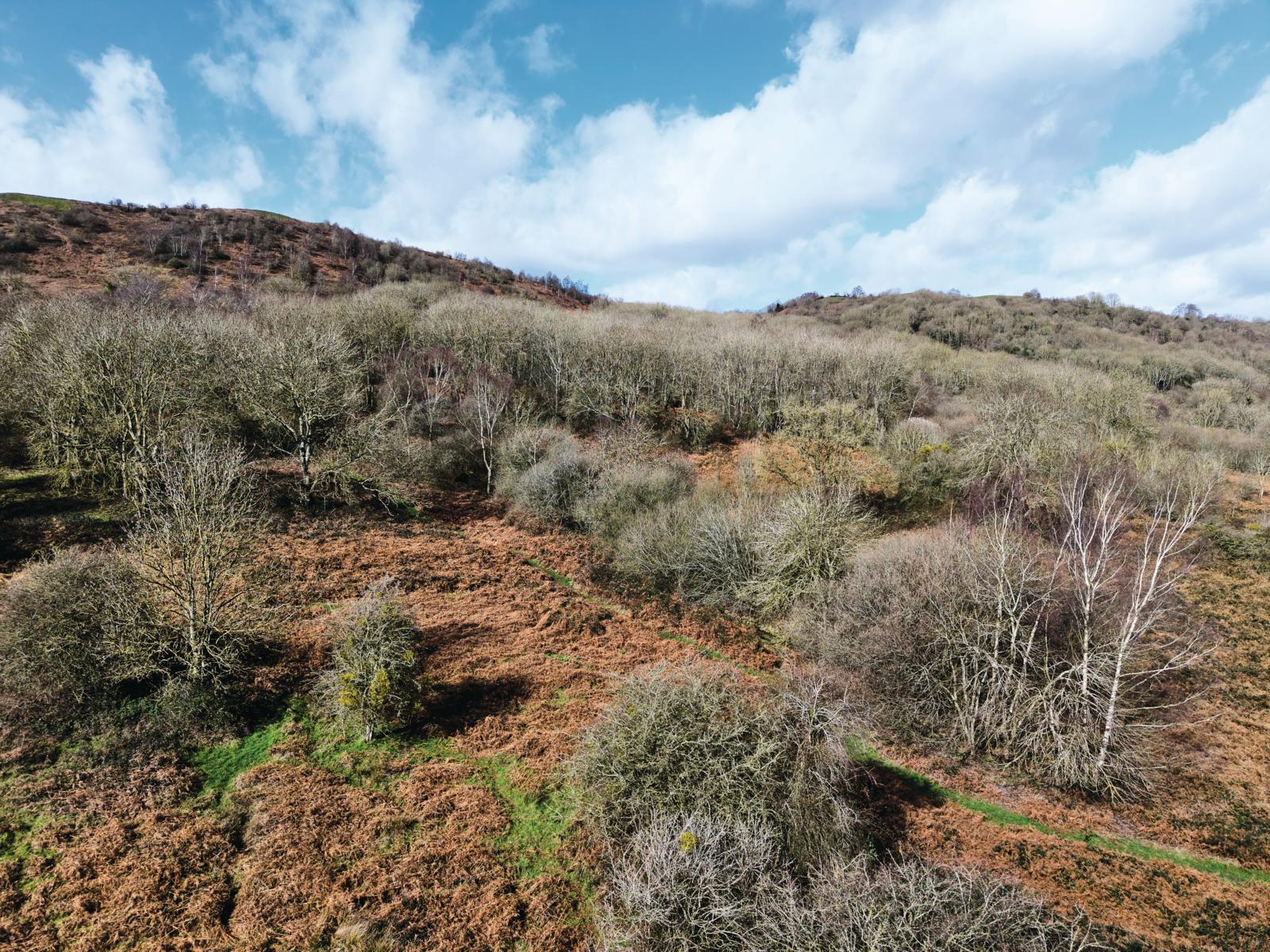
Through Nigel’s eyes, I get a better understanding of adder habitat. “They’re very much associated with bracken, gorse and heather. And quite rough, tussocky grassland. It’s quite scrubby,” he explains.
“If you were to pull that bracken apart and really look in there, it’s amazing what you can find. I’ve seen all sorts of things, from invertebrates, insects and amphibians to dormice and harvest mice. Even nightjars, short-eared and long-eared owls hang around in the bracken. So it’s an important habitat for a range of species.”
Unfortunately, some locals find the scrub unattractive and they’d like to neaten up the common. “We’re a bit obsessed with over-tidying things,” says Nigel ruefully. “So many animals like those untidy fringes.”
And so there is a process of wrangling with other users of the common but also a lot of work to build suitable habitat. “With the help of volunteers, we’re creating this glade-ride network throughout this area,” Nigel says, removing some trees to encourage scrub and let light in. He lays down the cut trees and brash to “create and link long linear banks”.
Following the adder's movements
Nigel has gained a lot of information from radio-tracking adders, a technique he learned from working with snake ecologists in Australia, after being awarded an Earthwatch scholarship. “They love to follow hedges, banks or stone walls but, as a small vulnerable animal, they don’t like to cross open ground.” Hence the need for a network of scrub.
I’m still amazed about the adder’s ability to fast for months on end. “It surprises a lot of people how little they do consume,” Nigel says. “They generally hunt things like field voles, short-tailed voles, a bank vole, wood mouse, even shrews.”
They lie in wait, ambushing passing prey and administering a dose of venom before tracking down their dead or dying target and finally eating it. “They’ll eat common frogs and even some small birds. Springwatch [in 2014] had them attacking nests of a goldfinch. They’ll even take a weasel.”
It’s the venom that has led to an irrational fear and wild misconceptions of adders. Every year, even respected news outlets will publish scare stories about adders that exaggerate the danger and increase the demonisation of the species. It frustrates and angers Nigel who writes to editors as often as he can to try to redress the balance.
“They very rarely show aggression,” says Nigel. “The first thing they’ll do is turn around and go straight back into the undergrowth. I see dogs running past them regularly. But some dogs are prone to go exploring the vegetation and there are about 40–100 dogs bitten by adders in the UK every year. They are very rarely fatal but it’s a very upsetting time for the owner.”
Some dog owners Nigel has met have a virulent hatred of adders because of this. And he’s aware of stories of adders being killed out of fear. He admits to being bitten by an adder. “It was my fault, because I handled the snake doing some work. And I just was careless. It was very painful and my fingers swelled up like sausages. If you are bitten, seek emergency help immediately.”
There are a few records of adders biting humans each year, but no one has died of adder venom in the UK since 1975. Nigel is concerned that the serious misunderstandings about adders are contributing to their decline. One of the big issues is disturbance – adders need to bathe in the sun to warm up, but if they are constantly being disturbed, particularly by dogs, they waste valuable energy.
“The big problem is that people let the dog off the lead and then look at their phones. They don’t notice where it is going. They don’t understand or respect the adder’s habitat,” says Nigel.
Predation pressure
Other factors are also closing in. Many of the best adder populations are on scrubby, unloved, unprotected land that is often earmarked for development. New roads, business parks and housing estates divide and isolate colonies of these small reptiles and populations simply wither away.
They also face predation pressure. Many species, from foxes to buzzards, will eat adders. Hamza Yassin told Nigel that he had witnessed a pair of golden eagles bringing 16 adders to their nest to feed their young in one day.
On top of that, Nigel is concerned about the impact of pheasants. Tens of millions are released into the countryside every autumn and Nigel says invertebrates and adders decline wherever pheasants are numerous. He has witnessed a pheasant attack and peck out the eyes of an adult adder and he suspects they readily gobble up the young adders.
I ask if he has tried to talk to the owners of the pheasant shoots. “Sometimes it’s even hard to get the opportunity to talk about this,” says Nigel. “And if you do talk about it, there seems to be a lot of scepticism. One landowner said to me, ‘the trouble is Nigel, my pheasants make me money and my adders don’t’.”
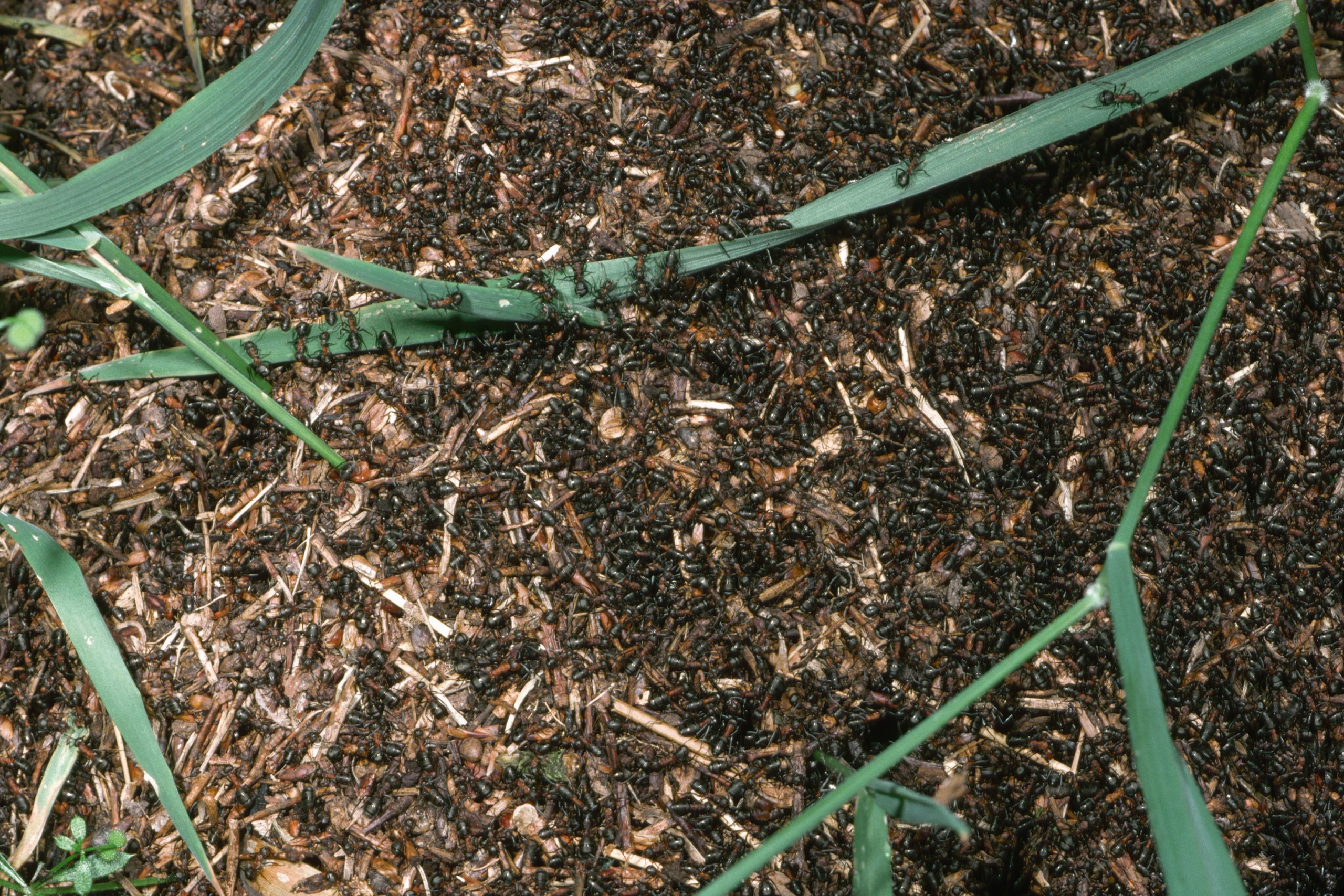
Nigel has some interesting insight into other, unexpected issues. Wood ant colonies – a great indicator of a healthy woodland – seem to negatively affect adder numbers. Meanwhile, he admits to “panicking” about the spread of wild boar from the nearby Forest of Dean: “We’ve seen some massive damage to habitats where they turned it over.”
We continue our search and find several more adders basking in the strengthening sunshine. Each one gives me a thrill, a joy of seeing something so scarce, so beautiful and so unusual. But we’re too early in the year for what Nigel describes as “the best wildlife spectacle in Britain”.
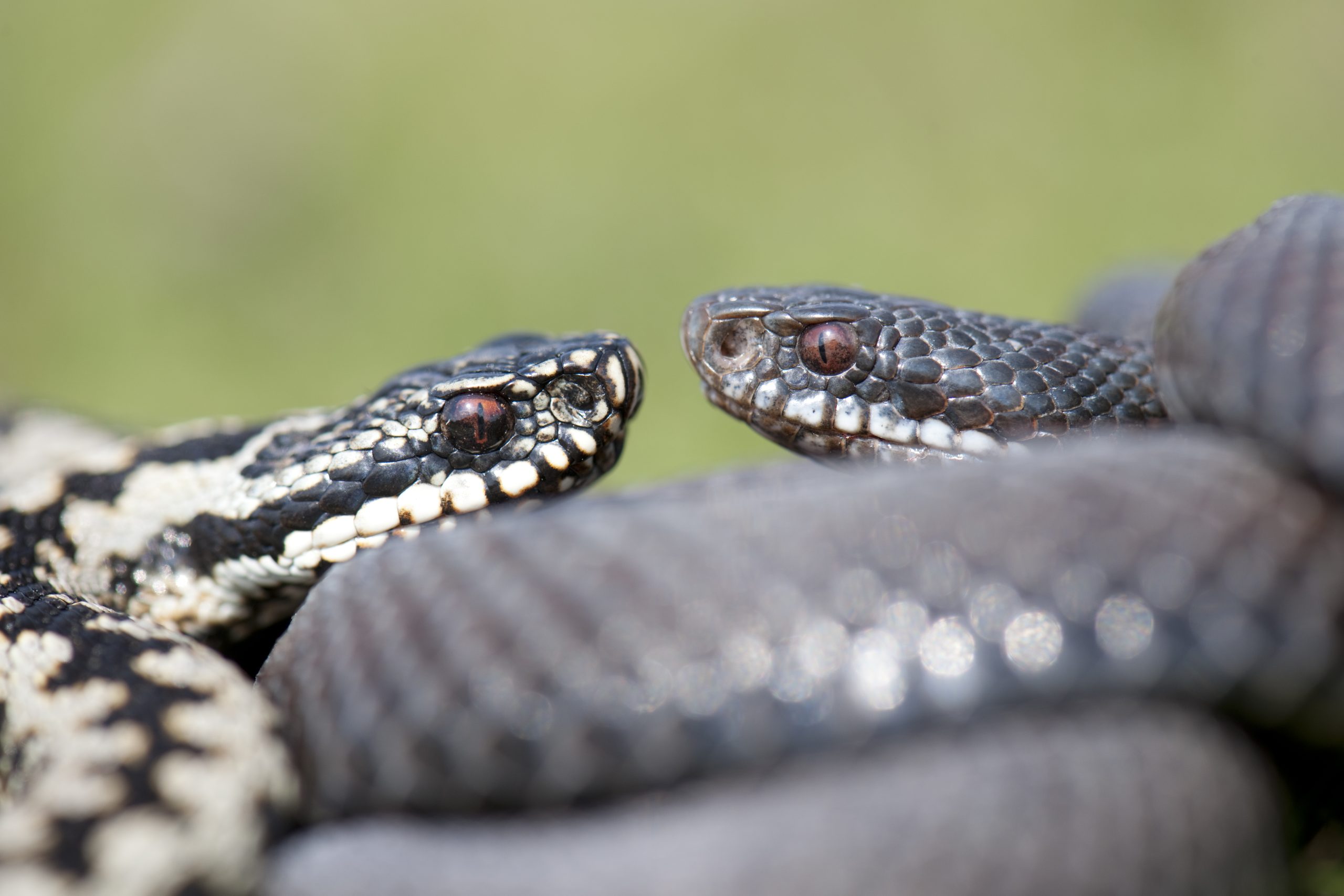
Once the adders are ready, usually in April, they think about mating and this is when male adders battle each other in a show of power so they can mate with a nearby female. They rise up in a dance of strength, weaving their bodies round each other.
“They are just totally fixated on battling. There can be some gaping and hissing. The weaker animal will be pushed over and the stronger one will chase him away. And then the winner will go straight back to his female and curl up on top of her, or nearby. And if any other male comes near in the next couple of weeks, he will just send them packing.”
From the gleam in Nigel’s eye as he recounts this, it sounds marvellous and something I would love to see. It’s something we should all be able to see. But if we want to have something as enchanting and important as adders in our countryside, many ecologists believe we need to change our attitudes, not just to the idea of a venomous snake in our landscapes but also to the scrubby, sometimes aesthetically challenging places they make their home.
And we definitely need more knowledgeable and passionate people such as Nigel to educate us and protect this threatened species.
Quick-fire adder questions
How much do adders weigh?
Up to 100g.
What do they eat?
Small mammals, other reptiles especially lizards and nestlings.
How big do they grow?
Up to 75cm long; females are usually larger than males.
Where are they found?
Heathland, moorland, scrubby grassland and coastal scrub. Also, edges of woodland.
How long do they live?
Up to 15 years.
How do they breed?
Males battle each other to gain access to the larger female – and will then defend her vigorously.
How many eggs?
Adders are ovoviviparous, which means the eggs develop and hatch within the female’s body. She will give birth to 10–12 live young.
Why do adders use venom?
An adder strike is extremely fast but the snake releases its prey instantaneously. The idea is that the venom does the work of killing the prey while the snake avoids being harmed by its victim’s struggles. It follows its envenomed prey until it dies seconds or minutes later.
When do they hibernate?
Usually from October to February or March. As climate change influences the seasons, some adders are appearing around Christmas time in southern areas.