
Squinting, it looks like a piece of popcorn. It's hard to imagine this tiny orb could be a lifeline for coral reefs around the world. “That will have maybe eight or 12 eggs,” says Dr Jamie Craggs as I peer at the minuscule bundle on screen, “and then sperm in the centre”. In the next container, the package has already broken open to reveal individual pollen-like specks dappled through the liquid: the coral’s eggs.
How is coral made?
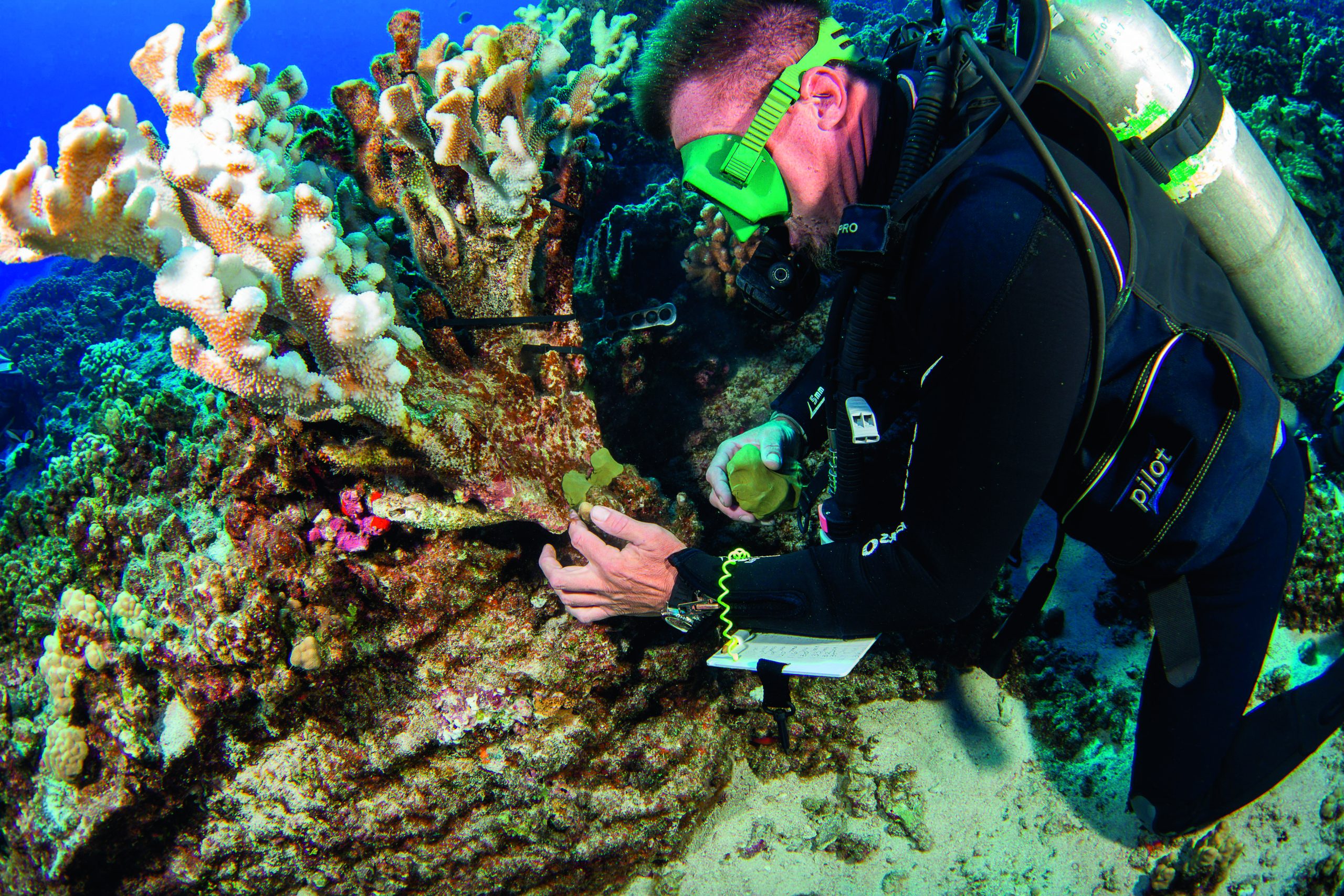
Most coral species spawn once a year. The bundles of eggs and sperm they release into the water float up to the surface, break apart and mix with spawn from other corals – despite being hermaphrodites, these animals can’t mate with themselves. If fertilised, the cells then divide to form a larva which drops down to the reef to become an individual coral polyp and then grow into a colony. Many colonies together form a reef.
For spawning to occur, the conditions must be just right – temperature, salinity, the length of daylight, the tide and the lunar cycle all play a role – and timing is everything. “You have to understand that half-an-hour window,” says Jamie, who is the principal aquarium curator at the Horniman Museum and Gardens.
With corals around the world under threat from warming waters, researchers are trying to give these fragile animals a helping hand through breeding programmes. They scoop up, spawn, and raise the little corals in controlled conditions before planting them back into the wild when they have grown stronger.
But catching the precise moment of spawning is critical. Miss it, and you’ve spent thousands on an expedition to the tropics for nothing. “You can go out there and have a storm, and then you lose that whole season, and then you’ve got to go back the following year,” says Jamie.
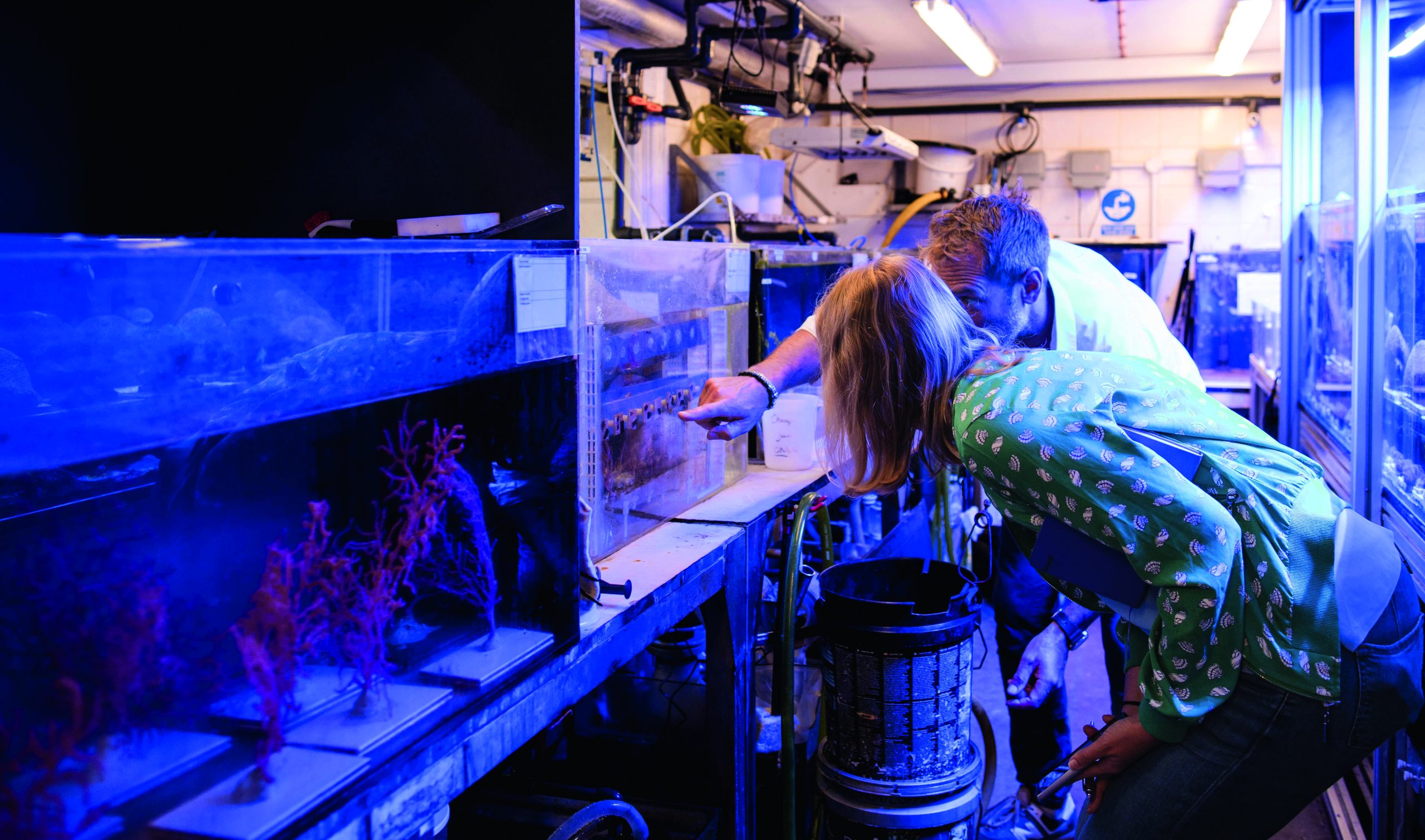
The spawn packages I’m looking at are the result of successful breeding, but they weren’t collected from a tropical reef. I’m in a somewhat surprising location – south-east London – on a behind-the-scenes tour with Coral Spawning International (previously the Coral Spawning Lab) at the Horniman Museum. The project originally started with jellyfish, which are distantly related to coral. The team had been raising jellies for display in the aquarium and started looking at breeding, explains Jamie, “and then we thought, let’s flip this over to corals”.
The coral-obsessed doctor – he even has a spawning system in his kitchen at home – leads the project, which aims to boost breeding efforts by learning to better predict what triggers coral reproduction and when the magic moment might take place. With support from Canon, the team also uses imaging to explore the mysteries of coral spawning; as a former underwater cameraman, Jamie is very aware of how useful photography can be in research.
The lab shuffle
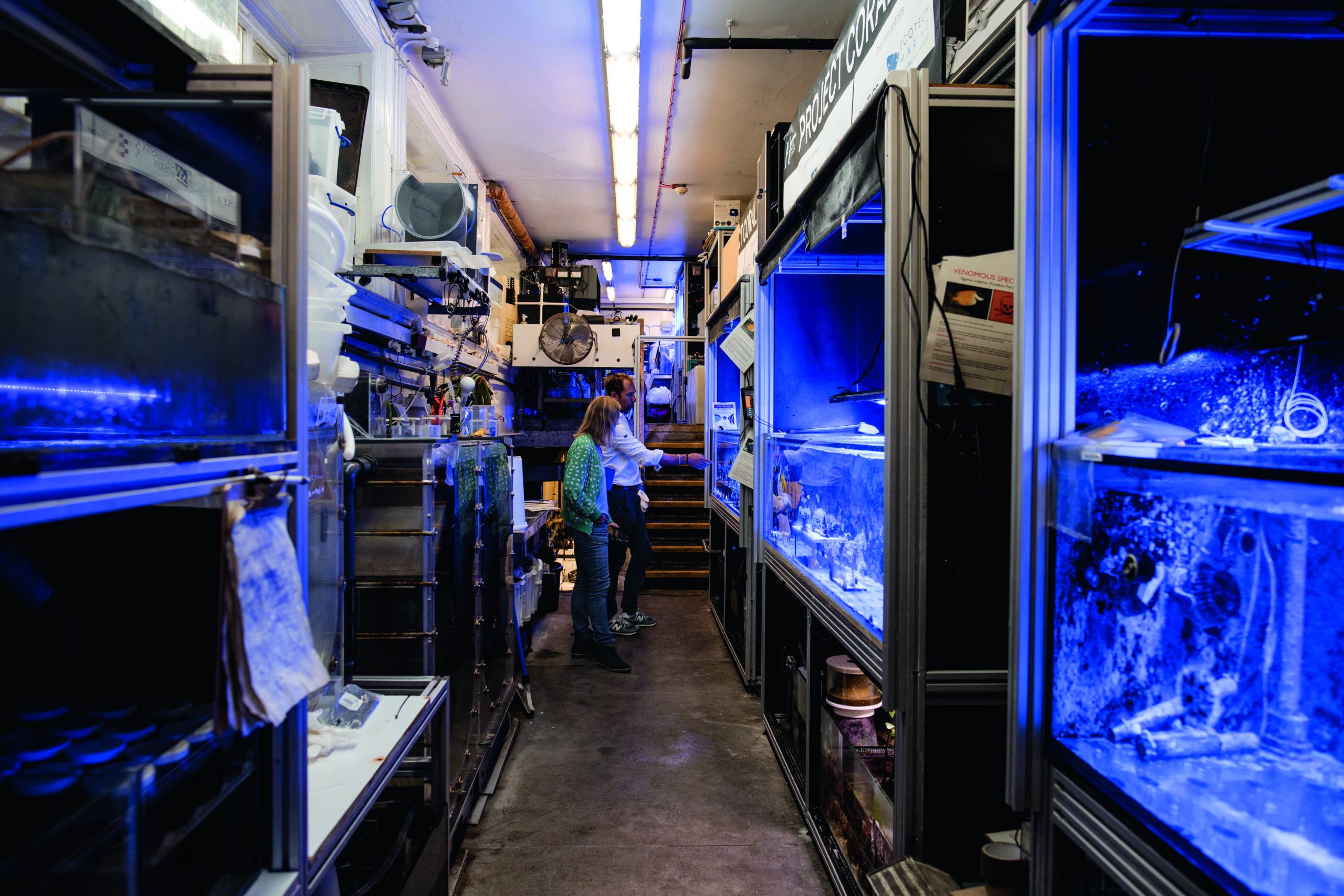
While showing me around the Horniman’s facilities, he introduces me to the “coral lab shuffle”, used to navigate tight squeezes in the small laboratory. We creep along a narrow corridor from the imaging workroom, past a cupboard with tanks of cute clownfish to a room full of tanks of corals at all stages of growth.
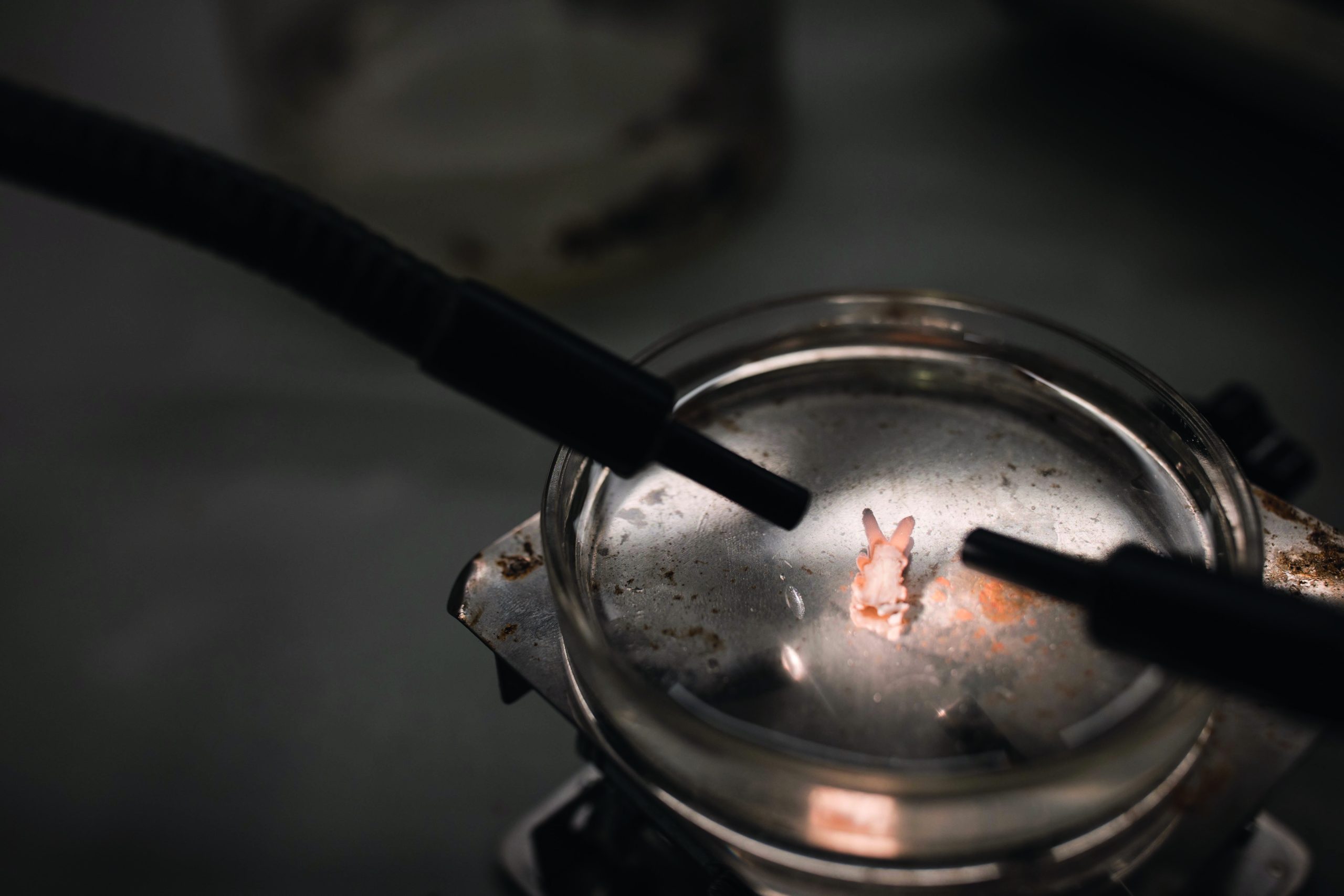
In the imaging lab, Jamie places a small branch of coral – split in half to reveal the interior – under the lens. Thanks to the sophisticated camera setup, I can make out tiny white eggs inside a cup-like structure. “Looking at the size and colour of that egg tells us when this individual is going to spawn,” he says. When they start blushing orange or pink, it’s a sign they will spawn after the next lunar cycle.
Researchers can be ready to skim off the spawn and complete fertilisation in the lab. Then, they rear the embryos in special tanks before putting the juvenile corals onto ceramic settlement plates, which mimic old coral skeletons and give them a good foundation to grow on. Once large and strong enough, the corals will be planted out on the reef. This whole process could take a year. Jamie says growing these delicate babies in the lab protects them from threats in the wild, such as being preyed upon or smothered by algae. “You’re giving them a head start.”
Shining beacon
Traditionally, many restoration projects grow reefs through fragmentation: take a piece of coral, break a piece off and glue it onto a structure so it can grow and spread. “It’s just like taking a cutting from a rose,” Jamie explains.
While this is an effective way of creating more coral cover, the new corals are all clones of each other; if they aren’t genetically resilient to a certain threat, they can all be wiped out. Sexual reproduction ensures genetic diversity, and if new corals are created with a desirable trait, such as thermal resilience, they can then be spread further through fragmentation.
Some coral polyps produced through sexual reproduction can merge. “When they’re close enough, they can form conjoined twins, basically,” adds Jamie. These genetically distinct ‘chimeras’ share resources and create stronger, more resilient coral. But the fusion doesn’t always work – and the lab’s clever imaging can warn of problems ahead.
“There’s some rejection going on here,” reveals Jamie, pulling up a photo onscreen of two ‘twinned’ coral polyps with a hairline fracture forming between them. “This line is showing they’re genetically too far apart.” Before long, the corals will reject each other, and the weaker one will die.
Sharing knowledge
The coral spawning project has celebrated many successes. “We were the first in the world to spawn corals in a planned way,” says Jamie. “Over the years, we’ve now spawned 60 species in lots of different regions around the world.” But they don’t want to keep their accomplishments to themselves. The project is now helping other researchers around the globe to build and manage their own coral labs. With funding, equipment and support from Canon, they are training scientists at Nature Seychelles in how to sample and image the corals.
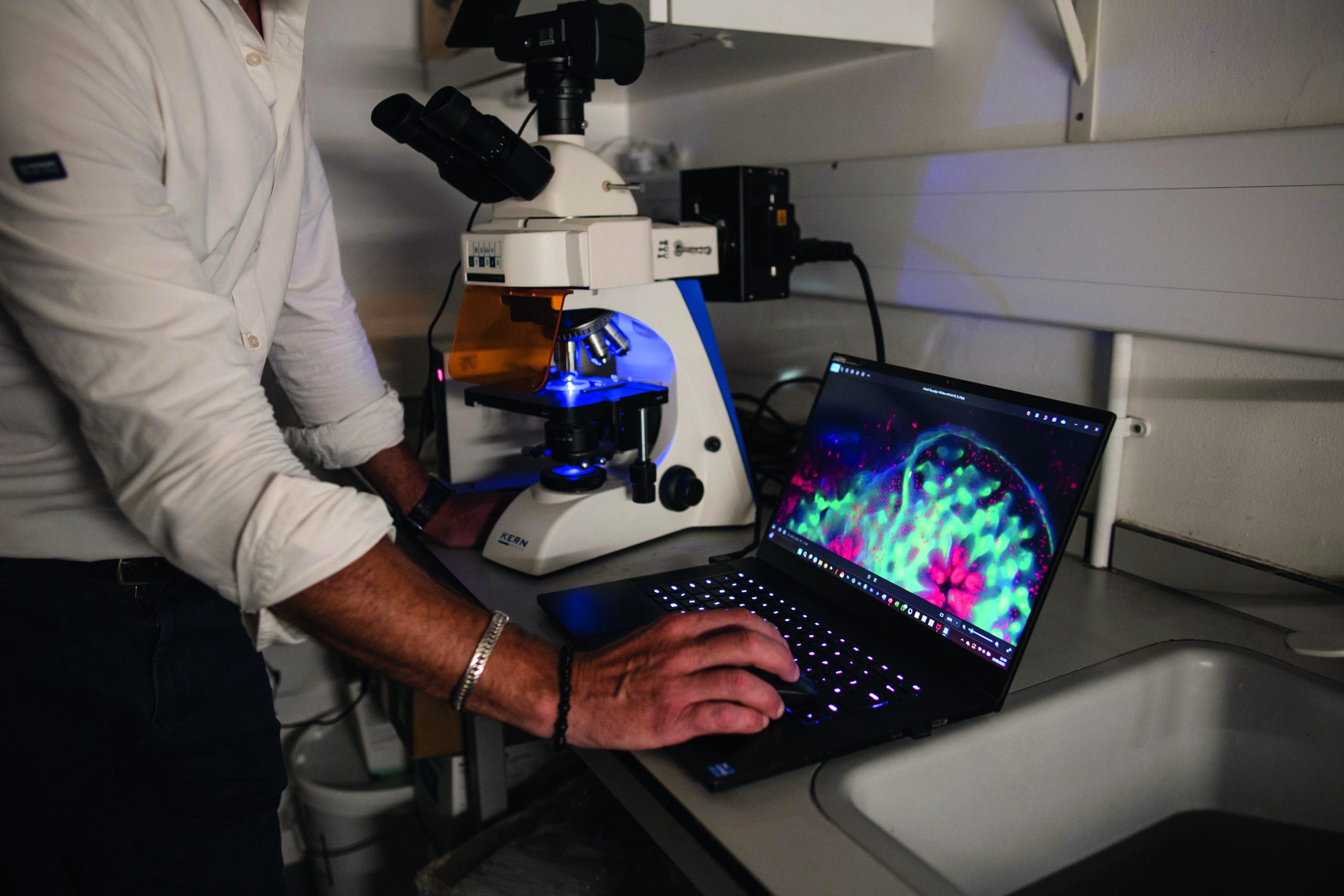
The training will include how to use imaging to take measurements with exceptional precision. Jamie demonstrates this on a 20-day-old baby coral. Zooming right into the tips of the polyp’s tentacles, he shows me a fluorescent glow created by special proteins that give the corals UV protection and help to attract prey. “These are a bit like a beacon, allowing the food to come near the polyp’s mouth,” he says.
- Britain's best source-to-sea river walks
- Here’s the most sustainable seafood to buy (and eat) right now – without it costing the earth
- Britain's best fishing locations
Microns of growth
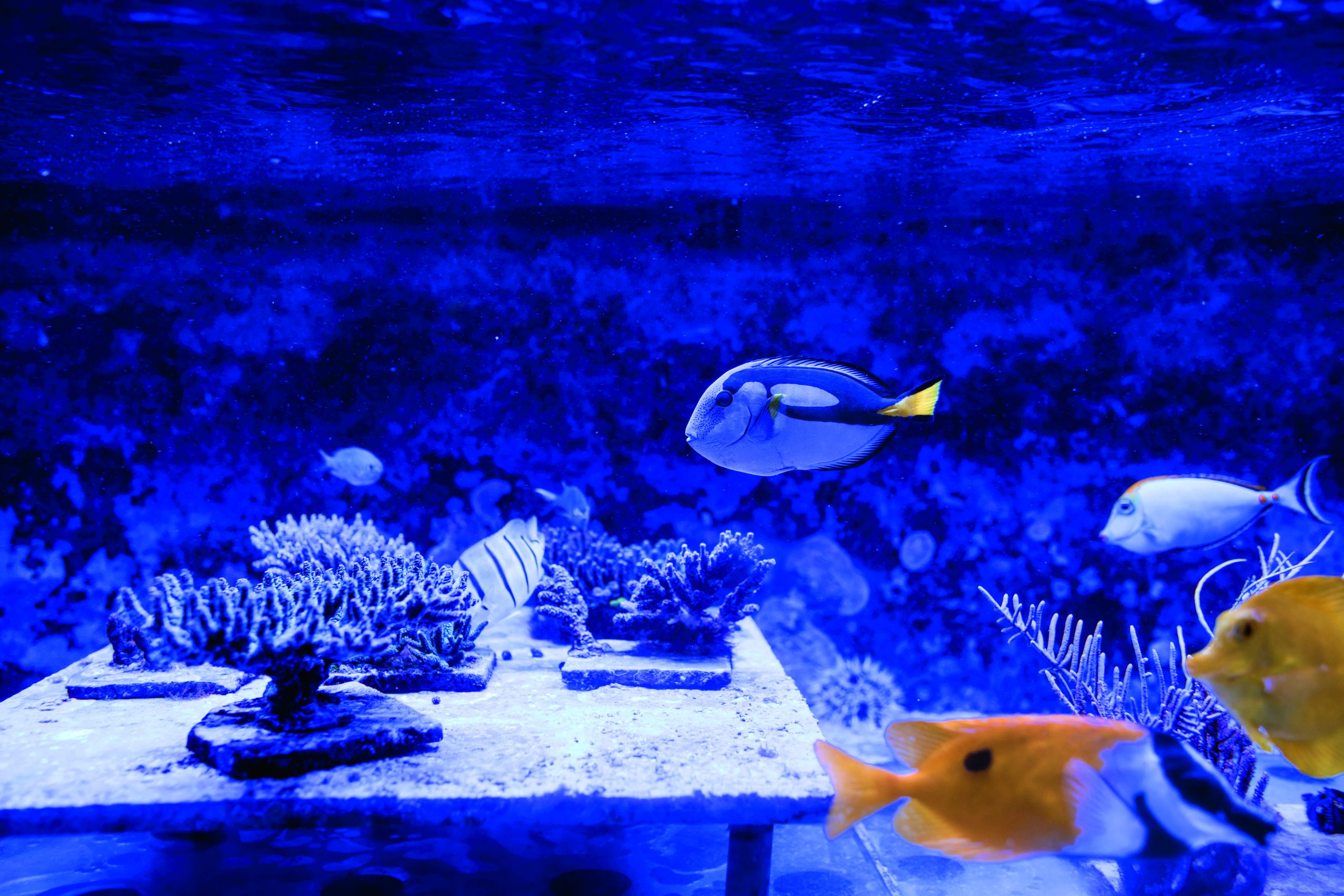
These fluorescence proteins can provide vital information about how different situations affect the coral. For example, if you split the corals into two groups, apply a fluorescent marker to their skeletons and feed them different diets, you can measure the new fluorescence to see which grew more quickly.
In this image, “we’re looking at about 10 microns of growth,” he says. “This is the finest scale of growth measurement that has been done on corals yet.” Being able to determine tiny differences in growth rates gives them actionable insights. “That allows us to say to Nature Seychelles: ‘If you feed them this diet, this is going to get them to grow quicker. This will make them stronger,” he adds.
They can also use regular macro photography to create a database of spawning times for each species. “You create a library to say: this species is going to go this month. This one might be next month,” he explains. Each month, the researchers can focus on the species currently spawning, collect them and get the settlement plates underway. In the Seychelles, it’s likely that “there won’t just be one month of spawning,” he says. “You end up with this conveyor belt of production.” Once the conveyor belt is underway, they can just keep producing more corals.
Researchers can also use photography to create “ortho mosaics” that show how well coral is growing after being planted on the reef. “You just swim in a pattern back and forth” taking photos, he says. “Backwards and forwards. Backwards and forwards. And the idea is you want to create an overlap of about 70% between each image.” Using sophisticated cameras, rather than just GoPros, gives them a better resolution and allows them to zoom in on individual corals to measure their growth.
“You can cover really big areas and get a phenomenal level of detail.” By joining up all the photos and filling in any gaps, they are able to create a 3D render of the reef, then use AI tools to recognise different coral species, calculate their surface area across the reef and track their growth. “It gives validation to how well it works,” he adds.
Lasting benefits
Swimming through a live coral reef is an experience unlike any other. On a healthy reef, the seabed is flush with intricate and vibrant red, orange, yellow and purple corals. But, as beautiful as corals are to look at, conservationists aren’t restoring them just for their looks. Despite taking up less than 1% of the seabed, coral reefs support around 25% of all marine life. Thousands of fish species rely on the reef structure for a safe home and somewhere to find food. Plus, millions of people around the world need these fish stocks for their food and livelihoods.
While transfixed by a stunning rendering of a gorgeous coral polyp in the lab, it’s easy to forget that this isn’t just about corals. Protecting and restoring these important ecosystems is vital for all ocean animals as well as communities globally. “So much of this is about fisheries,” says Jamie. “We need to boost that three-dimensional structure so the fish come back.”
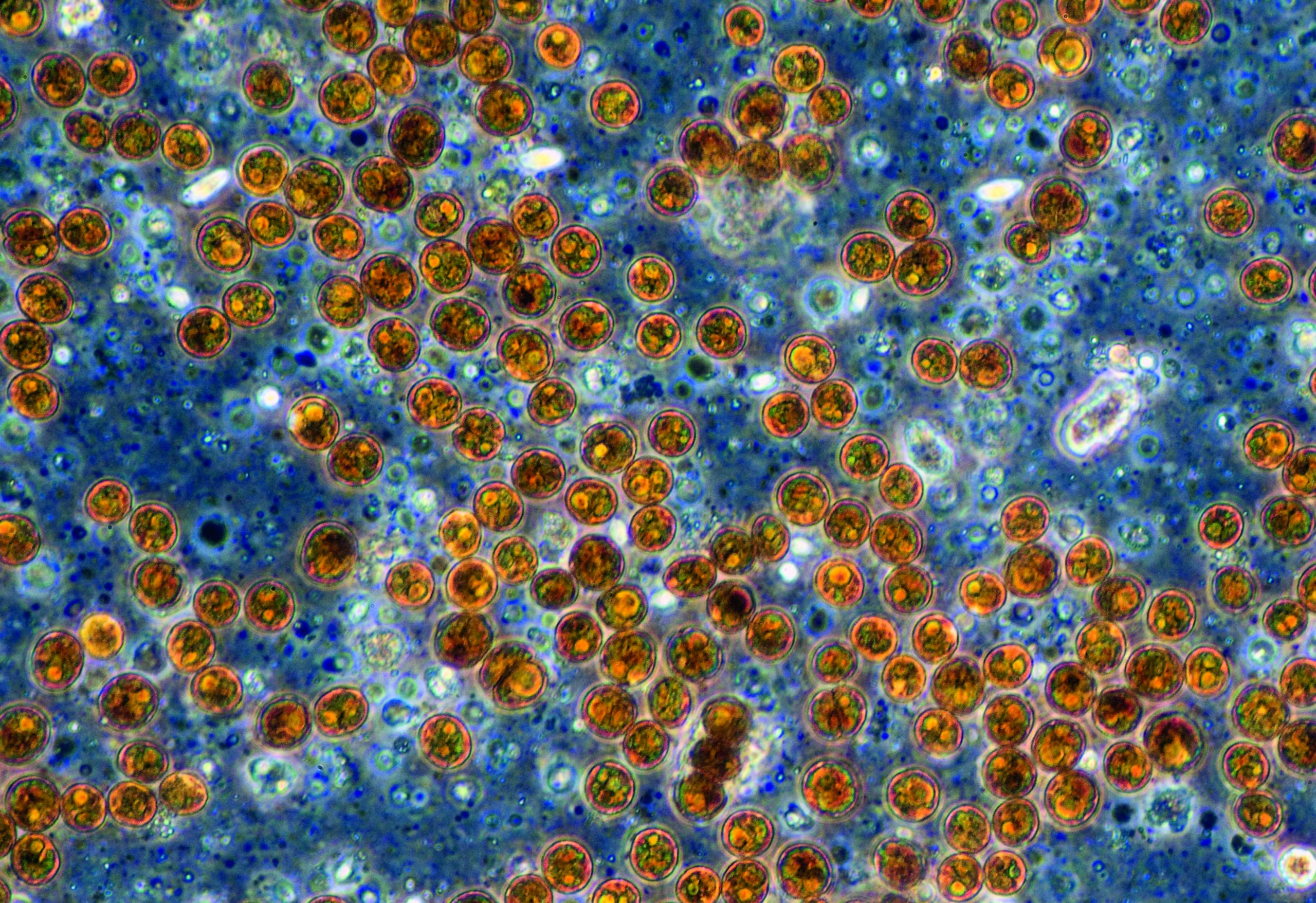
How the UK’s cold-water corals differ from corals found in tropical seas
- Depth – Cold-water corals typically live in deeper waters where there is less sunlight, while tropical corals, growing in regions within 30° north and 30° south of the equator, can be found in shallow reefs.
- Symbiotic algae – Tropical corals have a mutually beneficial relationship with microalgae called zooxanthellae which provide them with food. Cold-water corals do not have these partners and feed on plankton.
- Colour – Because cold-water corals lack these zooxanthellae, they are also less bright and varied in colour than tropical corals; the algae living inside the coral is what creates its stunning colours.
- Research efforts – Shallow, tropical reefs are better studied than deep-sea corals because they are more easily accessible. Research into cold-water corals has been historically overlooked due to deep-water challenges.
- Threats – Both shallow and deep-sea reefs are threatened but human activities may affect them in different ways. Dredging and deep-sea mining are a particular concern for cold-water corals.
